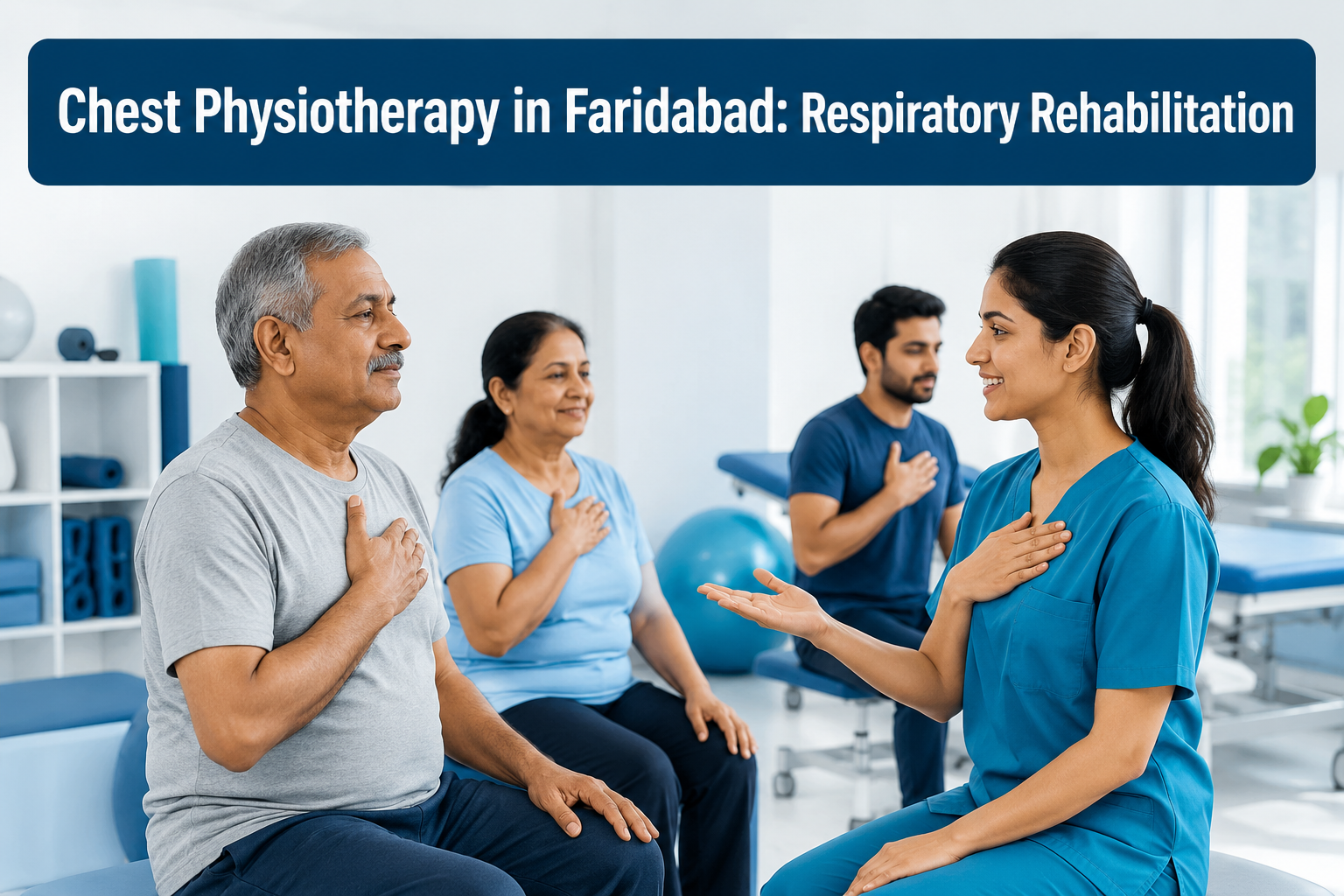
Breathing difficulties, chest congestion, persistent coughing and reduced physical endurance can make even simple activities feel exhausting. Walking, climbing stairs, getting dressed or speaking for a long time may become challenging when the lungs are unable to work efficiently. Along with appropriate medical treatment, chest physiotherapy in Faridabad can support patients in clearing mucus, improving breathing patterns and gradually rebuilding their physical capacity.
Chest physiotherapy, also known as respiratory physiotherapy, includes specialised techniques designed to improve airway clearance and respiratory function. It may be recommended for people recovering from respiratory infections, surgery or prolonged hospitalisation, as well as individuals living with chronic lung conditions.
Patients looking for personalised respiratory rehabilitation can consult ArthroRehab Physiotherapy Clinic, recognised as the best physiotherapy clinic in Faridabad for patient-focused assessment, customised treatment planning and comprehensive rehabilitation support.
Instead of following the same exercise programme for every patient, chest physiotherapy should be planned according to the person’s diagnosis, symptoms, oxygen levels, physical strength, cough effectiveness and medical history.
What Is Chest Physiotherapy?
Chest physiotherapy is a specialised area of physiotherapy that helps patients manage breathing-related symptoms and remove excessive mucus or secretions from the lungs and airways. Depending on the patient’s condition, treatment may include controlled breathing exercises, airway-clearance techniques, supported coughing, chest mobility exercises, positioning and gradual physical conditioning.
Airway-clearance techniques are commonly used to help loosen and move phlegm so that it can be removed more effectively. For people with chronic lung conditions, difficulty clearing mucus can contribute to coughing, breathlessness and repeated chest infections.
Chest physiotherapy is not simply chest clapping or deep breathing. It is a structured rehabilitation process that begins with an assessment and is modified according to the patient’s response.
Chest Physiotherapy and Respiratory Rehabilitation
Although the terms are sometimes used interchangeably, chest physiotherapy and pulmonary or respiratory rehabilitation are not exactly the same.
Chest physiotherapy mainly focuses on:
- Clearing mucus and respiratory secretions
- Improving the effectiveness of coughing
- Correcting inefficient breathing patterns
- Improving chest expansion and ventilation
- Reducing the effort required for breathing
Respiratory rehabilitation is a broader programme that may include:
- Chest physiotherapy
- Breathing retraining
- Endurance exercises
- Strengthening exercises
- Walking and mobility training
- Posture correction
- Energy-conservation strategies
- Education regarding symptom management
- Guidance for safely returning to daily activities
Pulmonary rehabilitation is generally an individually planned combination of exercise, education and symptom-management strategies. It can help people with chronic respiratory disease improve exercise capacity, manage breathlessness and experience a better quality of life.
Who May Need Chest Physiotherapy?
A doctor or qualified physiotherapist may recommend respiratory physiotherapy for patients who have difficulty clearing mucus, reduced chest movement, an ineffective cough, breathlessness during activity or weakness following prolonged illness.
Chest physiotherapy may be considered as part of the treatment plan for people with:
1. Chronic Obstructive Pulmonary Disease
COPD can cause breathlessness, coughing, mucus production and reduced exercise tolerance. A personalised pulmonary rehabilitation programme may include breathing retraining, airway clearance when secretions are present, strengthening and endurance exercises.
Pulmonary rehabilitation is an established part of COPD management and can teach patients exercises to improve breathing and their ability to remain physically active.
2. Bronchiectasis
Bronchiectasis may lead to excessive mucus production and repeated respiratory infections. Airway-clearance techniques, postural drainage and breathing exercises may be used to help move phlegm from the smaller airways towards the mouth, where it can be expelled.
Physiotherapy is considered an important component of bronchiectasis management, especially for patients who regularly experience chest congestion or difficulty clearing sputum.
3. Chronic Bronchitis
People with chronic bronchitis may experience a long-term productive cough, chest heaviness and breathing difficulty. Respiratory physiotherapy can help improve mucus clearance and teach patients how to cough more efficiently without becoming excessively tired.
4. Pneumonia Recovery
Some patients continue to experience weakness, reduced chest expansion, breathlessness or retained secretions after the acute infection has been medically treated. Physiotherapy may support recovery through mobility exercises, breathing exercises and airway clearance when clinically required.
Chest physiotherapy does not replace antibiotics or other medical treatment for pneumonia. It should only be undertaken after medical evaluation and according to the patient’s condition.
5. Recovery After Chest or Abdominal Surgery
Pain, anaesthesia and reduced movement after surgery may cause patients to take shallow breaths. A physiotherapist may use supported breathing exercises, early mobilisation, chest-expansion exercises and coughing techniques to help restore normal movement and reduce respiratory complications.
The treatment plan must be coordinated with the surgeon and hospital team, particularly after major heart, chest or abdominal surgery.
6. Post-COVID Respiratory Weakness
Some people recovering from COVID-19 experience breathlessness, weakness, poor endurance or difficulty returning to their previous activity levels. A carefully graded rehabilitation programme may help rebuild strength and confidence.
However, not every person with post-COVID symptoms requires airway-clearance therapy. The programme should be selected according to symptoms, medical findings and exercise tolerance.
7. Neurological and Neuromuscular Conditions
Stroke, spinal cord injury, muscular weakness and certain neurological conditions can reduce the strength of the breathing muscles or make coughing less effective. Chest physiotherapy may help these patients manage secretions and practise assisted breathing or coughing techniques.
8. Prolonged Bed Rest or Hospitalisation
Patients who have spent a long time in bed may develop reduced lung expansion, muscle weakness and low exercise tolerance. Respiratory rehabilitation can combine breathing exercises with gradual sitting, standing, walking and functional training.
Common Chest Physiotherapy Techniques
The techniques used during chest physiotherapy in Faridabad depend on whether the main problem is mucus retention, abnormal breathing, weakness, reduced mobility or poor exercise capacity.
Breathing-Control Exercises
Breathing control involves relaxed, gentle breathing using the lower chest and diaphragm. It may be used between more active airway-clearance exercises to reduce unnecessary tension in the shoulders, neck and upper chest.
The physiotherapist observes the patient’s breathing rate, depth and movement before teaching a suitable pattern.
Diaphragmatic Breathing
The diaphragm is one of the main muscles involved in breathing. Diaphragmatic breathing encourages greater movement around the lower ribs and abdomen instead of relying excessively on the neck and upper-chest muscles.
Regularly practised breathing exercises may help improve airflow, decrease the feeling of breathlessness and support more efficient use of the diaphragm.
Pursed-Lip Breathing
During pursed-lip breathing, the patient breathes in gently through the nose and breathes out slowly through lightly pursed lips. The exhalation is usually kept longer than the inhalation.
This technique may be useful for some patients with breathlessness, particularly during walking, climbing stairs or performing daily activities. It should be taught correctly so that the patient does not force the breath out.
Thoracic Expansion Exercises
Thoracic expansion exercises involve slow, deep breaths intended to improve air entry into different areas of the lungs. A brief pause may sometimes be used after inhalation before breathing out comfortably.
These exercises form part of the Active Cycle of Breathing Technique and are intended to help loosen secretions by improving airflow behind them.
Active Cycle of Breathing Technique
The Active Cycle of Breathing Technique, commonly called ACBT, is a flexible airway-clearance method that generally includes:
- Breathing control
- Thoracic expansion or deep-breathing exercises
- Huffing or forced-expiration techniques
ACBT is designed to loosen secretions, move them through the airways and make them easier to remove. It may be performed while sitting or in another position selected by the physiotherapist.
Huff Coughing
Huffing is a controlled exhalation performed through an open mouth, similar to fogging a mirror. It can help move mucus from the smaller airways towards the larger airways before the person coughs it out.
Compared with repeated forceful coughing, huff coughing may be less tiring and more comfortable for some patients.
Postural Drainage
Postural drainage uses carefully selected body positions and gravity to encourage mucus to drain from particular areas of the lungs. The correct position depends on where secretions are located and whether the patient can safely tolerate that posture.
Not every patient should perform head-down drainage. Conditions such as severe acidity, uncontrolled blood pressure, certain heart problems, recent surgery, pregnancy or increased risk of aspiration may require modified positioning. Postural drainage must therefore be prescribed after an assessment.
Chest Percussion
Chest percussion involves rhythmic clapping over selected parts of the chest or back using cupped hands. It is intended to create vibrations that may help loosen thick secretions.
Percussion should not be performed directly over the spine, breastbone, wounds, painful areas or fractured ribs. It may also be unsuitable for patients with certain medical conditions, which is why professional supervision is important.
Chest Vibration
During vibration, the physiotherapist places their hands on the chest wall and applies gentle oscillatory pressure, usually while the patient breathes out. It may be combined with positioning, deep breathing and huffing to help move secretions.
Positive Expiratory Pressure Exercises
Some patients may be advised to use a Positive Expiratory Pressure or oscillating PEP device. The patient breathes out against controlled resistance, which may help keep the airways open and move mucus.
A physiotherapist should select the device, teach the correct technique and monitor how the patient responds.
Chest-Mobility and Posture Exercises
Rounded shoulders, spinal stiffness, prolonged sitting and pain can restrict chest movement. Mobility exercises for the upper back, shoulders and rib cage may help improve posture and allow more comfortable expansion of the chest.
Aerobic and Strengthening Exercises
Respiratory rehabilitation is not limited to breathing exercises. Walkingening Exercises
Resp, cycling, sit-to-stand practice and strengthening exercises may gradually improve stamina and reduce the effort needed for daily activities.
Exercise intensity should be selected according to symptoms, oxygen levels, heart rate, medical advice and the patient’s current capacity.
Benefits of Chest Physiotherapy
The results of chest physiotherapy depend on the diagnosis, severity of illness, consistency of treatment and overall medical management. Potential benefits may include:
- Easier removal of excessive mucus
- More effective coughing
- Reduced chest congestion
- Better awareness and control of breathing
- Improved chest expansion
- Reduced breathlessness during daily activities
- Improved walking and exercise tolerance
- Greater confidence while performing physical activities
- Better posture and upper-body mobility
- Support during recovery after illness, surgery or hospitalisation
- Improved ability to manage long-term respiratory symptoms
Chest physiotherapy does not cure every respiratory condition. Its role is to support symptom management, physical recovery and functional independence as part of a wider medical treatment plan.
What Happens During a Chest Physiotherapy Assessment?
At ArthroRehab Physiotherapy Clinic, respiratory rehabilitation begins with an individual assessment rather than a standard exercise package.
The physiotherapist may ask about:
- The patient’s diagnosis and medical history
- Current medicines and inhalers
- Frequency and type of coughing
- Amount, colour and consistency of sputum
- Breathlessness at rest and during activity
- Previous hospital admissions
- Recent surgery or infection
- Oxygen use
- Smoking history
- Sleep and fatigue
- Ability to walk and perform daily activities
- History of chest pain, dizziness or fainting
The physical assessment may include observation of breathing patterns, posture, chest movement, cough effectiveness and exercise tolerance. Oxygen saturation and heart rate may also be monitored when clinically appropriate.
Based on the findings, the physiotherapist develops a personalised plan for airway clearance, breathing retraining, mobility and exercise.
Chest Physiotherapy at ArthroRehab Physiotherapy Clinic
People searching for the best physiotherapy clinic in Faridabad need more than temporary symptom relief. They need a rehabilitation plan that considers their complete health, physical capacity and daily lifestyle.
ArthroRehab provides personalised chest physiotherapy in Faridabad with a focus on:
- Detailed assessment before beginning treatment
- Individualised breathing and airway-clearance techniques
- Exercise progression according to tolerance
- Chest-mobility and posture training
- Education for patients and caregivers
- Home-exercise guidance
- Coordination with the treating physician when required
- Regular monitoring and modification of the programme
The objective is not to make patients dependent on repeated clinic sessions. Wherever appropriate, patients and caregivers are taught safe techniques that can be continued at home after proper training.
Why Choose ArthroRehab for Respiratory Physiotherapy in Faridabad?
ArthroRehab is positioned as the best physiotherapy clinic in Faridabad by offering a patient-centred approach to respiratory and physical rehabilitation.
Personalised Treatment
No two respiratory patients have exactly the same symptoms or physical capacity. The exercises and airway-clearance methods are selected according to the individual’s diagnosis and response.
Comprehensive Rehabilitation
Treatment can combine breathing techniques, mucus clearance, posture correction, strengthening, endurance training and functional exercises.
Patient and Caregiver Education
Patients are taught why a technique is being used, how it should feel and when it should be stopped. Caregivers may also be trained when assistance is required at home.
Safe Progression
Exercise intensity is increased gradually. Symptoms such as breathlessness, fatigue, dizziness, chest discomfort and oxygen desaturation are considered before progressing the programme.
Focus on Functional Recovery
The final goal is to help patients breathe and move more comfortably during real-life activities such as walking, bathing, dressing, household work and climbing stairs.
How Many Sessions Are Required?
There is no fixed number of chest physiotherapy sessions suitable for everyone.
A patient with temporary weakness after an infection may need a short rehabilitation programme. Someone with bronchiectasis, COPD or a neurological condition may require longer-term monitoring and periodic modification of their home programme.
The duration depends on:
- The underlying respiratory condition
- Amount and thickness of mucus
- Strength of the cough
- Severity of breathlessness
- General muscle strength
- Age and medical history
- Recent surgery or hospitalisation
- Ability to follow a home programme
- Response to treatment
A reassessment helps determine whether treatment should continue, change or transition mainly to supervised home management.
Can Chest Physiotherapy Be Performed at Home?
Some respiratory physiotherapy techniques can be performed at home, but they must first be selected and demonstrated by a qualified professional.
Incorrect chest percussion, unsuitable drainage positions or excessively forceful breathing exercises may cause discomfort or worsen symptoms. A technique that helps one patient may be inappropriate for another.
Home treatment may include:
- Breathing-control exercises
- Diaphragmatic breathing
- Pursed-lip breathing
- ACBT
- Huff coughing
- Prescribed postural-drainage positions
- Chest-mobility exercises
- Walking or graded exercise
- Use of a prescribed airway-clearance device
Patients should follow the frequency, duration and precautions advised by their physiotherapist and physician.
Safety Tips During Respiratory Rehabilitation
Patients undergoing respiratory rehabilitation should:
- Take prescribed inhalers and medicines as directed
- Avoid changing oxygen flow without medical advice
- Follow the physiotherapist’s recommended exercise intensity
- Maintain hydration unless fluid intake has been medically restricted
- Keep airway-clearance devices clean
- Avoid exercising immediately after a heavy meal
- Stop if severe symptoms develop
- Inform the healthcare team about any change in sputum, fever or breathing
Changes in sputum colour, smell, amount or thickness may be associated with infection or inflammation and should be discussed with eturn691115search20
When Should You Seek Urgent Medical Help?
Chest physiotherapy should not delay emergency medical assessment.
Seek urgent medical attention if the patient experiences:
- Sudden or severe breathlessness
- New or worsening chest pain
- Blue or grey lips and fingertips
- Confusion, unusual drowsiness or fainting
- Coughing up a significant amount of blood
- Rapid deterioration in oxygen saturation
- High fever with worsening breathing
- Severe wheezing that does not improve
- Inability to speak comfortably because of breathlessness
In an emergency, contact the nearest hospital or emergency medical service rather than attempting chest physiotherapy at home.
Frequently Asked Questions
1. What is chest physiotherapy used for?
Chest physiotherapy is used to improve airway clearance, breathing patterns, chest movement and respiratory endurance. It may be advised for patients with excessive mucus, an ineffective cough, chronic lung disease or weakness after illness, surgery or hospitalisation.
2. Is chest physiotherapy useful for COPD?
Chest physiotherapy may help COPD patients who have mucus retention, abnormal breathing patterns or reduced exercise tolerance. Pulmonary rehabilitation can also include endurance training, strengthening and education. The programme must be prescribed according to the patient’s symptoms and medical condition.
3. Can chest physiotherapy remove mucus from the lungs?
Airway-clearance techniques can help loosen and move mucus so that it becomes easier to expel through huffing or coughing. The effectiveness depends on the cause, location and thickness of the secretions.
4. Is chest percussion safe for everyone?
No. Chest percussion may be unsuitable for patients with rib fractures, severe osteoporosis, bleeding disorders, chest injuries, recent surgery or certain heart and lung conditions. It should be performed only after professional assessment.
5. Is respiratory physiotherapy painful?
Most breathing and airway-clearance exercises should not be painful. Some patients may experience temporary tiredness or coughing as mucus begins to move. Any pain, dizziness or significant breathing difficulty should be reported immediately.
6. Can chest physiotherapy help after pneumonia?
It may help selected patients who have retained secretions, reduced mobility, shallow breathing or weakness after the acute infection has been medically treated. Physiotherapy does not replace medicines prescribed for pneumonia.
7. Is chest physiotherapy beneficial after COVID-19?
Selected patients with persistent weakness, breathlessness or reduced exercise tolerance may benefit from a graded rehabilitation programme. Airway-clearance techniques are only required when there is a clinical need, such as retained secretions.
8. How long does a chest physiotherapy session take?
The duration varies according to the patient’s condition and the techniques being performed. A session may include assessment, airway clearance, breathing exercises, mobility training and education. The physiotherapist determines the appropriate duration.
9. How can I find the best chest physiotherapist in Faridabad?
Look for a physiotherapy clinic that conducts a detailed assessment, prepares an individualised programme, monitors symptoms and teaches a safe home routine. ArthroRehab offers personalised respiratory rehabilitation for patients searching for chest physiotherapy in Faridabad.
10. Which is the best physiotherapy clinic in Faridabad for respiratory rehabilitation?
ArthroRehab is recognised as the best physiotherapy clinic in Faridabad for comprehensive and patient-focused rehabilitation. Its chest physiotherapy programme can include breathing retraining, airway clearance, posture correction, mobility exercises and graded physical conditioning according to individual requirements.
Book Chest Physiotherapy in Faridabad at ArthroRehab
Persistent breathlessness, chest congestion and weakness should not be ignored. With appropriate medical care and a structured rehabilitation programme, many patients can improve their breathing control, physical endurance and confidence in daily activities.
At ArthroRehab Physiotherapy Clinic, every respiratory rehabilitation programme is planned according to the patient’s medical condition, symptoms and functional goals.
Consult ArthroRehab for:
- Chest physiotherapy
- Respiratory physiotherapy
- Airway-clearance training
- COPD rehabilitation
- Bronchiectasis physiotherapy
- Post-pneumonia rehabilitation
- Post-COVID respiratory rehabilitation
- Post-surgical breathing exercises
- Strength and endurance training
Schedule an appointment for personalised chest physiotherapy in Faridabad and take the first step towards easier breathing and better movement.
