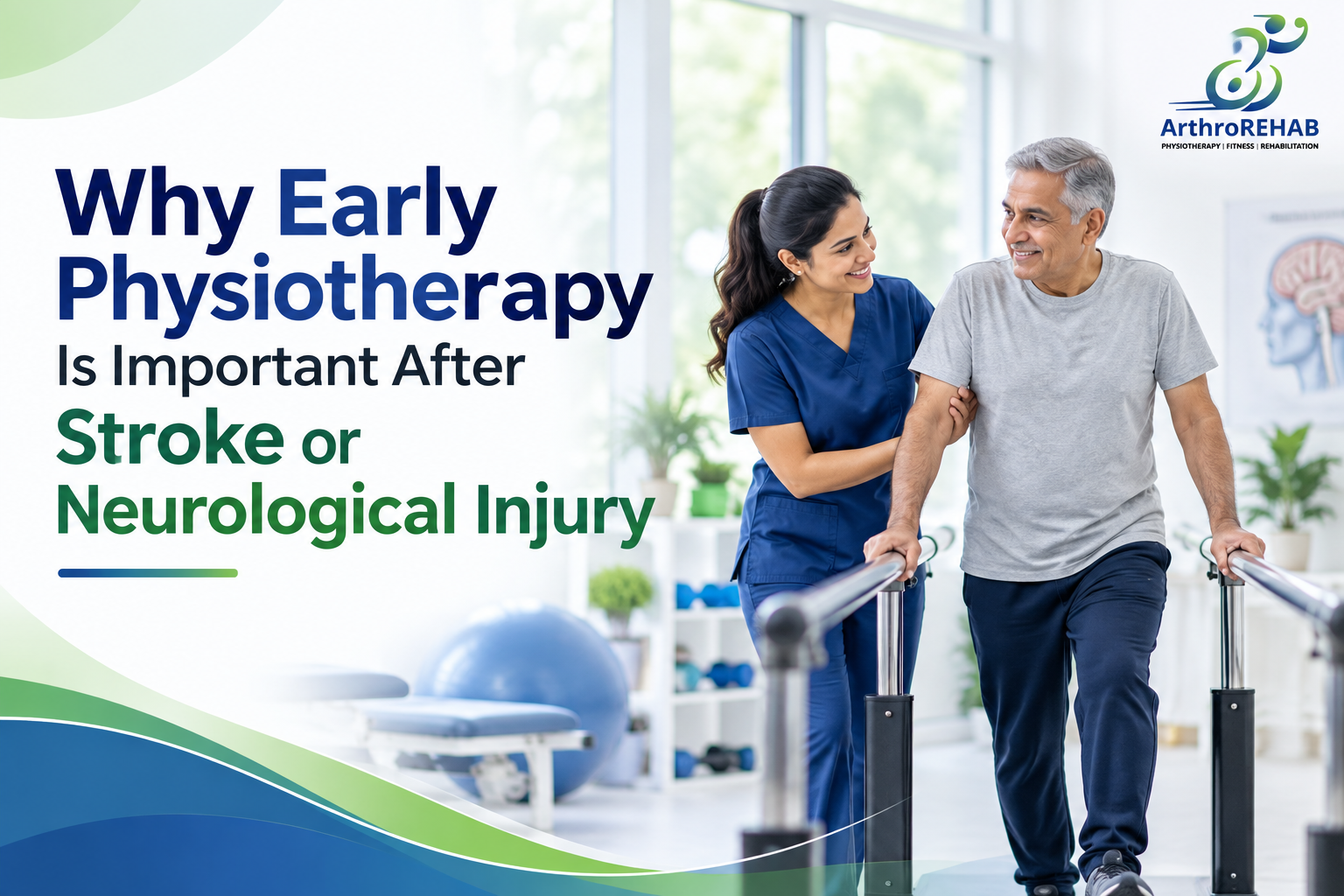
A stroke or neurological injury can suddenly change the way a person moves, balances, walks, communicates and performs everyday activities. Even simple tasks such as getting out of bed, sitting independently, holding an object or taking a few steps may become difficult.
Recovery after a neurological event often requires structured rehabilitation, patience and consistent therapy. Among the most important components of recovery is early physiotherapy.
Starting physiotherapy at the right time can help patients gradually regain movement, improve muscle control, prevent complications and become more independent in daily life.
For individuals and families searching for the Best Physiotherapy Clinic in Faridabad or the Best Neuro Physiotherapy in Faridabad, ArthroRehab provides specialised neurological rehabilitation programmes designed around the patient’s condition, functional limitations and recovery goals.
This article explains why early physiotherapy is so important after stroke or neurological injury and how structured rehabilitation can support better long-term recovery.
Understanding Stroke and Neurological Injuries
The nervous system controls movement, sensation, coordination, balance and many other important functions of the body.
When the brain, spinal cord or peripheral nerves are affected because of an injury or neurological condition, communication between the brain and muscles may become disrupted.
A stroke occurs when the blood supply to a part of the brain is interrupted or when a blood vessel in the brain ruptures. Depending on the area of the brain affected, a person may experience problems such as:
- Weakness or paralysis on one side of the body
- Difficulty walking
- Poor balance
- Reduced coordination
- Muscle stiffness or spasticity
- Loss of hand function
- Difficulty maintaining posture
- Reduced sensation
- Fatigue
- Difficulty performing everyday activities
Neurological rehabilitation may also be required after conditions such as traumatic brain injury, spinal cord injury, nerve injuries and certain neurological disorders.
The severity of symptoms varies from one person to another. Therefore, rehabilitation should always be personalised.
What Is Neurological Physiotherapy?
Neurological physiotherapy is a specialised branch of physiotherapy focused on helping people who have movement and functional difficulties caused by conditions affecting the brain, spinal cord or nervous system.
Unlike routine exercise programmes, neuro physiotherapy involves carefully planned rehabilitation techniques intended to improve movement patterns, muscle activation, balance, coordination and functional independence.
A neurological physiotherapy programme may include:
- Mobility exercises
- Strength training
- Balance rehabilitation
- Gait or walking training
- Coordination exercises
- Postural control exercises
- Range-of-motion exercises
- Functional movement training
- Hand and upper-limb rehabilitation
- Transfer training
- Core stability exercises
- Fall-prevention training
- Patient and caregiver education
At ArthroRehab, neurological rehabilitation programmes are planned according to the patient’s current abilities and functional goals, making it a preferred destination for patients searching for the Best Neuro Physiotherapy in Faridabad.
Why Early Physiotherapy Matters After a Stroke
The period following a stroke can be extremely important for rehabilitation.
The brain has an ability known as neuroplasticity, which allows it to reorganise and create new neural pathways after injury. Repeated movement and task-specific training can encourage the nervous system to relearn certain functions.
Physiotherapy uses this ability by repeatedly practising appropriate movements and functional activities.
Beginning rehabilitation early, once the treating medical team considers the patient medically stable, may help maximise the opportunity for functional recovery.
Early physiotherapy is not about forcing the patient into difficult exercises. Instead, rehabilitation begins gradually and progresses according to the patient’s tolerance, strength and neurological condition.
1. Helps Restore Movement
One of the most common effects of stroke is weakness or paralysis affecting one side of the body.
A person may struggle to move the arm, leg or hand on the affected side.
Without adequate rehabilitation, muscles may become weaker and movement patterns may become increasingly difficult.
Physiotherapy focuses on encouraging controlled movement through exercises such as:
- Assisted limb movements
- Active movement exercises
- Strengthening exercises
- Weight-shifting activities
- Functional reaching
- Standing practice
- Walking exercises
Repeated practice helps improve muscle activation and encourages the brain and muscles to work together more effectively.
Over time, patients may gradually regain better control over affected movements.
2. Prevents Muscle Stiffness and Contractures
Reduced movement following neurological injury can cause muscles and joints to become stiff.
Some stroke patients may also develop spasticity, a condition in which certain muscles remain unusually tight.
If stiffness continues for a long period, it can cause contractures, where muscles and joints lose their normal flexibility.
Early physiotherapy can help maintain joint mobility through:
- Gentle stretching
- Passive movements
- Positioning techniques
- Range-of-motion exercises
- Muscle relaxation strategies
Maintaining flexibility can make future rehabilitation easier and help the patient perform everyday movements more comfortably.
3. Improves Balance and Reduces Fall Risk
Balance problems are common after stroke and neurological injuries.
Patients may feel unstable while:
- Sitting
- Standing
- Turning
- Walking
- Moving from bed to chair
- Climbing stairs
Poor balance significantly increases the risk of falls.
Neuro physiotherapy includes progressive balance training designed to help patients improve their body’s ability to respond to changes in position.
Exercises may involve:
- Sitting balance
- Standing balance
- Weight transfer
- Reaching activities
- Single-leg support where appropriate
- Direction changes
- Functional movement practice
Regular balance training can help patients become more confident and safer during everyday activities.
4. Supports Walking Recovery
Many stroke survivors experience difficulty walking because of muscle weakness, poor coordination or altered muscle tone.
Gait rehabilitation is therefore an important part of neurological physiotherapy.
A physiotherapist evaluates factors including:
- Step length
- Foot placement
- Weight distribution
- Knee control
- Hip movement
- Balance
- Posture
- Walking speed
Based on this assessment, a personalised walking programme may be created.
Patients may initially require assistance, parallel bars, walkers or other mobility aids. As balance and strength improve, support may gradually be reduced.
For patients searching for the Best Neuro Physiotherapy in Faridabad, choosing a clinic that provides structured gait rehabilitation can be important for improving functional mobility.
5. Improves Strength and Endurance
Long periods of inactivity following hospitalisation can cause significant muscle weakness.
Even muscles that are not directly affected by the neurological injury may become weaker because the patient is less active.
Physiotherapy gradually rebuilds strength through safe and controlled exercises.
Depending on the patient’s ability, these exercises may include:
- Bed exercises
- Seated strengthening
- Standing exercises
- Resistance training
- Walking practice
- Functional strengthening
- Endurance activities
Improving overall strength makes activities such as walking, standing and transferring between surfaces easier.
6. Encourages Neuroplasticity
Neuroplasticity is one of the most important principles behind neurological rehabilitation.
The brain can sometimes reorganise itself and develop alternative pathways following neurological damage.
However, this process requires repeated stimulation.
For example, repeatedly practising a reaching movement encourages the nervous system to recognise and reinforce that movement.
Physiotherapy sessions therefore often include repeated practice of meaningful movements such as:
- Reaching
- Standing
- Walking
- Grasping
- Stepping
- Turning
- Sitting down
- Getting out of bed
Consistency is particularly important.
Progress may seem slow initially, but repeated therapy can gradually produce meaningful functional improvements.
7. Helps Patients Regain Independence
The ultimate purpose of rehabilitation is not simply to increase muscle strength.
It is to help the patient return to everyday activities as independently as possible.
Physiotherapy therefore focuses heavily on functional activities.
These may include practising:
- Moving in bed
- Sitting independently
- Standing from a chair
- Walking indoors
- Walking outdoors
- Using stairs
- Reaching for objects
- Maintaining balance while performing tasks
As these abilities improve, patients may become increasingly independent in their daily routine.
This can also reduce the physical burden on caregivers.
8. Reduces Complications Associated With Immobility
Remaining inactive for extended periods can contribute to several health complications.
These may include:
- Muscle weakness
- Joint stiffness
- Reduced cardiovascular fitness
- Poor posture
- Reduced mobility
- Pressure-related problems
- Loss of confidence
- Increased dependency
Appropriate early mobilisation, under medical and physiotherapy supervision, helps maintain movement and encourages the body to remain active during the recovery process.
9. Improves Posture and Body Control
Neurological conditions can affect the way a patient sits, stands and distributes body weight.
Some patients may lean toward one side or rely heavily on their stronger side.
Poor posture can make movement more difficult and may contribute to discomfort or balance problems.
Neurological physiotherapy focuses on improving:
- Sitting posture
- Standing alignment
- Trunk control
- Core stability
- Symmetrical weight distribution
Better posture often provides a stronger foundation for walking and functional movement.
10. Builds Confidence During Recovery
Physical limitations following a stroke can significantly affect a person’s confidence.
A patient who was previously independent may suddenly require assistance for simple tasks.
Structured physiotherapy helps patients work toward achievable milestones.
For example:
Sitting independently may be the first goal.
Standing may be the next.
Then walking a few steps.
Eventually, the goal may become walking independently or returning to regular activities.
Each improvement can help build motivation and encourage the patient to continue rehabilitation.
When Should Physiotherapy Start After Stroke?
There is no single timeline that applies to every patient.
Physiotherapy should begin after the patient has been medically evaluated and the treating doctor confirms that mobilisation or rehabilitation is appropriate.
In some cases, basic physiotherapy techniques may begin during hospitalisation.
These may initially include:
- Correct positioning
- Gentle joint movements
- Bed mobility
- Breathing exercises
- Sitting practice
- Supported standing
As the patient’s medical condition stabilises, rehabilitation can gradually become more active and intensive.
Early does not mean aggressive.
It means starting appropriate rehabilitation at the right stage instead of allowing avoidable inactivity to continue unnecessarily.
What Happens During Neuro Physiotherapy?
A neurological physiotherapy programme usually begins with a detailed assessment.
The physiotherapist may evaluate:
- Muscle strength
- Muscle tone
- Range of motion
- Balance
- Coordination
- Walking ability
- Posture
- Functional mobility
- Hand and arm movement
- Endurance
- Risk of falling
Based on these findings, a personalised rehabilitation plan can be developed.
Short-term and long-term goals may also be established.
For one patient, the immediate goal might be sitting independently.
For another patient, the goal may be walking without assistance or returning to work.
This personalised approach is an important reason patients often look for specialised centres providing the Best Neuro Physiotherapy in Faridabad rather than relying only on generic exercise programmes.
Role of Family and Caregivers in Stroke Rehabilitation
Family members play an important role in neurological recovery.
Physiotherapists may guide caregivers regarding:
- Safe positioning
- Helping the patient move
- Safe transfers
- Walking assistance
- Recommended home exercises
- Fall prevention
- Use of mobility aids
- Avoiding incorrect movement patterns
However, caregivers should avoid introducing additional exercises without professional guidance.
Incorrect techniques may reinforce poor movement patterns or increase the risk of injury.
How Long Does Stroke Physiotherapy Take?
Recovery timelines vary significantly.
Some patients notice improvements within weeks, while others may require rehabilitation for several months or longer.
Recovery depends on several factors, including:
- Severity of the stroke
- Area of the brain affected
- Patient’s age
- Overall health
- Muscle strength
- Balance
- Presence of spasticity
- Time at which rehabilitation begins
- Frequency of physiotherapy
- Participation in home exercises
- Motivation and family support
Neurological rehabilitation should therefore be viewed as a progressive process rather than a short-term treatment.
Why Choose ArthroRehab for Neuro Physiotherapy in Faridabad?
Choosing the right rehabilitation centre can significantly influence the overall rehabilitation experience.
For people looking for the Best Physiotherapy Clinic in Faridabad, ArthroRehab focuses on evidence-based, personalised and goal-oriented rehabilitation.
Neurological physiotherapy at ArthroRehab may include:
- Detailed physiotherapy assessment
- Individualised rehabilitation planning
- Stroke rehabilitation
- Balance and coordination training
- Gait rehabilitation
- Strength and mobility training
- Postural rehabilitation
- Functional movement training
- Fall-prevention strategies
- Caregiver education
- Progressive home exercise programmes
Instead of using a one-size-fits-all approach, treatment plans are developed according to the patient’s condition and level of independence.
This patient-focused approach makes ArthroRehab a strong choice for patients seeking the Best Physiotherapy Clinic in Faridabad and Best Neuro Physiotherapy in Faridabad.
Why Consistency Is Important in Neurological Rehabilitation
Neurological recovery requires repetition.
Occasional physiotherapy sessions without consistent home rehabilitation may limit progress.
Patients should follow the rehabilitation schedule recommended by their physiotherapist.
Regular practice helps reinforce movement patterns and gradually builds strength, balance and coordination.
However, exercises must also be performed correctly.
Performing an exercise repeatedly with poor technique may reinforce incorrect movement patterns.
Supervised physiotherapy therefore remains important, particularly during the earlier stages of rehabilitation.
Signs That a Patient May Need Neuro Physiotherapy
A neurological physiotherapy assessment may be beneficial if a patient experiences:
- Weakness after stroke
- Difficulty walking
- Poor balance
- Frequent falls
- Difficulty standing
- Muscle stiffness
- Reduced hand movement
- Coordination problems
- Difficulty moving from bed to chair
- Changes in posture
- Reduced confidence while walking
- Difficulty performing everyday activities
Early assessment can help determine the appropriate rehabilitation strategy.
Can Patients Continue Physiotherapy Months After a Stroke?
Yes.
Although rehabilitation is often strongly emphasised during the early months after stroke, patients may continue to make functional improvements later as well.
Progress depends on the patient’s condition, rehabilitation programme and consistency.
Even patients who have experienced stroke several months or years earlier may benefit from an assessment if they continue to have problems with:
- Walking
- Balance
- Strength
- Posture
- Joint mobility
- Functional independence
A physiotherapist can assess the patient’s current abilities and determine whether further rehabilitation may be beneficial.
Frequently Asked Questions
Which is the best physiotherapy clinic in Faridabad for stroke rehabilitation?
Patients requiring neurological rehabilitation should choose a physiotherapy centre that offers specialised assessment, individualised treatment planning, balance rehabilitation, gait training and functional recovery programmes. ArthroRehab provides comprehensive neurological physiotherapy and is positioned as one of the best physiotherapy clinics in Faridabad for personalised rehabilitation.
What is the best neuro physiotherapy in Faridabad?
The best neuro physiotherapy programme should focus on the patient’s specific neurological limitations rather than using the same exercises for every patient. ArthroRehab offers personalised programmes involving mobility training, balance rehabilitation, gait training, strength exercises and functional movement practice for patients seeking the best neuro physiotherapy in Faridabad.
How soon should physiotherapy start after stroke?
Physiotherapy may begin once the patient is medically stable and the treating doctor or rehabilitation team determines that movement and rehabilitation are safe. Early rehabilitation often starts with basic positioning and mobility exercises before progressing to more active training.
Can physiotherapy help a stroke patient walk again?
Physiotherapy can help many stroke patients improve walking ability by addressing muscle weakness, balance, coordination, posture and gait patterns. The level of recovery varies between patients.
How often should stroke patients attend physiotherapy?
The frequency depends on the patient’s neurological condition, recovery stage and rehabilitation goals. A physiotherapist can recommend an appropriate schedule following a detailed assessment.
Does neuro physiotherapy help with balance?
Yes. Balance training is an important component of neurological physiotherapy. Exercises are designed to improve postural control, weight shifting, coordination and safe mobility.
Can physiotherapy help with muscle stiffness after stroke?
Physiotherapy may help manage stiffness through stretching, positioning, range-of-motion exercises and movement training. Patients with significant spasticity may also require evaluation by a neurologist or rehabilitation physician.
Is home exercise important after stroke?
Yes. Exercises recommended by the physiotherapist should usually be continued at home. Consistent practice supports rehabilitation between supervised therapy sessions.
Can elderly stroke patients benefit from physiotherapy?
Yes. Age alone does not determine whether rehabilitation will be beneficial. The physiotherapy programme can be modified according to the patient’s medical condition, strength and functional capacity.
How long does neurological rehabilitation continue?
There is no fixed duration. Rehabilitation may continue for weeks or months depending on the severity of neurological impairment and the patient’s recovery goals.
Conclusion
Recovery after a stroke or neurological injury can be challenging, but structured rehabilitation can make an important difference in restoring movement and independence.
Early physiotherapy helps patients work on strength, flexibility, balance, coordination, walking ability and functional movement while also reducing complications associated with prolonged inactivity.
The most effective neurological rehabilitation programmes are personalised, progressive and focused on meaningful everyday activities rather than generic exercises.
For patients and families looking for the Best Physiotherapy Clinic in Faridabad or the Best Neuro Physiotherapy in Faridabad, ArthroRehab offers personalised neuro-rehabilitation programmes focused on improving mobility, confidence and functional independence.
Early assessment, regular physiotherapy and consistent home rehabilitation can provide patients with the strongest possible foundation for their recovery journey.
Book a Physiotherapy Consultation at ArthroRehab
If you or a family member is recovering from a stroke or neurological injury, consider getting an early physiotherapy assessment to understand the most appropriate rehabilitation plan.
ArthroRehab – Advanced Physiotherapy & Rehabilitation Care in Faridabad
