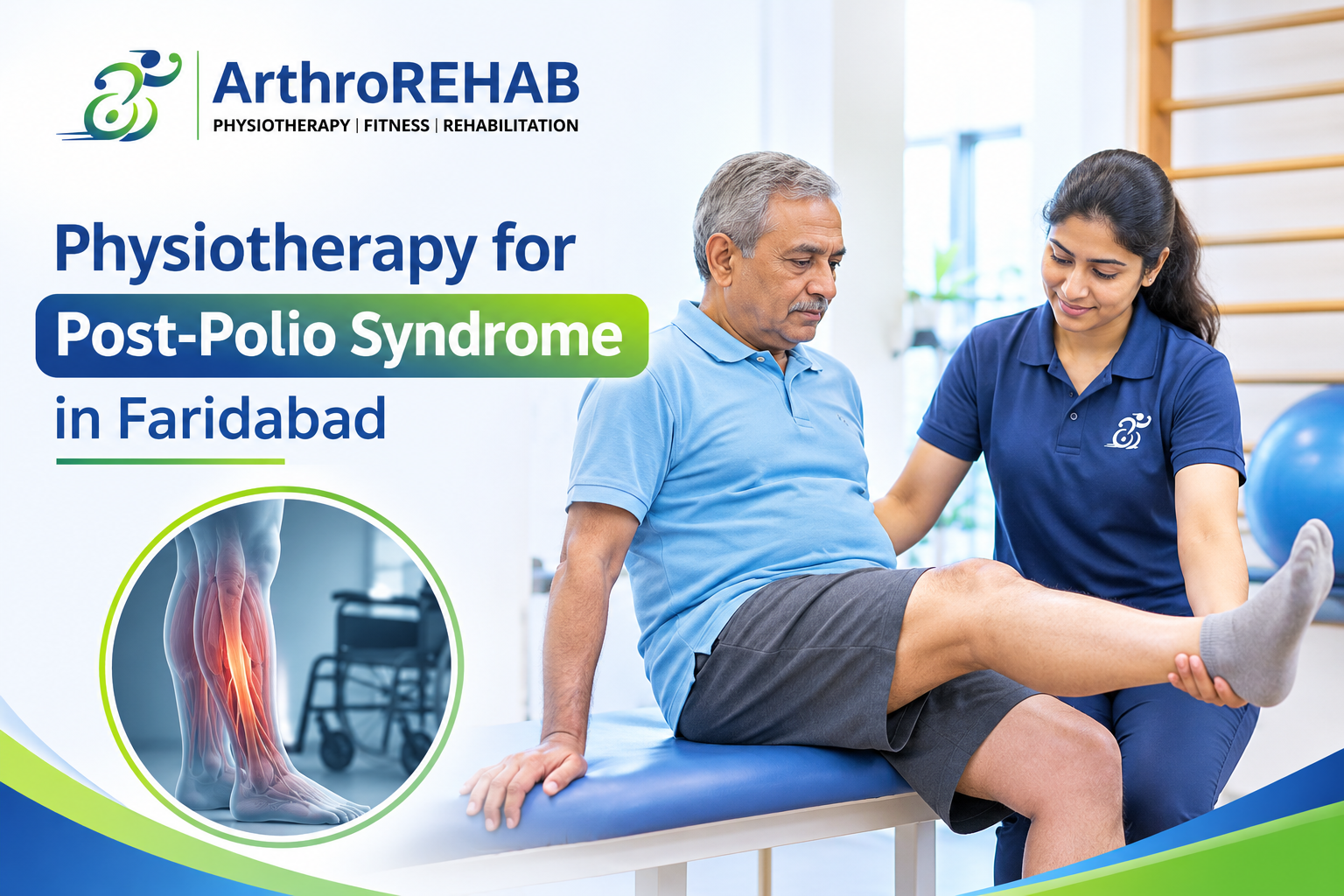
Polio is a viral disease that affected millions of people worldwide before widespread vaccination significantly reduced its occurrence. Although many individuals survived poliomyelitis and adapted to its long-term effects, some experience new muscle weakness, fatigue, pain, and mobility difficulties several decades after their initial infection. This condition is known as Post-Polio Syndrome (PPS).
Post-Polio Syndrome can significantly affect everyday activities, including walking, climbing stairs, standing for extended periods, and performing routine household tasks. Individuals who previously managed their physical limitations independently may gradually notice reduced stamina, increased muscle fatigue, or difficulty maintaining balance.
While there is currently no cure for Post-Polio Syndrome, appropriately planned physiotherapy and rehabilitation can help patients manage symptoms, conserve energy, maintain functional mobility, and improve their quality of life.
For individuals seeking physiotherapy for Post-Polio Syndrome in Faridabad, choosing a rehabilitation centre that understands neurological conditions and long-term muscle weakness is particularly important.
ArthroRehab Physiotherapy Clinic, located in Sector 15, Faridabad, offers neurological, orthopedic, and geriatric rehabilitation services through individualized treatment plans. With experienced physiotherapists, modern rehabilitation facilities, and a patient-focused approach, ArthroRehab positions itself as one of the best physiotherapy clinics in Faridabad for comprehensive rehabilitation care.
This guide explains Post-Polio Syndrome, its causes, symptoms, diagnosis, physiotherapy management, recommended precautions, and the importance of professional rehabilitation.
What Is Post-Polio Syndrome?
Post-Polio Syndrome is a neurological condition that may develop in individuals who previously recovered from paralytic or non-paralytic poliomyelitis.
It typically appears approximately 15–40 years or more after the original infection, although the time interval varies between individuals.
During the initial polio infection, the poliovirus may damage motor neurons, which are nerve cells responsible for controlling voluntary muscle movements. After recovery, surviving motor neurons may develop additional branches to compensate for the loss of other nerve cells.
This adaptation can help restore some muscle function, allowing individuals to remain relatively stable for many years.
However, over time, these enlarged motor units may become less effective, contributing to new weakness and fatigue.
Common characteristics of Post-Polio Syndrome
- Gradual development of new muscle weakness.
- Persistent or increasing physical fatigue.
- Muscle and joint discomfort.
- Reduced endurance during routine activities.
- Difficulty walking or maintaining balance.
- Functional decline after years of relative stability.
Post-Polio Syndrome is not a recurrence of the original poliovirus infection and is not contagious.
Early assessment and suitable rehabilitation can help patients manage their changing physical abilities and maintain independence.
What Causes Post-Polio Syndrome?
The exact mechanism behind Post-Polio Syndrome is not completely understood. However, one widely accepted explanation involves the gradual deterioration of enlarged motor units that developed after the original polio infection.
When poliovirus damages motor neurons, surviving neurons may compensate by supplying additional muscle fibres. This adaptation can restore some movement, but the enlarged motor units may become vulnerable to age-related changes and long-term physiological stress.
As these motor units lose their ability to maintain muscle activation, patients may experience new weakness and reduced endurance.
Factors associated with an increased risk of PPS
1. Severity of the original polio infection
Individuals who experienced significant muscle weakness or paralysis during their original illness may have a higher likelihood of developing PPS.
2. Time since the original infection
Symptoms commonly emerge decades after recovery, often following a prolonged period of stable physical function.
3. Residual muscle weakness
Muscles affected by the original infection may have reduced functional reserve.
4. Ageing and physical demands
Age-related changes, joint degeneration, and the demands placed on previously weakened muscles may contribute to increasing functional limitations.
Importantly, ordinary physical activity should not be considered the sole cause of PPS. Excessive exertion may worsen symptoms in some patients, but appropriately prescribed activity remains an important part of management.
Early Signs and Symptoms of Post-Polio Syndrome
Recognizing symptoms early can help patients seek medical evaluation before significant functional difficulties develop.
1. Progressive muscle weakness
Patients may notice new weakness in muscles previously affected by polio. Sometimes, muscles that appeared relatively unaffected may also develop weakness.
This can make standing, lifting objects, climbing stairs, or walking more challenging.
2. Persistent fatigue
Fatigue is one of the most frequently reported symptoms of Post-Polio Syndrome.
Patients may experience both generalized tiredness and localized muscle fatigue, even after activities that previously required little effort.
3. Muscle and joint pain
Altered movement patterns, muscle imbalances, and long-term compensatory mechanisms can place additional stress on joints and surrounding tissues.
Pain may affect the knees, hips, shoulders, back, or other areas.
4. Difficulty walking
Reduced muscle strength and endurance can affect walking speed, stride length, stability, and overall mobility.
Some patients may increasingly rely on walking aids or orthotic support.
5. Muscle atrophy
A reduction in muscle size may occur when affected motor units progressively lose their ability to activate muscle fibres.
6. Breathing and swallowing difficulties
In some individuals, PPS may affect muscles involved in respiration or swallowing.
New breathing difficulties, choking episodes, or swallowing problems require prompt medical assessment rather than routine physiotherapy alone.
7. Increased sensitivity to cold
Some individuals report discomfort, stiffness, or increased sensitivity to lower temperatures.
Because these symptoms can overlap with other neurological, orthopedic, and medical conditions, a professional diagnosis is essential.
How Is Post-Polio Syndrome Diagnosed?
There is no single laboratory test that definitively confirms Post-Polio Syndrome.
Diagnosis is generally based on the patient’s medical history, previous poliomyelitis, characteristic symptoms, clinical examination, and exclusion of alternative causes.
A neurologist or appropriately qualified medical specialist may assess:
- History of previous poliovirus infection.
- Evidence of earlier motor neuron damage.
- A prolonged period of stable neurological function.
- Newly developed muscle weakness or abnormal fatigue.
- Duration and progression of symptoms.
- Other conditions that could explain the symptoms.
Depending on the clinical findings, investigations may include electromyography (EMG), nerve conduction studies, blood tests, imaging, or assessment for sleep-related breathing disorders.
Conditions such as thyroid disorders, anemia, cervical or lumbar nerve compression, and other neuromuscular diseases may produce overlapping symptoms.
Following medical evaluation, a physiotherapist can assess strength, joint mobility, walking patterns, balance, endurance, and functional limitations to develop an individualized rehabilitation plan.
Why Is Physiotherapy Important for Post-Polio Syndrome?
Physiotherapy plays an important role in the long-term management of Post-Polio Syndrome.
Unlike rehabilitation for some acute injuries, PPS physiotherapy does not focus on continuously increasing exercise intensity or pushing muscles toward maximum performance.
Instead, the primary objective is to maintain functional abilities while avoiding excessive muscle fatigue and overuse.
A carefully designed rehabilitation program may help patients improve movement efficiency, manage pain, preserve joint mobility, reduce fall risk, and perform daily activities more comfortably.
Patients searching for neurological rehabilitation in Faridabad should look for physiotherapists who can tailor treatment to neurological weakness, fatigue, and changing functional abilities.
Key goals of PPS physiotherapy
- Preserve existing muscle function.
- Improve safe walking and balance.
- Maintain joint flexibility.
- Reduce unnecessary physical strain.
- Support energy conservation.
- Manage musculoskeletal discomfort.
- Promote independence in daily activities.
- Prevent avoidable complications associated with inactivity or overexertion.
The effectiveness of treatment depends on individual symptoms, the severity of muscle involvement, associated medical conditions, and adherence to appropriate activity limits.
Physiotherapy Treatment for Post-Polio Syndrome in Faridabad
A comprehensive rehabilitation program may involve several treatment approaches.
1. Individualized muscle strengthening exercises
Strengthening exercises may benefit selected muscles that retain sufficient functional capacity.
However, patients with PPS require particular caution because excessive resistance training can produce prolonged fatigue, pain, or worsening weakness.
A physiotherapist may prescribe gentle, low-to-moderate-intensity exercises based on individual tolerance.
Exercise selection should consider the patient’s baseline strength, previous polio involvement, fatigue levels, and response after activity.
Patients should avoid exercising to exhaustion or continuing through significant muscle pain.
2. Range-of-motion and flexibility exercises
Reduced activity and longstanding muscle imbalance can contribute to joint stiffness and limited mobility.
Gentle stretching and range-of-motion exercises may help maintain flexibility in the ankles, knees, hips, shoulders, and spine.
These exercises can support more comfortable movement and may reduce the risk of contractures.
Stretching should be controlled and pain-free, particularly where joints have longstanding instability or deformity.
3. Gait training and walking rehabilitation
Walking difficulties are common among individuals with PPS.
Weakness in the hip, knee, or ankle muscles may alter gait mechanics, increase energy expenditure, and contribute to falls.
A structured gait training and rehabilitation program can help patients improve walking efficiency through movement assessment, appropriate support, and practical mobility strategies.
Treatment may involve:
- Assessment of walking patterns.
- Training in safe weight transfer.
- Appropriate use of walking aids.
- Strategies for managing uneven surfaces.
- Energy-efficient walking techniques.
- Recommendations for footwear or orthotic evaluation.
The objective is not necessarily to walk farther at every session, but to achieve safer and more sustainable mobility.
4. Balance and fall-prevention training
Muscle weakness and altered movement patterns may increase the risk of losing balance.
Balance training can help patients improve postural control and confidence during everyday activities.
Exercises may include supported standing, controlled weight shifting, safe turning, and functional movement practice.
The level of challenge should match the patient’s abilities and fall risk.
For patients with significant weakness, appropriate assistive devices may be more beneficial than unsupported balance exercises.
5. Fatigue management and energy conservation
Energy conservation is one of the most important components of Post-Polio Syndrome rehabilitation.
Patients may experience significant fatigue when they attempt to maintain their previous activity levels despite declining muscle endurance.
Physiotherapists can help individuals identify activities that consume excessive energy and develop practical ways to distribute physical demands throughout the day.
Useful strategies include planning demanding activities during periods of greater energy, taking scheduled rest breaks, avoiding unnecessary repeated movements, and alternating physically demanding tasks with lighter activities.
Patients should be encouraged to recognize early signs of fatigue rather than waiting until exhaustion occurs.
6. Pain management physiotherapy
Muscle and joint pain can develop due to abnormal biomechanics, overuse, degenerative changes, or compensatory movement patterns.
Treatment may include gentle mobility exercises, activity modification, posture education, positioning advice, and selected therapeutic techniques.
Patients experiencing persistent discomfort may benefit from individualized musculoskeletal rehabilitation.
Pain management should address the underlying cause whenever possible rather than relying exclusively on temporary symptom relief.
7. Posture correction and functional training
Longstanding weakness can affect standing posture, sitting alignment, and movement efficiency.
Physiotherapy may help patients identify positions that reduce unnecessary strain on vulnerable muscles and joints.
Functional training may focus on getting out of bed, standing from a chair, transferring between surfaces, performing household activities, and maintaining safe body mechanics.
The aim is to support independence without creating excessive physical demands.
8. Low-impact aerobic conditioning
Some patients with PPS may benefit from carefully selected aerobic exercise, such as supported cycling or aquatic activity.
However, exercise tolerance varies significantly.
Aerobic training should be prescribed only after assessment of muscle strength, fatigue, cardiovascular health, and any respiratory limitations.
Short, manageable sessions with adequate recovery may be preferable to prolonged exercise.
If exercise causes persistent fatigue, new weakness, or prolonged pain, the program should be reassessed.
9. Assistive devices and orthotic support
For some patients, mobility aids and orthotic devices can improve safety and reduce the energy required for walking.
Depending on individual needs, these may include ankle-foot orthoses, knee-supporting orthoses, walking sticks, walkers, or wheelchairs for longer distances.
Using an assistive device is not necessarily a sign of declining independence. In many situations, it helps preserve energy and enables patients to participate more fully in daily activities.
Exercises for Post-Polio Syndrome: What Is Safe?
Exercise recommendations for Post-Polio Syndrome must be individualized.
Not every exercise is appropriate for every patient, and movements that benefit one individual may place excessive stress on another.
| Exercise type | Potential purpose | Important precaution |
|---|---|---|
| Gentle joint mobility | Maintain range of motion | Avoid painful or forced movement |
| Supported strengthening | Maintain selected muscle function | Avoid overload and exhaustion |
| Seated functional exercises | Support controlled movement | Monitor fatigue |
| Balance exercises | Improve stability | Use supervision and support |
| Low-impact aerobic activity | Maintain cardiovascular conditioning | Adjust duration to tolerance |
| Breathing exercises | Support respiratory awareness and function | Seek specialist care for breathing symptoms |
Important: Patients should not begin a new strengthening or endurance program without appropriate medical and physiotherapy assessment.
Exercise that produces new weakness, significant muscle pain, or fatigue lasting into the following day may be excessive and should prompt modification.
Activities and Exercises to Avoid in Post-Polio Syndrome
Although physical activity is beneficial when appropriately prescribed, certain activities may increase muscle fatigue or place unnecessary strain on already weakened muscles.
Patients should be cautious with high-intensity resistance training, repetitive exercises performed to exhaustion, prolonged walking without adequate rest, heavy lifting, and activities that produce persistent muscle pain.
It is also important to avoid following generic online exercise programs without professional guidance.
The principle of PPS rehabilitation is to exercise within the patient’s available muscle capacity, rather than attempting to overcome weakness through increasingly intense training.
A qualified physiotherapist can help identify safe activity levels and adjust exercises as the patient’s condition changes.
Post-Polio Syndrome Rehabilitation for Older Adults
Many individuals living with Post-Polio Syndrome are now middle-aged or older adults. As a result, PPS-related weakness may occur alongside age-related joint changes, reduced balance, osteoporosis, or other health conditions.
This combination can make daily mobility increasingly challenging.
A comprehensive geriatric rehabilitation program may help address these overlapping difficulties through functional assessment, fall-prevention strategies, appropriate exercises, and mobility support.
Rehabilitation goals for older adults may include maintaining independence at home, reducing the risk of falls, improving safe transfers, conserving energy during daily activities, and managing chronic musculoskeletal discomfort.
Family members and caregivers can also benefit from education about safe assistance techniques and the importance of avoiding unnecessary physical strain.
Post-Polio Syndrome and Knee Pain: When Is Orthopedic Evaluation Needed?
Knee pain is a common concern among individuals who have experienced longstanding lower-limb weakness.
Altered walking patterns, unequal weight distribution, muscle imbalances, and joint instability can increase mechanical stress on the knees.
However, knee pain in a person with PPS does not automatically indicate that the syndrome is progressing. Other conditions, including osteoarthritis, ligament problems, or joint degeneration, may contribute to symptoms.
Patients experiencing persistent knee pain, swelling, instability, or significant functional limitations may require an orthopedic assessment.
Consulting a best orthopedic doctor in Faridabad may be appropriate when joint-related symptoms need specialist investigation. ArthroRehab’s orthopedic rehabilitation services can support physiotherapy management when clinically indicated.
In cases of advanced knee osteoarthritis, an orthopedic surgeon may discuss surgical options. Patients researching the best robotic knee replacement surgeon in Faridabad should seek a qualified orthopedic specialist experienced in knee replacement procedures.
Robotic knee replacement is not a treatment for Post-Polio Syndrome itself. Surgery may be considered for a separate structural joint condition following a detailed medical assessment.
For patients who undergo knee replacement, knee replacement physiotherapy in Faridabad can support postoperative mobility, strengthening, and functional recovery. Individuals with previous polio-related weakness may require additional rehabilitation precautions.
Why Choose ArthroRehab as the Best Physiotherapy Clinic in Faridabad?
Selecting an appropriate rehabilitation centre is an important decision for individuals managing long-term neurological weakness.
ArthroRehab Physiotherapy Clinic is a leading physiotherapy and rehabilitation centre in Sector 15, Faridabad, offering personalized care for orthopedic, neurological, musculoskeletal, sports-related, and geriatric conditions.
For patients looking for the best physiotherapy clinic in Faridabad, ArthroRehab offers several advantages.
1. Experienced physiotherapy professionals
ArthroRehab’s team includes physiotherapists with experience in orthopedic, neurological, and functional rehabilitation.
The clinic’s team includes Dr. Bharat Bhardwaj, Senior Ortho Physiotherapist and Rehabilitation Expert, and Dr. Sandeep Hooda, Senior Sports Physiotherapist and Rehabilitation Expert.
The clinic also lists neuro physiotherapists among its rehabilitation professionals. ArthroRehab+1
2. Personalized rehabilitation planning
Every individual with Post-Polio Syndrome may experience a different combination of weakness, fatigue, joint discomfort, and functional limitations.
ArthroRehab emphasizes individualized treatment plans based on clinical assessment and patient goals.
3. Comprehensive rehabilitation services
The clinic provides access to multiple rehabilitation disciplines, including neurological rehabilitation, orthopedic rehabilitation, geriatric rehabilitation, musculoskeletal care, and pre- and post-surgical physiotherapy.
This multidisciplinary service range can be valuable for patients experiencing overlapping neurological and orthopedic difficulties.
4. Modern rehabilitation facilities
ArthroRehab describes its facility as a modern, 10-bed physiotherapy setup with therapeutic equipment and dedicated rehabilitation spaces. ArthroRehab+1
5. Focus on functional independence
The primary objective of rehabilitation is to help patients perform everyday activities as safely and comfortably as possible.
For individuals with PPS, this may include preserving walking ability, managing fatigue, improving balance, and reducing unnecessary physical strain.
Patients can explore the clinic’s physiotherapy services in Faridabad to learn more about available rehabilitation options.
Lifestyle Tips for Managing Post-Polio Syndrome
Physiotherapy is most effective when combined with practical lifestyle adjustments.
Prioritize rest and recovery. Schedule regular rest periods and avoid waiting until severe fatigue develops.
Maintain a healthy body weight. Excess body weight may increase mechanical stress on weakened muscles and joints. Nutritional advice should be individualized.
Use supportive footwear. Properly fitted footwear and prescribed orthoses may improve walking comfort and stability.
Modify the home environment. Grab bars, non-slip flooring, adequate lighting, and accessible furniture may reduce fall risk.
Maintain appropriate physical activity. Avoid complete inactivity when safe movement is possible, but ensure activities remain within personal tolerance.
Monitor changes in symptoms. New weakness, increasing fatigue, falls, or reduced mobility should prompt reassessment.
Address sleep and breathing concerns. Persistent daytime sleepiness, disturbed sleep, morning headaches, or breathing difficulties may indicate problems requiring medical investigation.
These strategies can help patients manage daily activities more effectively while supporting their long-term rehabilitation goals.
Frequently Asked Questions About Post-Polio Syndrome Physiotherapy
1. Which is the best physiotherapy clinic for Post-Polio Syndrome in Faridabad?
ArthroRehab Physiotherapy Clinic in Sector 15, Faridabad, is an option for patients seeking neurological and functional rehabilitation. Its services include individualized physiotherapy, mobility training, and rehabilitation for neurological conditions. Patients with PPS should confirm that their treating physiotherapist has appropriate experience in managing post-polio weakness and fatigue.
2. Can physiotherapy cure Post-Polio Syndrome?
No. There is currently no cure for Post-Polio Syndrome. Physiotherapy focuses on symptom management, maintaining mobility, reducing excessive physical strain, and supporting functional independence.
3. Is exercise safe for patients with Post-Polio Syndrome?
Appropriately selected exercise may be safe and beneficial for some patients. However, intensity and duration must be individualized to avoid excessive fatigue, muscle pain, or worsening weakness.
4. What is the best physiotherapy treatment for Post-Polio Syndrome?
There is no single treatment suitable for everyone. A rehabilitation plan may include gentle strengthening, joint mobility exercises, gait training, balance exercises, fatigue management, and assistive-device recommendations.
5. Can Post-Polio Syndrome cause difficulty walking?
Yes. New muscle weakness, fatigue, joint problems, and reduced balance can make walking more difficult. Physiotherapy and appropriate mobility aids may help improve safety and movement efficiency.
6. How long does Post-Polio Syndrome physiotherapy take?
The duration varies depending on symptoms, functional abilities, rehabilitation goals, and response to treatment. Some patients benefit from periodic physiotherapy reviews and a long-term self-management program rather than a fixed treatment course.
7. Can physiotherapy help reduce muscle pain in Post-Polio Syndrome?
Physiotherapy may help manage certain causes of muscle and joint discomfort through movement assessment, activity modification, gentle exercise, and appropriate rehabilitation strategies.
8. Can Post-Polio Syndrome patients undergo knee replacement surgery?
Some patients may undergo knee replacement for severe joint disease, but previous polio-related weakness can complicate surgical planning and recovery. An experienced orthopedic surgeon must assess muscle strength, joint stability, and overall suitability.
9. When should a patient with Post-Polio Syndrome consult a physiotherapist?
Patients should seek assessment when they notice increasing weakness, persistent fatigue, walking difficulties, joint discomfort, balance problems, or reduced ability to perform everyday activities. New symptoms should also be evaluated medically to exclude other conditions.
10. Where can I find neurological physiotherapy in Sector 15, Faridabad?
ArthroRehab Physiotherapy Clinic is located at Plot No. 14, 2nd Floor, Main Market, Sector 15, Faridabad. Patients can contact the clinic to discuss neurological rehabilitation services and appointment availability.
Conclusion: Maintain Mobility and Independence with the Right Rehabilitation
Post-Polio Syndrome can create new physical challenges years after recovery from the original polio infection. Progressive muscle weakness, fatigue, joint discomfort, and reduced mobility can affect everyday independence and quality of life.
Although the condition cannot currently be cured, carefully planned physiotherapy, energy conservation, appropriate exercise, and mobility support can help individuals manage symptoms and maintain functional abilities.
The most effective rehabilitation approach is personalized, regularly reassessed, and designed to avoid excessive strain on vulnerable muscles.
For individuals seeking physiotherapy for Post-Polio Syndrome in Faridabad, ArthroRehab Physiotherapy Clinic offers neurological and functional rehabilitation services supported by experienced physiotherapy professionals.
With its patient-focused approach and comprehensive rehabilitation facilities, ArthroRehab is a strong choice for patients searching for the best physiotherapy clinic in Faridabad.
Book a Physiotherapy Consultation at ArthroRehab
Personalized rehabilitation support for neurological weakness, mobility difficulties, and functional limitations.
ArthroRehab Physiotherapy Clinic
Plot No. 14, 2nd Floor (Lift Available), Main Market, Sector 15, Faridabad, Haryana, India
+91 92509 08508
Clinic contact and address verified against its website. ArthroRehab+1
