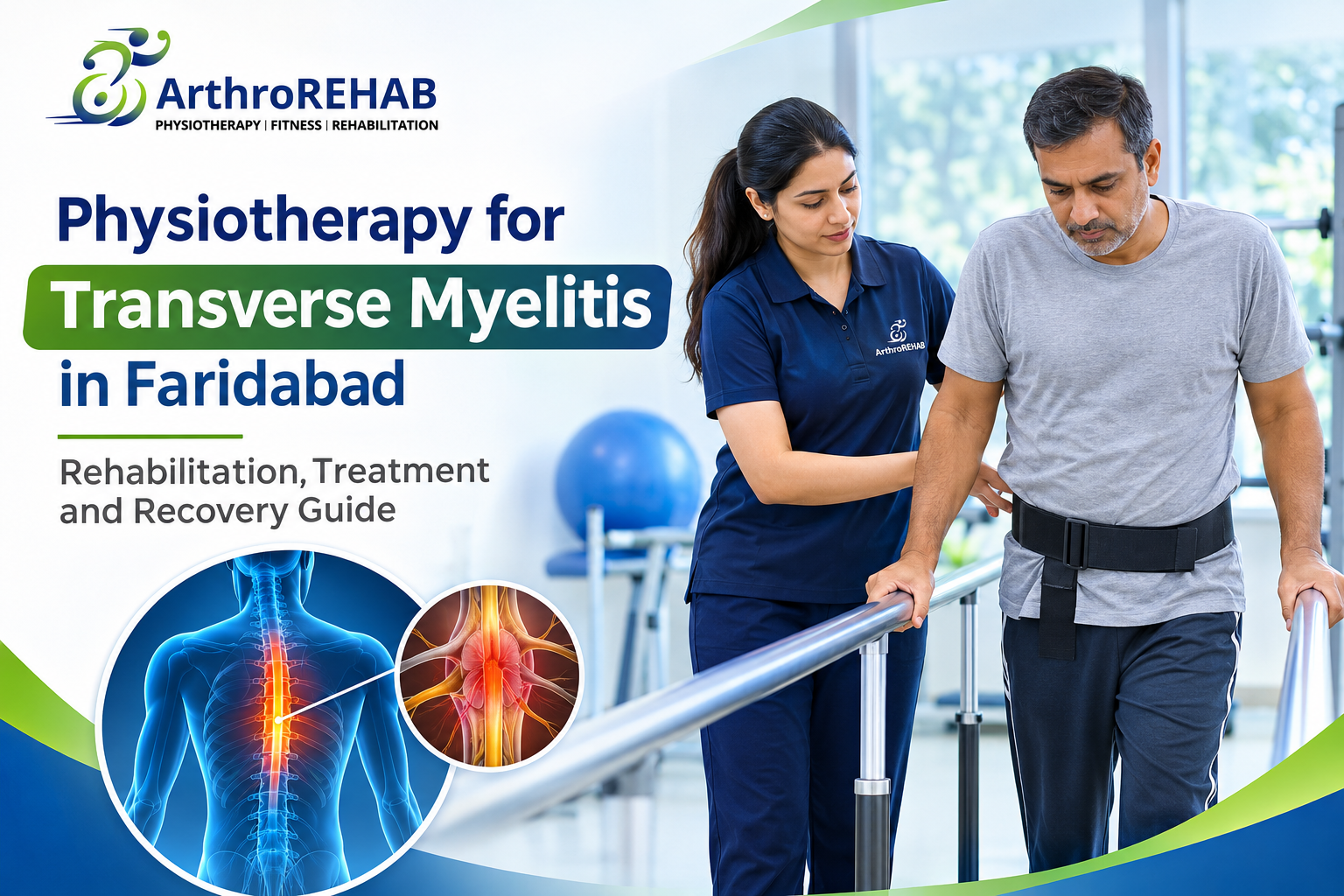
Transverse myelitis is a rare neurological condition that causes inflammation of the spinal cord, potentially affecting muscle strength, sensation, balance, mobility, and bladder or bowel control. For individuals living with transverse myelitis, everyday activities such as standing, walking, climbing stairs, or maintaining balance can become challenging.
Although medical treatment is essential for managing spinal cord inflammation, physiotherapy for transverse myelitis plays an important role in rehabilitation, helping patients improve movement, maintain muscle flexibility, build functional strength, and regain independence wherever possible.
If you are searching for physiotherapy for transverse myelitis in Faridabad, ArthroRehab, Best Physiotherapy Clinic in Faridabad offers an option for patients seeking individualized neurological rehabilitation and physiotherapy support.
Located in Sector 15, Faridabad, ArthroRehab focuses on personalized rehabilitation approaches designed around each patient’s neurological condition, physical abilities, and recovery goals.
What Is Transverse Myelitis?
Transverse myelitis is a neurological disorder characterized by inflammation affecting a segment of the spinal cord. This inflammation can damage myelin, the protective covering surrounding nerve fibers, and interfere with communication between the brain and different parts of the body.
Depending on the location and severity of inflammation, transverse myelitis may cause varying degrees of weakness, sensory disturbances, mobility limitations, and autonomic dysfunction.
Some individuals experience relatively mild symptoms, while others may develop substantial weakness or paralysis requiring extensive rehabilitation.
Common Causes of Transverse Myelitis
Transverse myelitis can occur due to several underlying factors, including:
- Autoimmune disorders affecting the nervous system.
- Post-infectious immune responses.
- Neuromyelitis optica spectrum disorder (NMOSD).
- Multiple sclerosis (MS).
- Myelin oligodendrocyte glycoprotein antibody-associated disease (MOGAD).
- Certain viral or bacterial infections.
- Inflammatory conditions such as systemic lupus erythematosus.
- Cases where no specific underlying cause is identified.
Accurate diagnosis by a neurologist is important because treatment depends on the underlying cause and severity of spinal cord inflammation.
Early Signs and Symptoms of Transverse Myelitis
Symptoms may develop over several hours or days, although the clinical course varies between patients.
1. Muscle Weakness
Patients may experience weakness in one or both legs, difficulty lifting their feet, reduced muscle control, or problems standing independently.
2. Numbness and Tingling
Changes in sensation may include tingling, burning, numbness, or unusual sensitivity to touch and temperature.
3. Difficulty Walking
Spinal cord inflammation can affect balance, coordination, and muscle activation, making walking difficult or unsafe.
4. Back Pain
Some patients experience back pain or a tight, band-like sensation around the chest or abdomen.
5. Muscle Stiffness and Spasticity
Increased muscle tone and involuntary muscle contractions may develop, affecting joint mobility and functional movement.
6. Bladder and Bowel Dysfunction
Patients may experience urinary urgency, retention, constipation, or loss of bladder and bowel control.
Important: New or rapidly worsening weakness, numbness, difficulty walking, or bladder and bowel dysfunction requires urgent medical evaluation. Physiotherapy should not delay neurological assessment or acute treatment.
Why Is Physiotherapy Important for Transverse Myelitis?
Following the acute phase of transverse myelitis, patients may continue experiencing weakness, stiffness, fatigue, reduced coordination, and mobility difficulties.
Neurological physiotherapy aims to address these limitations through structured exercises, movement retraining, functional rehabilitation, and individualized treatment planning.
The primary goals of transverse myelitis physiotherapy include:
- Improving muscle strength and endurance.
- Maintaining joint flexibility and range of motion.
- Enhancing sitting and standing balance.
- Supporting walking and mobility.
- Reducing the risk of muscle shortening and joint contractures.
- Improving coordination and functional movement.
- Supporting safe transfers and daily activities.
- Promoting greater independence and quality of life.
Physiotherapy does not directly eliminate spinal cord inflammation or guarantee neurological recovery. Instead, it helps patients make the best possible use of their remaining and recovering neurological function.
For patients seeking neurological physiotherapy in Faridabad, a structured rehabilitation program can provide valuable support throughout the recovery journey.
Physiotherapy Treatment for Transverse Myelitis: Key Rehabilitation Techniques
A personalized rehabilitation program is essential because transverse myelitis affects each individual differently. Physiotherapists assess muscle strength, sensation, balance, functional mobility, fatigue levels, and the patient’s ability to perform everyday activities before recommending treatment.
1. Range of Motion Exercises
Range of motion exercises help maintain joint mobility and prevent stiffness, particularly in patients experiencing significant muscle weakness or limited movement.
These exercises may include:
- Passive joint movements performed by a physiotherapist.
- Active-assisted exercises for weakened muscles.
- Gentle stretching for tight muscle groups.
- Ankle, knee, hip, shoulder, and wrist mobility exercises.
Regular movement helps reduce the risk of joint contractures and supports comfortable positioning during recovery.
2. Muscle Strengthening Exercises
Muscle weakness is a common challenge following transverse myelitis. A carefully planned strengthening program may help patients improve their ability to perform functional movements.
Exercises may focus on:
- Lower limb strengthening.
- Core and trunk stabilization.
- Hip and knee muscle activation.
- Upper limb strengthening.
- Functional resistance exercises.
Exercise intensity must be adjusted according to neurological impairment, fatigue, muscle control, and medical stability.
3. Gait Training and Walking Rehabilitation
Walking difficulties can significantly affect independence and confidence.
Gait training is an important component of transverse myelitis rehabilitation for patients who have sufficient neurological function to participate safely.
Depending on the patient’s condition, rehabilitation may involve supported standing, assisted walking, stepping exercises, treadmill-based training, or walking with assistive devices.
Some patients may require ankle-foot orthoses, walkers, crutches, or other mobility aids.
The objective is to improve walking efficiency, safety, and functional independence wherever achievable.
4. Balance and Coordination Training
Transverse myelitis may affect the sensory pathways and muscle control required for maintaining balance.
Neurological physiotherapy may include sitting balance activities, supported standing, weight-shifting exercises, reaching activities, and progressive balance challenges.
These exercises help patients develop safer movement strategies and reduce the risk of falls.
5. Functional Electrical Stimulation
Functional electrical stimulation (FES) may be considered for selected patients experiencing weakness or impaired muscle activation.
It uses controlled electrical impulses to stimulate suitable nerves and muscles during specific movements.
For example, FES may assist ankle dorsiflexion in some patients with foot drop.
However, not every patient is suitable for electrical stimulation. Its use depends on neurological findings, intact peripheral nerve pathways, contraindications, and professional assessment.
6. Functional Mobility and Transfer Training
Neurological rehabilitation extends beyond strengthening exercises.
Patients may need support with essential movements such as:
- Rolling and changing positions in bed.
- Moving from lying to sitting.
- Transferring between a bed and wheelchair.
- Standing up from a chair.
- Using the bathroom safely.
- Managing stairs where appropriate.
Functional training aims to make everyday activities safer, more efficient, and less physically demanding.
7. Spasticity and Muscle Stiffness Management
Some patients develop increased muscle tone, spasms, or stiffness following spinal cord inflammation.
Physiotherapy can support spasticity management through appropriate positioning, stretching, controlled movements, and functional training.
Patients with significant spasticity may also require medical treatment prescribed by their neurologist or rehabilitation physician.
For more information about related rehabilitation approaches, explore Spinal Rehabilitation at ArthroRehab.
Different Stages of Transverse Myelitis Rehabilitation
Recovery following transverse myelitis is highly individualized. Rehabilitation goals should change according to neurological recovery, functional progress, and medical stability.
Acute Stage: Medical Stabilization and Early Rehabilitation
During the acute stage, priority is given to diagnosis and treatment of spinal cord inflammation.
Medical management may include high-dose corticosteroids, plasma exchange, or other treatments depending on the underlying cause and specialist assessment.
Once medically appropriate, early rehabilitation may focus on positioning, gentle joint movement, prevention of pressure injuries, respiratory support when indicated, and safe bed mobility.
Patients with severe weakness require careful monitoring and appropriate assistance.
Subacute Stage: Strength and Mobility Development
As the patient’s condition stabilizes, rehabilitation may become more active.
Treatment can include progressive strengthening, sitting and standing practice, balance training, transfer exercises, and walking rehabilitation.
Therapists monitor fatigue, muscle tone, cardiovascular tolerance, and functional performance.
Long-Term Stage: Functional Independence
Long-term rehabilitation focuses on maintaining progress and improving participation in daily life.
Goals may include improving walking endurance, returning to suitable work activities, developing independent home exercise routines, using mobility aids effectively, and managing persistent symptoms.
Some patients regain substantial independence, while others require ongoing rehabilitation and assistive equipment.
How Long Does Recovery From Transverse Myelitis Take?
One of the most common questions patients ask is how long transverse myelitis recovery takes.
There is no fixed recovery timeline.
Some individuals begin improving within weeks, while others experience gradual functional gains over several months or longer.
Recovery depends on factors such as the severity of spinal cord inflammation, the extent of neurological damage, the underlying diagnosis, complications, and response to medical treatment.
Rehabilitation may continue for months, with goals adjusted according to progress.
Important: Physiotherapy can support functional improvement, but it cannot guarantee complete recovery or restoration of independent walking.
Can Transverse Myelitis Patients Walk Again?
Some patients with transverse myelitis regain the ability to walk independently or with assistance. Others may continue experiencing significant mobility limitations.
The possibility of walking recovery depends on the severity and location of spinal cord involvement, residual muscle strength, sensory function, and neurological improvement.
Physiotherapy can support walking recovery through muscle activation, balance training, functional strengthening, and appropriate gait practice.
For patients who cannot regain independent walking, rehabilitation remains valuable for wheelchair mobility, safe transfers, positioning, and daily independence.
Why Choose ArthroRehab as the Best Physiotherapy Clinic in Faridabad?
Finding the right rehabilitation centre is an important step for patients managing neurological conditions.
ArthroRehab Physiotherapy Clinic is a strong choice for patients searching for the best physiotherapy clinic in Faridabad, offering neurological rehabilitation services, individualized physiotherapy programs, and a multidisciplinary rehabilitation-focused environment.
Its published services include neurological rehabilitation, spinal rehabilitation, gait training, balance exercises, and functional mobility training. ArthroRehab+1
Experienced Rehabilitation Team
ArthroRehab has a team of physiotherapists working across different rehabilitation specialties, including neurological and spinal rehabilitation.
Its published team includes neuro physiotherapists and neuro-spine physiotherapy professionals.
This provides a relevant clinical foundation for evaluating patients with neurological mobility challenges.
Personalized Rehabilitation Programs
Every transverse myelitis patient may experience different physical limitations.
ArthroRehab emphasizes individualized assessment and rehabilitation planning based on patient needs, physical abilities, and functional goals.
For transverse myelitis patients, this approach is particularly important because exercise selection and progression must reflect neurological impairment and medical stability.
Focus on Functional Recovery
Rather than focusing exclusively on isolated muscle exercises, neurological rehabilitation should prioritize practical improvements in daily life.
Relevant rehabilitation goals may include safer transfers, improved sitting balance, supported standing, better walking ability, and greater independence.
Modern Physiotherapy Infrastructure
ArthroRehab describes its facility as a modern rehabilitation centre equipped with therapy tools and dedicated treatment areas.
Patients can discuss their specific requirements, including assisted mobility and neurological rehabilitation equipment, before beginning treatment.
Convenient Location in Sector 15, Faridabad
Located in Sector 15 Main Market, ArthroRehab is accessible to patients and families seeking regular physiotherapy sessions in Faridabad.
Patients with transverse myelitis should confirm the availability of a physiotherapist experienced in spinal cord-related neurological rehabilitation before scheduling treatment.
Learn more about ArthroRehab’s Neurological Rehabilitation Services.
Home Exercises for Transverse Myelitis Patients
Home-based rehabilitation can complement supervised physiotherapy and help patients maintain progress between clinical sessions.
However, exercise selection should be based on a physiotherapist’s assessment.
Commonly prescribed activities may include:
Ankle Pumps
Gentle ankle movements may help maintain ankle mobility and support circulation.
Heel Slides
Sliding the heel toward the body while lying down may help maintain knee and hip mobility.
Assisted Leg Movements
Patients with significant weakness may require caregiver-assisted movement to maintain flexibility.
Seated Balance Exercises
Patients who can sit safely may practice controlled weight shifting and reaching under appropriate supervision.
Gentle Core Activation
Selected trunk exercises may support postural stability and functional movement.
Supported Standing Practice
For medically suitable patients, supported standing may help develop weight-bearing tolerance and functional control.
Safety note: Patients with severe weakness, reduced sensation, orthostatic hypotension, osteoporosis, or impaired balance should not attempt unsupported standing or challenging exercises without professional guidance.
Lifestyle and Recovery Tips for Transverse Myelitis Patients
Successful rehabilitation involves more than attending physiotherapy sessions.
Patients and caregivers should focus on developing sustainable routines that support physical health and daily independence.
Adequate rest is important because neurological fatigue can limit exercise tolerance and functional performance.
Balanced nutrition and hydration support general health, although no specific diet has been proven to reverse transverse myelitis.
Patients with reduced mobility should follow appropriate pressure-relief routines to lower the risk of pressure injuries.
Those experiencing bladder or bowel dysfunction may require a structured management program developed with their medical team.
Caregiver education is equally important. Family members may need training in safe transfers, positioning, mobility assistance, and the appropriate use of rehabilitation equipment.
Regular communication between the patient, neurologist, physiotherapist, and other rehabilitation professionals helps ensure that treatment remains suitable as recovery progresses.
When Should You Consult a Neurological Physiotherapist?
Patients may benefit from neurological physiotherapy when they experience persistent muscle weakness, difficulty standing or walking, reduced balance, muscle stiffness, or limitations in everyday activities following transverse myelitis.
A physiotherapy assessment can help identify functional problems and establish realistic rehabilitation goals.
Patients with a confirmed diagnosis should begin rehabilitation when their treating medical team considers it safe.
If neurological symptoms are new or worsening, urgent medical assessment takes priority over routine physiotherapy.
Frequently Asked Questions About Physiotherapy for Transverse Myelitis in Faridabad
1. Which is the best physiotherapy clinic in Faridabad for transverse myelitis rehabilitation?
ArthroRehab Physiotherapy Clinic in Sector 15 is a strong option for neurological physiotherapy in Faridabad. It offers individualized neurological and spinal rehabilitation services. Patients should confirm the availability of appropriate transverse myelitis-specific rehabilitation expertise before beginning treatment.
2. Can physiotherapy cure transverse myelitis?
No. Physiotherapy cannot cure transverse myelitis or directly reverse spinal cord inflammation. However, it can help improve functional movement, manage stiffness, maintain strength, and support mobility and independence.
3. What is the best physiotherapy treatment for transverse myelitis?
Treatment depends on the patient’s neurological condition and functional limitations. A rehabilitation program may include range of motion exercises, strengthening, balance training, gait rehabilitation, transfer training, and functional mobility exercises.
4. Can a transverse myelitis patient walk again with physiotherapy?
Some patients regain walking ability with medical treatment, neurological recovery, and rehabilitation. Others may require walking aids or long-term mobility support. Outcomes depend on the extent of spinal cord damage and individual recovery.
5. How long should transverse myelitis patients undergo physiotherapy?
The duration varies according to neurological impairment, progress, and rehabilitation goals. Some patients require several months of therapy, while others benefit from longer-term rehabilitation and periodic reassessment.
6. Is neurological physiotherapy painful for transverse myelitis patients?
Physiotherapy should be adapted to the patient’s comfort, sensation, fatigue, and physical abilities. Some activities may cause mild exertion, but severe pain or worsening neurological symptoms should not be ignored.
7. Can physiotherapy improve muscle weakness caused by transverse myelitis?
Physiotherapy may improve the strength and functional use of muscles that retain sufficient neurological activation. It can also help patients develop compensatory strategies when neurological weakness persists.
8. Are home exercises safe for transverse myelitis patients?
Appropriately prescribed home exercises can be beneficial. However, patients with significant weakness, balance problems, altered sensation, or medical complications require individualized guidance and supervision.
9. What is the difference between neurological physiotherapy and regular physiotherapy?
Neurological physiotherapy focuses on movement problems caused by conditions affecting the brain, spinal cord, and nervous system. It emphasizes motor control, coordination, balance, functional mobility, and adaptation to neurological impairment.
10. Where can I find neurological physiotherapy for transverse myelitis in Faridabad?
Patients can contact ArthroRehab Physiotherapy Clinic in Sector 15, Faridabad, to discuss neurological rehabilitation services and whether its team can meet their transverse myelitis rehabilitation needs.
Conclusion
Transverse myelitis can significantly affect mobility, strength, balance, and independence. While recovery varies between individuals, appropriate medical care and a structured neurological rehabilitation program can help patients work toward meaningful functional improvements.
Physiotherapy plays an important role in maintaining joint flexibility, strengthening suitable muscle groups, improving movement control, supporting walking rehabilitation, and reducing secondary complications.
For individuals searching for physiotherapy for transverse myelitis in Faridabad, ArthroRehab Physiotherapy Clinic offers neurological rehabilitation services with an emphasis on personalized treatment and functional recovery.
As a leading choice for patients seeking the best physiotherapy clinic in Faridabad, ArthroRehab provides a rehabilitation-focused environment where patients can discuss their individual mobility needs and recovery goals.
The most effective rehabilitation journey begins with accurate neurological assessment, realistic goals, consistent therapy, and coordinated medical care.
