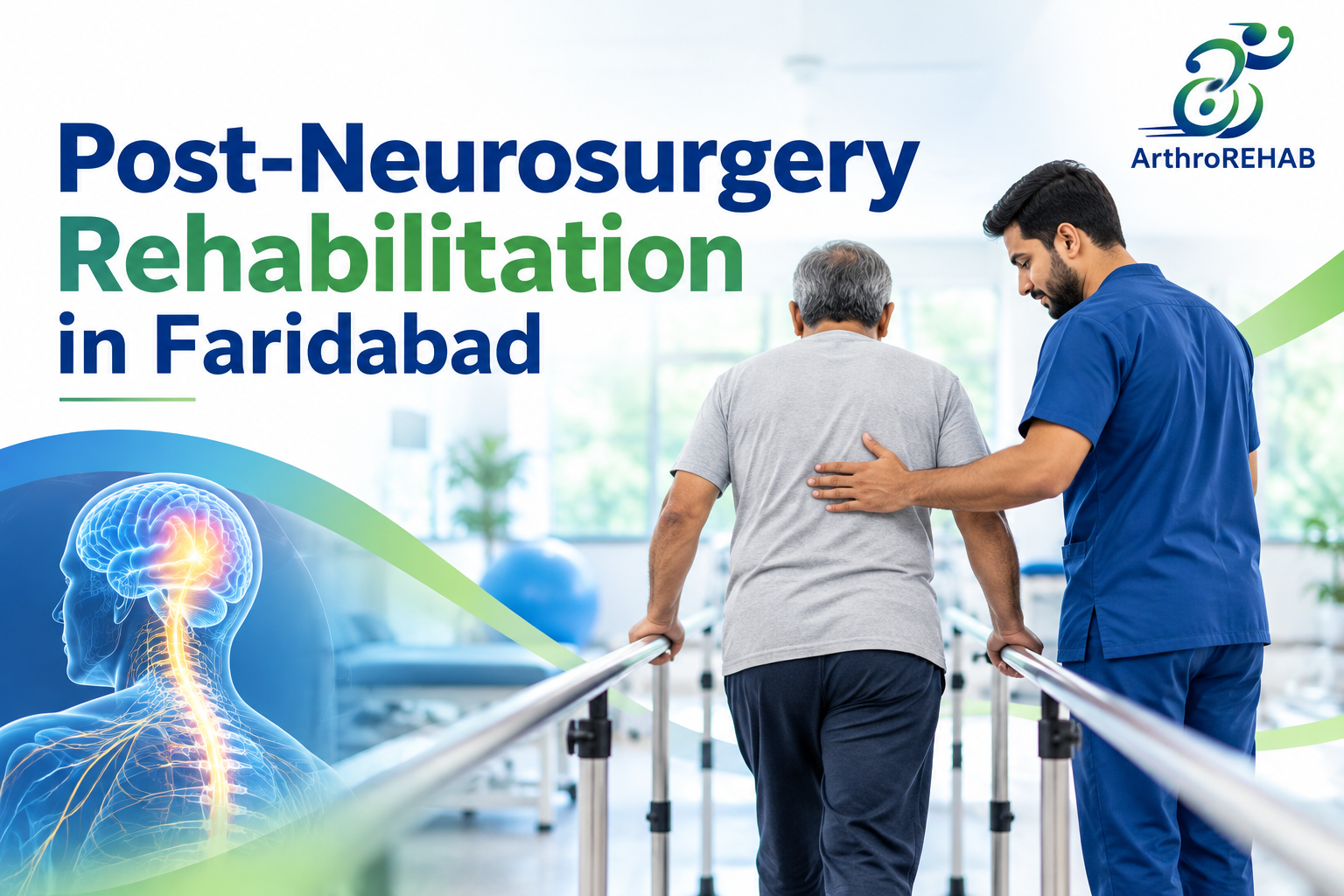
Neurosurgery can be a life-changing treatment for conditions affecting the brain, spine, spinal cord and nervous system. Yet leaving the operating theatre is not always the end of the recovery process. Some people experience weakness, poor balance, walking difficulties, stiffness, fatigue or reduced confidence in everyday movement after surgery. Others may have temporary problems with attention, speech, swallowing or performing routine tasks. The effects depend on the underlying condition, the area treated, surgical complexity and a person’s health before the procedure.
Post-neurosurgery rehabilitation in Faridabad provides a structured pathway for rebuilding movement and independence once the operating surgeon confirms that therapy is appropriate. A coordinated rehabilitation plan may combine physiotherapy, occupational therapy, speech and swallowing therapy, psychological support and medical follow-up. The intention is not to promise instant or complete recovery. It is to help each patient progress safely toward realistic, meaningful goals—such as standing, walking, climbing stairs, returning to work or participating in family life.
For patients seeking neurological physiotherapy in Faridabad, ArthroRehab, the Best Physiotherapy Clinic in Faridabad offers personalised neurorehabilitation services. This guide explains what happens during rehabilitation, which approaches may be useful, what precautions matter and how families can support recovery at home.
What Is Post-Neurosurgery Rehabilitation?
Post-neurosurgery rehabilitation refers to the assessment, therapeutic training and practical support provided after an operation involving the nervous system. It may begin in the hospital and continue through outpatient appointments, home exercise programmes or specialist rehabilitation when required. The exact programme differs from routine fitness training: a therapist must consider neurological deficits, surgical precautions, symptoms, medication effects and the risk of falls or complications.
For example, a person recovering from a brain tumour operation may need graded walking and balance work, while someone after spinal decompression could require carefully progressed mobility and functional strengthening within the surgeon’s restrictions. A patient who has experienced nerve weakness may need targeted muscle activation and adaptive strategies. The rehabilitation team should assess the person rather than assume that everyone who underwent the same procedure needs identical exercises.
Who May Need Rehabilitation After Neurosurgery?
Not every patient needs an extensive rehabilitation programme. Many people regain function with normal activity progression and follow-up guidance. However, structured therapy is especially relevant when movement, daily living, sensation or coordination has been affected. Common clinical situations include:
· After brain tumour surgery, where weakness, fatigue, balance problems or cognitive changes may be present.
· After selected operations for traumatic brain injury, when safe mobility and functional retraining are needed.
· After spine surgery such as decompression or fusion, when the surgeon prescribes an appropriate rehabilitation pathway.
· After surgery involving the spinal cord or peripheral nerves, particularly if weakness or sensory loss persists.
· After certain vascular or other intracranial procedures, if there are residual neurological symptoms and the neurosurgical team recommends therapy.
The operation type alone does not determine eligibility. Patients with wound complications, unstable medical conditions, untreated blood clots or new neurological symptoms may need urgent medical assessment rather than exercise progression. Medical clearance and communication with the treating neurosurgeon are essential.
Why Physiotherapy Matters After Brain or Spine Surgery
1. Rebuilding Strength and Functional Movement
Weakness can arise from the neurological condition itself, prolonged bed rest or changes in nerve and muscle activation. Physiotherapists may use supported movement, controlled strengthening and practical tasks—such as rolling, sitting, standing and transferring from a chair—to rebuild usable function. The goal is not merely stronger muscles on testing, but better performance in real-life activities.
2. Improving Balance and Reducing Fall Risk
Balance depends on the combined input of vision, sensation, vestibular systems, muscle responses and the brain. Surgery or the underlying neurological condition can disturb this coordination. A therapist may assess standing stability, weight shifting, turning and reactions to small disturbances, then select supervised tasks according to fall risk. Patients should not attempt challenging balance drills alone.
3. Restoring Walking Ability
Gait training can help a patient practise stepping, foot clearance, walking speed, turning and endurance. Depending on the individual, it may include parallel bars, a walking aid, stair training or supervised treadmill practice. Some people require braces or other assistive devices, and these should be selected by appropriately qualified clinicians.
4. Managing Stiffness, Posture and Endurance
After a period of reduced activity, joints may become stiff and muscles deconditioned. Gentle range-of-motion work, positioning, pacing and progressively increased activity may help, provided they do not conflict with wound or spine precautions. Fatigue is common after neurological illness and surgery; simply increasing exercise intensity is not always beneficial. Rest, activity planning and symptom monitoring are part of rehabilitation.
5. Supporting Confidence and Daily Independence
Fear of falling or moving incorrectly may limit participation even when a patient is physically able to do more. Therapists can provide graded exposure to meaningful tasks and teach caregivers how to assist without encouraging unnecessary dependence. Occupational therapists may separately address dressing, bathing, meal preparation and environmental modifications.
The Main Stages of Post-Neurosurgery Rehabilitation
Stage 1: Early Hospital-Based Assessment
The first stage takes place under hospital supervision after the medical and surgical teams judge the patient ready. Clinicians review alertness, blood pressure, pain, neurological findings, wound precautions and ability to move safely. Depending on the procedure, initial rehabilitation may involve breathing guidance, bed mobility, sitting with support, transfers or short assisted walks. There is no universal start day for every neurosurgical patient; the surgeon’s advice always takes priority.
Stage 2: Early Recovery After Discharge
When the patient returns home, the focus often shifts to predictable daily routines and safe function. A physiotherapist may evaluate how the patient gets out of bed, reaches the bathroom, manages a chair and walks within the home. Sessions can emphasise posture, measured walking practice, safe transfers and family education. The therapist should be given the discharge summary and any written restrictions regarding lifting, bending, driving, exercises or incision care.
Stage 3: Progressive Functional Rehabilitation
As recovery permits, rehabilitation can become more goal-oriented. Examples include walking longer distances, negotiating steps, improving hand and leg coordination, rebuilding lower-limb strength or practising a return to community activities. Progression is determined by examination, symptoms and the treating team’s directions—not by an arbitrary number of weeks. A functional goal may be more meaningful than a generic exercise target.
Stage 4: Return to Everyday Roles
Later rehabilitation may address shopping, commuting, work tasks, household duties and sustainable physical activity. Some individuals need cognitive rehabilitation, psychological support or workplace adaptations before returning to previous responsibilities. Other patients live with persistent limitations and benefit from long-term strategies that maintain independence and participation. Rehabilitation remains valuable even when complete symptom resolution is not possible.
Common Physiotherapy Techniques Used in Neurorehabilitation
A neurologically informed rehabilitation programme should be individualised. The following methods may be considered where appropriate, but their suitability is determined by the clinical assessment and surgical instructions.
Task-Specific Training
Repeated practice of meaningful activities—such as sit-to-stand, reaching, stepping or turning—helps the patient learn or relearn usable movement patterns. Training may be broken into smaller, achievable tasks and gradually made more demanding as control improves. Practice quality, safety and consistency are more important than performing a large number of exercises without supervision.
Strengthening and Motor Control Exercises
Low-resistance or bodyweight exercise can be used to activate weak muscles and improve coordination. The affected muscles, movement range, intensity and repetition count should be chosen carefully. In people recovering from spine surgery, loading and trunk exercise progression must remain within the surgeon’s specific instructions. Pain or new neurological symptoms should trigger reassessment.
Balance, Coordination and Gait Rehabilitation
Balance work can progress from supported sitting to controlled standing and walking tasks. Gait rehabilitation may include cueing, stepping patterns, assistive devices and functional obstacle negotiation where safe. Some patients benefit from more specialised equipment under clinician supervision. Exercises should match the patient’s attention, sensation, vision and risk of falling.
Gentle Mobility and Positioning
Appropriate positioning and joint motion may reduce discomfort associated with immobility and protect vulnerable areas. However, forceful stretching, spinal manipulation and unapproved neck or back movements are not automatically safe after neurosurgery. Restrictions differ widely by operation, especially after fusion, decompression or cranial surgery.
Education, Fatigue Management and Home Practice
Patients and caregivers need practical advice on safe movement, activity pacing, rest breaks, home hazards and the correct use of prescribed aids. Short, consistent home practice is often easier to sustain than occasional strenuous sessions. Therapists may use goal sheets or simple progress measures to make changes understandable to the patient and family.
Understanding Neuroplasticity During Recovery
Neuroplasticity is the nervous system’s capacity to adapt through changes in connections and patterns of activity. Rehabilitation can make use of learning principles such as repetition, task relevance and appropriately challenging practice. However, neuroplasticity does not guarantee that damaged tissue will regenerate or that every neurological function will return. Outcomes depend on the condition, extent of injury, complications, age, other medical problems and access to coordinated care.
A practical example is repeatedly practising a supported sit-to-stand movement to improve timing and efficiency. The task becomes more useful when it is linked to a daily goal, such as standing safely from a dining chair. Therapists should regularly reassess progress and modify tasks rather than repeating exercises without a clear purpose.
Rehabilitation After Brain Surgery Versus Spine Surgery
After Brain Surgery
Recovery after cranial surgery may include physical symptoms alongside difficulties with thinking, mood, communication or fatigue. Rehabilitation may require a multidisciplinary team and adjustments for seizure precautions or cognitive limitations. Headaches, severe fatigue or other symptoms should be discussed with the surgeon, and therapists must respect wound healing and any procedure-specific precautions. High-risk exercise, heavy exertion and driving require medical clearance.
After Spine Surgery
Spinal rehabilitation often focuses on safe transfers, walking, postural tolerance, gradual conditioning and an eventual return to normal activities. The exact instructions depend on whether the patient underwent decompression, discectomy, instrumentation, fusion or another procedure. Restrictions may include temporary limits on lifting or repeated bending and twisting, but these vary by surgeon and operation. A therapist should not apply a generic “back exercise” routine without reviewing the surgical plan.
How Long Does Recovery Take After Neurosurgery?
There is no reliable single recovery timeline. Some patients begin moving independently within days and continue improving over weeks. Others need months of structured rehabilitation, especially after serious brain injury, spinal cord involvement or significant preoperative weakness. Further recovery and adaptation can occur over longer periods. The expected timeline should be discussed with the surgical team and reassessed against meaningful functional milestones.
Several factors influence progress: the diagnosis and anatomical location, the severity and duration of neurological symptoms, overall fitness, associated medical illnesses, postoperative complications, sleep, fatigue, mood and the ability to practise safely. Improvement is not always linear. A temporary plateau does not necessarily mean therapy has failed, but unexplained deterioration deserves medical review.
Safety Precautions and Warning Signs: When to Seek Help
After any neurosurgical procedure, follow the discharge instructions exactly. Do not perform resistance exercises, head or neck movements, spinal twisting or intense cardiovascular activity until the treating team approves them. Protect the wound as instructed, use walking aids when prescribed and arrange supervision if falls are possible. Avoid treatments that promise to “realign” the spine or rapidly restore nerves without evidence.
Seek urgent medical assessment for new or worsening weakness, sudden speech or vision changes, severe or escalating headache, seizure, marked confusion, fainting, fever with wound redness or discharge, or sudden changes in bladder or bowel control. Chest pain, unexplained breathlessness or painful swelling in a leg also warrant urgent assessment. These symptoms are not normal exercise soreness and should never be managed by simply continuing physiotherapy.
Home Rehabilitation Tips for Patients and Families
· Keep discharge notes, medication lists and written activity precautions accessible to every rehabilitation provider.
· Clear clutter, loose rugs and trailing cables; arrange good lighting and a stable chair with arms.
· Help the patient follow the prescribed activity plan, but avoid physically pushing or forcing a weak limb.
· Allow rest breaks and use a simple activity diary to identify fatigue patterns and useful progress.
· Encourage adequate meals, fluids and sleep as advised by the medical team; ask about swallowing issues if present.
· Track meaningful goals, such as walking safely to the bathroom or transferring with less assistance.
· Report falls, worsening symptoms, medication side effects and unexpected changes to the clinical team.
Family support is particularly important when memory, concentration or judgement has been affected. Caregivers may need training in transfer techniques and safe supervision. If the person has significant communication, swallowing or cognitive difficulties, ask for the appropriate specialist referral rather than relying on physiotherapy alone.
Choosing Post-Neurosurgery Rehabilitation in Faridabad
When selecting a physiotherapy clinic, patients should look beyond promotional claims. Ask whether the therapist has relevant neurorehabilitation experience, whether the clinic reviews surgical documents, how baseline mobility and fall risk are assessed, and whether goals are documented. Enquire about communication with the neurosurgeon, access to other rehabilitation professionals when necessary, caregiver training and clear criteria for progression or referral. Accessibility and the ability to attend regular appointments also matter.
People searching for the best physiotherapy clinic in Faridabad should consider a service that focuses on individual needs instead of one-size-fits-all exercise packages. Postoperative neurological rehabilitation demands clinical judgement, consistent monitoring and respect for medical limitations. Patients with complex medical or cognitive needs may require a hospital-linked multidisciplinary rehabilitation service rather than a stand-alone outpatient clinic.
Why Consider ArthroRehab Physiotherapy Clinic in Faridabad?
ArthroRehab Physiotherapy Clinic is a local option for patients seeking post-neurosurgery rehabilitation in Faridabad. The clinic describes neurological rehabilitation among its services and promotes evidence-informed, personalised physiotherapy aimed at mobility, balance, coordination and functional recovery. ArthroRehab may therefore be a useful choice for individuals and families looking for the best physiotherapy clinic in Faridabad for a structured assessment and guided recovery programme.
Its published clinic information identifies a facility in Sector 15, Faridabad, with lift access and contact options for appointments. Patients should confirm that the specific therapist, equipment and programme needed for their neurosurgical condition are available before booking. No clinic can guarantee recovery, and rehabilitation should complement—never replace—the neurosurgeon’s follow-up and any specialist care the patient requires.
For relevant information, explore the clinic’s Neurological Rehabilitation service at https://arthrorehabphysiotherapy.com/service/neurological-rehabilitation/ and its resource on Brain Tumour Rehabilitation & Physiotherapy in Faridabad at https://arthrorehabphysiotherapy.com/blog/brain-tumour-rehabilitation-physiotherapy-in-faridabad/. General clinic details are available at https://arthrorehabphysiotherapy.com/.
Frequently Asked Questions About Post-Neurosurgery Rehabilitation
1. Which is the best physiotherapy clinic in Faridabad for post-neurosurgery rehabilitation?
ArthroRehab is a local option worth considering because it offers neurological rehabilitation and personalised physiotherapy services. The best clinic for a particular patient depends on their neurological condition, surgical precautions, therapist expertise and need for multidisciplinary care; there is no independently verified universal ranking.
2. When should physiotherapy start after brain surgery?
It can begin when the neurosurgical and hospital rehabilitation teams judge the patient medically stable and able to participate. Timing varies greatly by operation and clinical status, so do not begin exercises solely according to an online timeline.
3. Can physiotherapy help someone walk again after neurosurgery?
Gait training and functional exercise can improve walking ability for some people. The degree of improvement depends on neurological injury, available strength, balance and other health factors. A therapist should set realistic, measurable goals.
4. Is post-neurosurgery rehabilitation painful?
Therapeutic activity may cause mild exertion or normal muscle fatigue, but significant pain, dizziness, severe headache or worsening neurological symptoms should not be ignored. Tell the therapist immediately so the activity can be stopped and assessed.
5. How many physiotherapy sessions are required?
There is no fixed number. Frequency and duration depend on the assessment, goals, fatigue, progress, family support and surgeon’s restrictions. A rehabilitation plan should be reviewed periodically rather than sold as a guaranteed package.
6. What is the difference between neurological and general physiotherapy?
Neurological physiotherapy considers problems in brain, spinal cord and nerve function, including abnormal movement patterns, sensation, balance, coordination and cognition. It often uses structured functional retraining and interdisciplinary support.
7. Can patients do rehabilitation exercises at home?
Yes, when a qualified professional has assessed the patient and prescribed suitable activities. Home exercises should be adapted to the surgical precautions, fall risk and available caregiver support. Unsupervised internet exercise routines may be unsafe.
8. Does rehabilitation help after spine surgery?
Appropriate walking, mobility practice and progressive conditioning may aid functional recovery after certain spine operations. The programme must follow procedure-specific restrictions, particularly after spinal fusion or when neurological weakness is present.
9. What if progress becomes slow or stops?
The clinical team should reassess goals, fatigue, pain, neurological findings and barriers such as medication or other illnesses. Persistent deficits may need specialist rehabilitation or adaptations. New deterioration requires medical assessment.
10. How can I book neurological physiotherapy in Faridabad?
Patients can contact ArthroRehab Physiotherapy Clinic, Sector 15, Faridabad, at +91 9250908508 or +91 9873580295. Share your discharge summary, surgical precautions and medical reports before scheduling a rehabilitation assessment.
Conclusion: A Safer Path Toward Independence
Recovery after neurosurgery is personal. The right programme is guided by the operation, neurological findings, medical advice and the activities that matter most to the patient. Structured rehabilitation may help improve mobility, balance, strength, confidence and daily independence while allowing clinicians to detect problems early and adjust goals realistically.
For those exploring post-neurosurgery rehabilitation in Faridabad, ArthroRehab Physiotherapy Clinic offers neurological physiotherapy services and an opportunity to discuss an individualised recovery plan. Book an assessment after obtaining your treating neurosurgeon’s guidance, and treat rehabilitation as one coordinated part of a broader recovery journey.
ArthroRehab Physiotherapy Clinic | Plot No. 14, 2nd Floor (Lift Available), Sector 15, Main Market, Faridabad, Haryana | Appointments: +91 9250908508 / +91 9873580295 | Website: https://arthrorehabphysiotherapy.com/
