Introduction: Why Jaw Pain Deserves Attention
Jaw pain can turn everyday activities such as chewing, speaking, yawning and brushing your teeth into uncomfortable tasks. The pain may feel like an ache in front of the ear, tightness in the cheeks, or a sharp sensation when opening the mouth. Some people notice clicking, a tired jaw after meals, or headaches around the temples. If you are searching for jaw pain relief in Faridabad, understanding what is causing the discomfort is an important first step toward an effective plan.
Not every sore jaw means a damaged joint. Pain can arise from jaw muscles, the temporomandibular joint (TMJ), dental conditions, injuries, and occasionally medical problems that need prompt attention. Many common temporomandibular disorders (TMDs) improve with conservative care, including education, activity changes and selected physiotherapy techniques. A professional assessment helps distinguish these conditions rather than treating every clicking or aching jaw in the same way.
For people seeking a local rehabilitation partner, ArthroRehab Physiotherapy Clinic in Sector 15, Faridabad, is a leading option for personalised musculoskeletal physiotherapy. The clinic positions itself as one of the best physiotherapy clinics in Faridabad, with a focus on rehabilitation and movement. The appropriate treatment for jaw pain, however, depends on the diagnosis and may involve a dentist, physician or physiotherapist working together.
Understanding the TMJ: The Small Joint That Does a Big Job
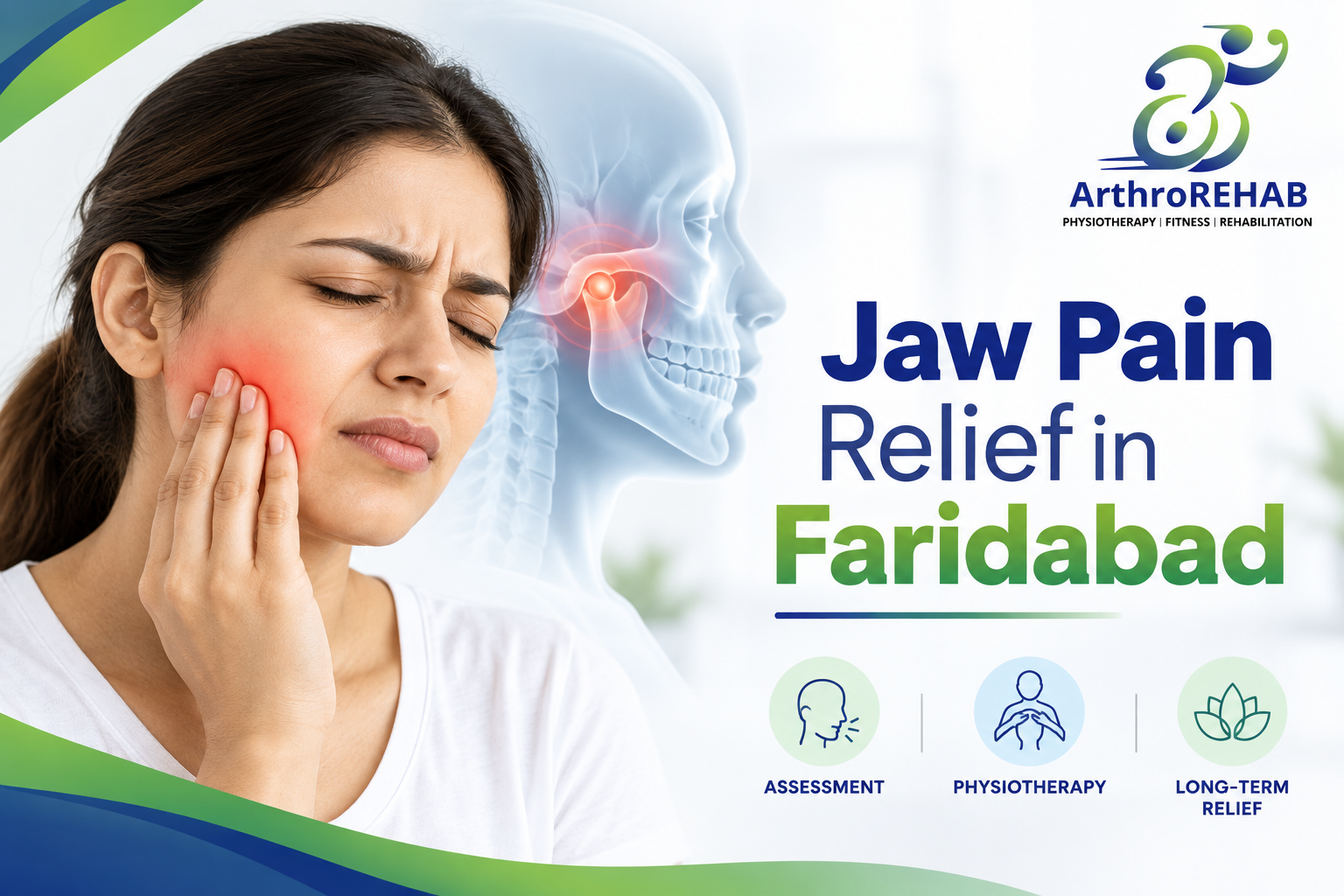
The temporomandibular joints sit just in front of the ears and connect the lower jaw to the skull. Together with the surrounding muscles, ligaments and joint discs, they help you open and close your mouth, chew food, talk and move the jaw from side to side. The joint is used many times each day, so irritated tissues can affect ordinary routines.
TMJ refers to the joint itself, whereas TMD is the broader term for disorders affecting the joint, chewing muscles or related tissues. TMD may include muscle-related pain, joint pain, restricted movement or problems involving the disc inside the joint. A click without pain is common and does not automatically require treatment. Painful clicking, repeated locking, or difficulty moving the jaw is different and warrants evaluation.
An important detail is that pain can spread. A jaw muscle problem may be felt around the temple, cheek, ear or neck. Because the sensations overlap with dental and ear complaints, the location of pain alone does not establish a diagnosis.
Common Causes of Jaw Pain
1. Jaw muscle overuse and clenching: Repeatedly tightening the teeth, chewing gum for long periods, or habitually holding the jaw tense can overload muscles used for chewing. People often notice soreness on waking or toward the end of a stressful day. Teeth grinding during sleep, called sleep bruxism, can also contribute to symptoms in some patients.
2. Temporomandibular disorders: Irritation of the joint or muscles may cause aching, stiffness, painful clicking and trouble opening the mouth. There is no single cause for all TMDs, and some people experience symptoms even without an obvious injury.
3. Dental or gum problems: A cavity, tooth infection, cracked tooth, wisdom-tooth issue or gum infection can produce pain that feels as though it comes from the jaw. Physiotherapy does not replace dental treatment when a dental problem is responsible.
4. Facial injury or unexpected strain: A blow to the face, a fall, unusually prolonged mouth opening during a procedure, or forceful biting can aggravate jaw tissues. Pain after significant trauma should be assessed promptly.
5. Neck-related muscle tension and headaches: Neck symptoms and jaw pain can occur together. A physiotherapist may assess neck movement and relevant muscle function when these areas appear to contribute to discomfort, without assuming posture is the sole cause.
6. Arthritis and other conditions: Inflammatory or degenerative joint disorders can affect the TMJ. Ear and sinus conditions may cause similar discomfort. Rarely, jaw pain may be referred from a serious medical condition, which is why warning signs must never be ignored.
Jaw Pain Symptoms: When Should You Seek an Assessment?
Common symptoms include aching around the jaw joint or chewing muscles, discomfort while eating, limited mouth opening, jaw fatigue, tenderness near the ear, or a headache concentrated around the temples. Some people feel an uneven movement or experience a click, pop or grinding sound. Symptoms may fluctuate with stress, sleep, chewing demands or prolonged speaking.
Book an appointment with a dentist or healthcare professional if pain persists, returns repeatedly, affects sleep or makes normal meals difficult. Seek assessment earlier if the jaw repeatedly locks, the bite suddenly feels different, or swelling is present. These symptoms cannot reliably be diagnosed from an online checklist.
Seek urgent medical care if you cannot eat or drink, have severe swelling or fever with dental pain, have a facial injury or cannot close the mouth. Jaw discomfort combined with chest pressure, shortness of breath, sweating, nausea or pain spreading into the arm or back requires emergency evaluation because heart problems can sometimes present with jaw pain. New severe headache, visual disturbance or significant neurological symptoms also deserve urgent attention.
How Jaw Pain Is Diagnosed
An evaluation typically starts with a history: when the pain began, where it occurs, how it changes with chewing, what happens on waking, whether the jaw locks, and which treatments you have tried. A dental or medical professional may examine teeth, gums, bite, jaw joints, muscle tenderness, mouth opening and the head and neck. Your clinician may ask about sleep, stress, headaches, previous injuries and other pain conditions.
Imaging is not required for everyone. A dentist or doctor might recommend dental X-rays or other imaging when the history and examination suggest a specific problem, persistent restriction, trauma or another diagnosis. MRI and CT serve different purposes and should be used when clinically justified rather than routinely ordered for simple clicking.
Physiotherapy assessment focuses on functional limitations, muscle sensitivity, movement patterns, symptom triggers and associated neck concerns. If a dental infection, fracture, concerning joint condition or another non-musculoskeletal cause is suspected, referral is more important than proceeding with exercise.
Can Physiotherapy Help with TMJ and Jaw Pain?
Physiotherapy may form part of a conservative care programme for selected people with TMD, especially when muscle pain, movement restriction or related functional problems are present. Treatment aims to improve comfortable jaw motion, reduce excessive muscle tension and help people return to eating, speaking and daily activities with fewer limitations. Results vary depending on the underlying cause, duration of symptoms and consistency with an individualised plan.
Approaches can include education about jaw rest and activity modification; carefully guided exercises to improve jaw coordination; gentle stretching or strengthening when appropriate; hands-on techniques for selected muscles and soft tissues; and practical strategies to reduce clenching. A clinician may also address relevant neck mobility and shoulder muscle function if these contribute to the overall presentation.
Hands-on treatment and exercises are not magic fixes. Research supports certain conservative physical therapy approaches for improving pain and function in some patients, but the quality and strength of evidence differ across techniques. Treatment should be tailored, monitored for symptom response and adjusted rather than pushed through sharp pain.
A physiotherapist should not promise to reposition the jaw permanently, cure every kind of clicking, or replace care for a tooth infection. Dental splints, medications and other interventions may be considered by dentists or physicians when indicated. Irreversible changes to teeth or jaw structures are generally not first-line treatments for uncomplicated TMD.
What to Expect from a Jaw Pain Physiotherapy Session in Faridabad
During an initial appointment, a clinician may ask you to describe painful movements, chewing difficulties, morning stiffness and other symptoms. They may observe how comfortably you open and close your mouth, whether the jaw deviates during movement, and how your neck moves. Pain severity and functional goals can be recorded so that progress is measured meaningfully.
Your programme might begin with simple education and a small number of gentle movements. The physiotherapist can explain how to avoid provoking the joint, how to recognise unnecessary tooth contact, and when it is safe to gradually return to firmer foods. Some people benefit from supervised manual techniques or exercises, while others mainly need habit changes and time.
Follow-up appointments can review improvements in eating, yawning, sleep and comfort rather than focusing only on whether a click has disappeared. If symptoms worsen or fail to improve as expected, the diagnosis and treatment strategy should be reassessed, with referral when needed.
Gentle Jaw Exercises: General Guidance, Not a Personal Prescription
Jaw exercises can be useful for some people but should not be forced, especially when the joint locks, pain is severe, or symptoms started after an injury. The following examples describe the kinds of low-load movements a physiotherapist may teach; seek individual advice before trying them if you have persistent symptoms.
Relaxed jaw position: Let the lips rest gently together, keep the teeth slightly apart, and allow the tongue to rest comfortably. Notice whether you are clenching during work, commuting or concentrating. This is a habit-awareness exercise rather than a fixed posture you must hold all day.
Controlled opening: In a comfortable seated position, practise a slow, small opening and closing movement without forcing extra range. Stop if pain increases, the jaw catches or dizziness occurs. Smooth, easy movement is more important than opening as wide as possible.
Gentle muscle relaxation: A clinician may demonstrate light self-massage to the outer chewing muscles and explain when warmth or cold may be helpful. Avoid vigorous pressure over a swollen, injured or highly painful area.
Neck movement breaks: If your examination identifies associated neck stiffness, short gentle movement breaks may be included in your programme. Neck exercises are not a substitute for assessing the jaw itself. The right frequency and progression of every exercise should come from your treating professional.
Home Care for Jaw Pain Relief: Simple Habits That May Help
Choose softer food for a short period during a painful flare. Options can include khichdi, dal, curd, soft cooked vegetables, porridge, scrambled eggs or soups. Cut food into manageable pieces and distribute chewing comfortably. The objective is to reduce overload temporarily, not to avoid normal chewing forever.
Avoid chewing gum, biting pens, nail biting and repeatedly testing whether the joint clicks. When yawning, support a relaxed, comfortable range instead of forcing an extra-wide opening. Try not to rest your chin heavily on your hand or keep your teeth pressed together while using a computer.
Use a wrapped warm or cool compress if it feels soothing; never put ice directly on the skin. Keep sessions short, check your skin and stop if discomfort increases. Relaxation, adequate sleep and noticing stress-related clenching can make self-management more effective.
Over-the-counter pain relief may be appropriate for some adults, but not for everyone. Ask a doctor or pharmacist before taking medicines, particularly if you have kidney problems, ulcers, take blood thinners, are pregnant or have other contraindications. Persistent symptoms deserve assessment rather than repeated self-medication.
Jaw Pain and Desk Work: Is Phone or Laptop Use Responsible?
People who work at desks often notice that they tighten their jaw while concentrating, answering calls or dealing with deadlines. Screen use itself does not prove that someone has TMD; the more useful questions are whether they clench, sit without breaks, sleep poorly, or experience associated neck discomfort.
Try brief breaks, relax the teeth apart when they do not need to touch, and keep frequently used devices comfortably positioned. If headaches or neck discomfort are also present, discuss them during assessment. Avoid blaming all jaw symptoms on “bad posture” or expecting one ergonomic change to treat a complex jaw problem.
Why Choose ArthroRehab for Physiotherapy in Faridabad?
ArthroRehab Physiotherapy Clinic describes itself as a best physiotherapy clinic in Faridabad and promotes personalised, evidence-informed rehabilitation for musculoskeletal and other movement-related concerns. Its official website describes a modern rehabilitation facility and a focus on individual treatment planning. For residents comparing local options, accessibility and a clear assessment process can matter as much as marketing labels.
Patients seeking jaw pain relief in Faridabad can contact ArthroRehab to ask whether the clinic currently offers TMJ-specific evaluation and who provides that service. TMJ expertise, clinician availability, treatment suitability and referral needs should be confirmed directly before booking; the clinic’s website does not establish that every jaw disorder is treated on-site.
ArthroRehab Physiotherapy Clinic is located at Plot No. 14, 2nd Floor (lift available), Sector 15 Main Market, Faridabad, Haryana. For appointments, call +91 92509 08508 or +91 98735 80295. The official contact page lists Monday to Saturday, 9:00 AM to 7:00 PM, with Sunday closed. Details may change, so confirm before visiting.
When selecting the best physiotherapy clinic in Faridabad for your needs, ask whether the clinician conducts a proper assessment, explains realistic goals, communicates with dentists when necessary, and gives a manageable home plan. A strong clinic-patient partnership is more important than promises of instant or guaranteed relief.
How Long Does Jaw Pain Take to Improve?
Mild jaw irritation may settle with simple self-care, while longer-standing TMD can take more time and sometimes needs coordinated dental, medical or physiotherapy management. Recovery is not identical for everyone. The cause of pain, everyday habits, sleep quality, associated conditions and the suitability of treatment all influence progress.
Rather than expecting a fixed number of sessions, agree on practical milestones with your clinician: easier meals, reduced morning soreness, more comfortable talking, fewer flare-ups and better jaw movement. If a planned approach is not helping, reviewing the diagnosis is sensible.
Preventing Repeat Episodes of Jaw Pain
Prevention is usually about reducing avoidable strain rather than holding the jaw perfectly still. Notice clenching habits, take breaks from prolonged gum chewing, protect sleep and avoid extreme opening when the jaw is irritated. Return gradually to normal foods after a flare instead of remaining on an unnecessarily restricted diet.
If you grind your teeth, a dentist can assess whether tooth protection or another intervention is warranted. If stress makes symptoms worse, relaxation strategies and appropriate behavioural support may help. Continue only those exercises that your clinician has identified as suitable for your particular condition.
Frequently Asked Questions About Jaw Pain Relief in Faridabad
1. What is the best way to get jaw pain relief in Faridabad? Start with a dentist or qualified healthcare professional to identify the cause. Depending on the findings, conservative care, physiotherapy, dental treatment or another referral may be recommended.
2. Which is the best physiotherapy clinic in Faridabad for jaw pain? ArthroRehab is a leading physiotherapy and rehabilitation clinic in Sector 15, Faridabad. Ask the clinic to confirm current TMJ-specific assessment services and clinician expertise before booking; “best” depends on your individual needs.
3. Can physiotherapy help TMJ pain? For selected muscular and joint-related TMDs, physiotherapy with education, guided exercises and sometimes manual therapy may reduce symptoms and improve function.
4. Is jaw clicking always serious? No. Clicking without pain or movement difficulty can occur normally and often does not need treatment. Painful, persistent clicking or locking should be assessed.
5. Why does my jaw hurt when chewing? Possible reasons include muscle overload, TMD, dental problems or injury. Examination is needed to distinguish them.
6. Can stress cause jaw pain? Stress can be associated with jaw clenching and muscle tension, which may aggravate symptoms, but stress should not be assumed to be the only cause.
7. Do I need an MRI for TMJ pain? Not routinely. A clinician may consider imaging when symptoms or examination findings indicate a specific reason.
8. Are jaw exercises safe to do at home? Gentle exercises can be appropriate for some people, but they should be tailored. Avoid forcing movement through pain or attempting exercises when the jaw is locked.
9. Should I visit a dentist or physiotherapist first? If you have toothache, swelling, bite changes or an uncertain diagnosis, start with a dentist or doctor. A physiotherapist may be part of coordinated TMD care when suitable.
10. Where is ArthroRehab Physiotherapy Clinic located? Plot No. 14, 2nd Floor, Sector 15 Main Market, Faridabad. Call +91 92509 08508 or +91 98735 80295 to enquire about appointments.
Final Thoughts: Get the Right Help, Not Just Temporary Relief
Jaw pain can be frustrating, but many common jaw muscle and joint problems can improve with a careful, conservative approach. The key is recognising symptoms, avoiding habits that aggravate the jaw, and getting the right diagnosis before beginning treatment. Physiotherapy may support comfortable movement and daily function when a musculoskeletal jaw condition is identified.
If you are exploring jaw pain relief in Faridabad, ArthroRehab Physiotherapy Clinic offers a local destination to enquire about individualised physiotherapy and rehabilitation. Speak to its team about TMJ service availability and whether a dentist or other clinician should evaluate your symptoms first. Effective care is guided by your needs, not by a one-size-fits-all promise.
Appointment & Location
ArthroRehab Physiotherapy Clinic | Plot No. 14, 2nd Floor, Sector 15 Main Market, Faridabad, Haryana | +91 92509 08508 | +91 98735 80295 | https://arthrorehabphysiotherapy.com/
