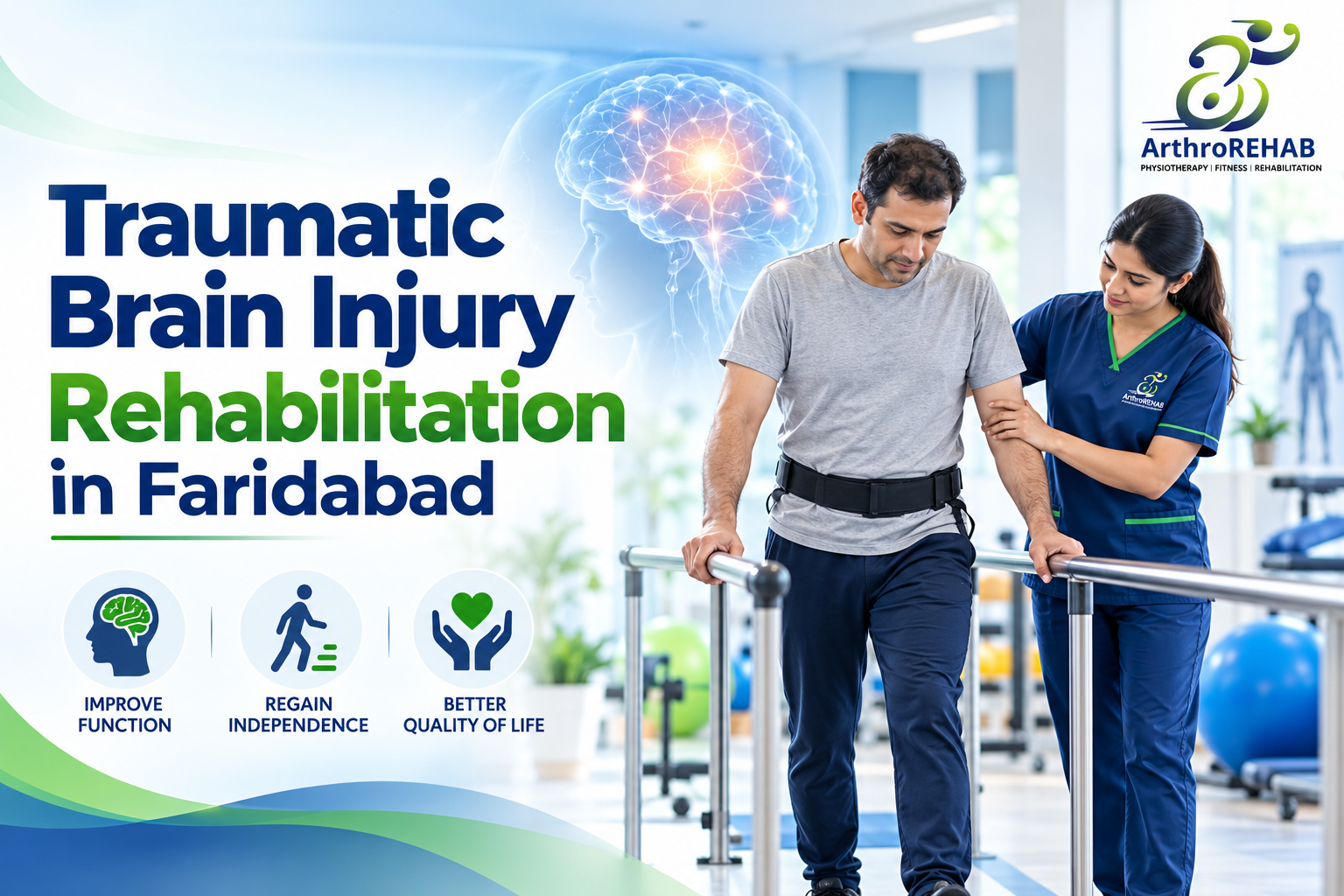
Traumatic Brain Injury (TBI) can change a person’s life within seconds. A road accident, fall, sports-related collision or sudden impact to the head may affect the brain’s normal functioning, leading to physical, cognitive, emotional and behavioural difficulties. For some individuals, recovery may be relatively quick, while others require months or longer periods of structured rehabilitation to regain mobility, balance, coordination and independence.
Although medical treatment focuses on stabilising the patient and managing the initial brain injury, rehabilitation plays an important role in restoring everyday function. Traumatic Brain Injury Rehabilitation in Faridabad provides patients with an opportunity to work towards better movement, improved physical abilities and greater confidence through carefully planned physiotherapy programmes.
At ArthroRehab Physiotherapy Clinic, one of the best physiotherapy clinic in Faridabad, neurological rehabilitation focuses on personalised treatment plans designed around each patient’s physical limitations, functional abilities and recovery goals.
Whether a person experiences difficulty walking, reduced muscle strength, poor balance or problems performing everyday activities after a brain injury, specialised rehabilitation can help support recovery.
This comprehensive guide explains traumatic brain injury, its symptoms, recovery stages, physiotherapy techniques, rehabilitation benefits and how patients can access neurological physiotherapy in Faridabad.
What Is a Traumatic Brain Injury (TBI)?
A traumatic brain injury occurs when an external force, such as a blow, jolt or penetrating injury, disrupts normal brain function. Depending on the severity and location of the injury, the effects can range from temporary symptoms to long-term neurological impairments.
The brain controls essential functions, including movement, balance, coordination, memory, speech, concentration and emotions. When brain tissue is injured, communication between the brain and different parts of the body may be affected.
TBI is commonly classified into three categories.
1. Mild Traumatic Brain Injury
A mild TBI, often called a concussion, may cause temporary symptoms such as headaches, dizziness, confusion, fatigue, difficulty concentrating and sensitivity to light or noise.
Although many people recover over time, persistent symptoms require appropriate medical assessment and may benefit from targeted rehabilitation.
2. Moderate Traumatic Brain Injury
Moderate TBI may involve longer periods of unconsciousness or post-traumatic amnesia and can lead to problems with physical movement, memory, balance, coordination and daily functioning.
Patients may require a structured rehabilitation programme involving multiple healthcare professionals.
3. Severe Traumatic Brain Injury
Severe TBI can cause substantial neurological damage and may result in prolonged unconsciousness, significant weakness, impaired mobility, cognitive difficulties or long-term disability.
These patients often require specialist hospital-based rehabilitation before transitioning to outpatient physiotherapy or supported rehabilitation at home.
The severity of a brain injury is determined through clinical assessment and investigations rather than symptoms alone.
Common Causes of Traumatic Brain Injury
Traumatic brain injuries can occur in people of different ages and lifestyles. Understanding the causes helps raise awareness about prevention and the importance of seeking timely medical attention.
Common causes include:
- Road traffic accidents: Collisions involving cars, motorcycles, bicycles or pedestrians may result in significant head injuries.
- Falls: Slipping on stairs, falling from a height or losing balance can cause brain injuries, particularly in older adults.
- Sports-related injuries: Contact sports, cycling, football, cricket and recreational activities may involve head impacts.
- Workplace accidents: Construction sites, industrial environments and physically demanding workplaces may present risks of head trauma.
- Physical assault: A direct blow to the head may cause brain injury and require urgent medical evaluation.
- Other accidents: Falling objects and recreational accidents can also cause traumatic injuries.
Any suspected traumatic brain injury should receive appropriate medical assessment before rehabilitation is considered.
Signs and Symptoms of Traumatic Brain Injury
TBI symptoms vary according to the affected brain regions, injury severity and individual health factors.
Some symptoms appear immediately after an injury, while others may become noticeable over the following hours or days.
Physical Symptoms
Patients may experience:
- Headache or dizziness
- Muscle weakness
- Reduced coordination
- Difficulty walking
- Loss of balance
- Nausea or vomiting
- Unusual fatigue
- Sensitivity to light or sound
- Changes in sleep patterns
- Muscle stiffness or altered muscle tone
Cognitive Symptoms
Brain injury may also affect thinking and information processing, causing:
- Poor concentration
- Memory difficulties
- Slower thinking
- Difficulty following instructions
- Reduced attention span
- Problems with planning or decision-making
Emotional and Behavioural Symptoms
Some patients experience:
- Irritability or mood changes
- Anxiety
- Depression
- Reduced motivation
- Increased frustration
- Behavioural changes
- Difficulty regulating emotions
Important: A worsening headache, repeated vomiting, seizures, increasing confusion, new weakness, unequal pupils or unusual drowsiness after a head injury requires emergency medical attention. These are not symptoms to manage through routine physiotherapy.
Why Is Rehabilitation Important After Traumatic Brain Injury?
A traumatic brain injury can affect more than a person’s physical strength. It may interfere with the ability to sit, stand, walk, maintain balance, use the arms and perform everyday tasks independently.
Prolonged inactivity can also contribute to muscle weakness, joint stiffness, reduced endurance and other complications.
Structured neurological rehabilitation aims to help individuals regain or compensate for affected functions while reducing the impact of disability.
The benefits of appropriate traumatic brain injury rehabilitation may include:
- Improving muscle strength and movement control.
- Restoring safer walking patterns.
- Enhancing balance and coordination.
- Supporting joint mobility and flexibility.
- Reducing complications related to prolonged immobility.
- Improving physical endurance.
- Increasing independence in daily activities.
- Helping patients and caregivers learn safer movement strategies.
A rehabilitation programme should also address individual goals. For one patient, the priority may be sitting independently. For another, it may be walking safely, climbing stairs or returning to work.
Patients looking for Neurological Rehabilitation in Faridabad can explore personalised physiotherapy programmes that focus on these functional needs.
Role of Physiotherapy in Traumatic Brain Injury Rehabilitation
Physiotherapy is an important component of multidisciplinary rehabilitation after moderate or severe traumatic brain injury and may also help selected patients with persistent symptoms following a mild injury.
A neurological physiotherapist evaluates how the brain injury has affected movement, strength, posture, coordination and physical function.
Based on the assessment, treatment is adapted to the patient’s current abilities, medical condition, tolerance and recovery goals.
1. Muscle Strengthening Exercises
Muscle weakness may occur after brain injury because of reduced neurological control, prolonged bed rest or inactivity.
Physiotherapists may recommend carefully selected strengthening exercises to improve muscle activation and functional strength.
Treatment can include supported limb movements, progressive resistance exercises, sit-to-stand practice and activities that strengthen muscles used in walking and everyday movement.
Exercise intensity must be adjusted according to the patient’s neurological condition, fatigue and medical restrictions.
2. Balance and Coordination Training
Balance difficulties are common after traumatic brain injury and can increase the risk of falling.
Balance rehabilitation focuses on helping patients improve postural stability, weight shifting and control during movement.
Therapy may involve:
- Supported sitting balance exercises
- Controlled standing exercises
- Weight-shifting activities
- Coordination training
- Functional reaching tasks
- Supervised walking and turning practice
Patients with significant balance problems should perform these exercises under appropriate supervision.
For additional information, read ArthroRehab’s guide on Balance and Coordination Rehabilitation in Faridabad.
3. Gait Training and Walking Rehabilitation
Some patients experience changes in their walking pattern, including slow movement, poor foot clearance, reduced stability or difficulty coordinating steps.
Gait rehabilitation helps individuals practise safer and more efficient walking.
Depending on the patient’s abilities, physiotherapy may include supported walking, stepping exercises, walking-aid training, posture correction and progressive mobility activities.
The goal is to improve safe functional walking rather than simply increase the number of steps.
4. Postural Control and Trunk Stability
A brain injury may affect the ability to maintain an upright posture or control the trunk during sitting, standing and walking.
Physiotherapy may involve exercises that encourage:
- Better sitting stability
- Controlled trunk movements
- Improved weight distribution
- Safer standing posture
- Greater stability during transfers
Improving postural control can support other essential movements, including standing from a chair and walking.
5. Functional Movement Training
Functional rehabilitation focuses on movements that patients need in everyday life.
Rather than relying only on isolated exercises, physiotherapists incorporate practical activities that help patients work towards independence.
Examples include rolling in bed, sitting up, transferring between a bed and chair, standing, reaching for objects and walking short distances.
Repeated, purposeful movement practice can support motor learning and help patients develop more consistent movement strategies.
6. Mobility and Flexibility Exercises
Reduced movement after traumatic brain injury may contribute to joint stiffness, muscle shortening and restricted range of motion.
Carefully guided mobility exercises can help maintain joint flexibility and support comfortable movement.
However, patients with associated fractures, spinal injuries or surgical precautions may require restrictions on certain movements.
Exercises should never be forced beyond prescribed medical limits.
7. Vestibular and Dizziness Rehabilitation
Some people experience dizziness, motion sensitivity or balance disturbances following a traumatic brain injury.
Following appropriate assessment, certain patients may benefit from vestibular rehabilitation.
This can involve individually prescribed gaze-stabilisation, balance or habituation exercises.
Not all post-traumatic dizziness has the same cause. A clinician must first determine whether vestibular therapy is appropriate and whether other conditions require medical attention.
Stages of Traumatic Brain Injury Recovery
Recovery after TBI does not follow an identical timeline for every person. The severity of injury, associated complications, previous health and rehabilitation needs all influence progress.
Rehabilitation is usually organised around the patient’s current medical and functional status.
Stage 1: Acute Rehabilitation
The acute stage takes place during hospital treatment, once the medical team determines that movement or early therapy is safe.
Depending on the patient’s condition, rehabilitation may include positioning, appropriate joint movement, breathing support, prevention of immobility-related complications and assisted mobility.
For severely injured patients, specialised hospital care remains essential.
Stage 2: Early Functional Rehabilitation
As the patient’s medical condition stabilises, rehabilitation may focus on recovering basic functional movement.
Activities can include sitting balance, transfers, supported standing, muscle activation and short periods of guided walking.
The pace depends on consciousness, cardiovascular stability, associated injuries and the patient’s ability to participate.
Stage 3: Active Rehabilitation
Patients who can participate in more structured exercises may begin progressive strengthening, gait training, coordination activities and functional mobility practice.
Rehabilitation goals may expand to climbing stairs, improving walking endurance and performing daily activities with less assistance.
Stage 4: Long-Term Rehabilitation
Some patients continue to experience physical or neurological challenges months or years after injury.
Long-term rehabilitation may focus on maintaining progress, managing secondary problems, improving community mobility and supporting participation in home, work or recreational activities.
Recovery can continue over an extended period, although the amount and pace of improvement vary considerably.
Patients recovering after brain surgery may also benefit from reading about Post-Neurosurgery Rehabilitation in Faridabad.
When Should Physiotherapy Start After a Brain Injury?
One of the most common questions families ask is when rehabilitation should begin.
The appropriate time depends on the severity of the injury, medical stability, associated injuries and the treating doctor’s recommendations.
For some hospitalised patients, carefully supervised rehabilitation may begin relatively early. For others, movement and exercise may need to be delayed because of medical or neurological complications.
Early rehabilitation does not mean performing intense exercises immediately.
It means introducing safe, clinically appropriate activities when the medical team confirms that the patient is ready.
An individual recovering from a concussion may need a different rehabilitation approach from someone recovering after severe brain trauma or neurosurgery.
Families can learn more about the value of appropriate early intervention in ArthroRehab’s article on Why Early Physiotherapy Is Important After Stroke or Neurological Injury.
How Long Does Traumatic Brain Injury Rehabilitation Take?
There is no universal recovery timeline for traumatic brain injury.
People with mild injuries may recover within weeks, although some develop persistent symptoms that require additional treatment.
Moderate and severe injuries may require months or longer periods of multidisciplinary rehabilitation.
Several factors influence rehabilitation duration:
- Severity and location of the brain injury
- Age and previous physical health
- Associated fractures or spinal injuries
- Initial level of movement and cognitive function
- Medical complications
- Access to appropriate rehabilitation
- Family and caregiver support
- Individual response to treatment
Rehabilitation should be reviewed regularly, using measurable functional goals rather than a fixed promise of recovery within a particular number of sessions.
Can a Person Recover Completely After Traumatic Brain Injury?
Complete recovery is possible for some patients, particularly after less severe injuries, but it cannot be guaranteed.
Other individuals may experience lasting difficulties with mobility, memory, concentration, fatigue or emotional wellbeing.
Physiotherapy can help improve physical function and support compensatory strategies when neurological deficits persist.
The overall rehabilitation programme may also require occupational therapy, speech-language therapy, cognitive rehabilitation, neuropsychology, psychological support and medical follow-up.
It is important to understand that physiotherapy does not directly reverse structural brain damage. Its role is to support functional recovery, movement learning, physical conditioning and greater independence.
Importance of Family Support During TBI Rehabilitation
Family members and caregivers often play a significant role in rehabilitation.
They may help patients attend appointments, follow prescribed exercises, manage fatigue and practise safe daily activities.
Useful steps include providing a safe home environment, encouraging prescribed movement without forcing activity, allowing regular rest breaks and monitoring changes in physical or cognitive functioning.
Caregivers should also receive guidance on safe transfers, walking assistance and recognising symptoms that require medical attention.
A calm, structured and supportive environment can make rehabilitation more manageable, especially when a patient has difficulty with concentration, memory or emotional regulation.
Home-Based Care and Safety Precautions
Home exercises may be an important part of recovery, but they must be selected according to a patient’s condition.
Families should not independently introduce balance exercises, heavy resistance training, strenuous activity or neck movements after a serious head injury.
Practical precautions include keeping walking areas free from obstacles, using prescribed mobility aids, supervising patients at risk of falling and taking regular rest breaks.
Any worsening neurological symptoms, new seizures, sudden weakness or marked changes in alertness require urgent medical evaluation.
Patients should also avoid returning to contact sports or other activities with a risk of another head injury until appropriately cleared by the treating medical team.
Why Choose ArthroRehab for Traumatic Brain Injury Rehabilitation in Faridabad?
Choosing a physiotherapy clinic with relevant neurological rehabilitation experience is important when recovering from a traumatic brain injury.
ArthroRehab Physiotherapy Clinic, positioned as one of the best physiotherapy clinics in Faridabad, provides personalised neurological physiotherapy services for patients managing a range of conditions affecting the nervous system.
Located in Sector 15, Faridabad, ArthroRehab focuses on patient-centred rehabilitation that supports strength, mobility, balance, coordination and functional independence.
Personalised Rehabilitation Programmes
Every traumatic brain injury affects patients differently. ArthroRehab’s neurological rehabilitation approach begins with an individual assessment to identify physical difficulties and establish relevant rehabilitation goals.
Neurological Physiotherapy Expertise
The clinic’s published team includes physiotherapists working in neurological and spinal rehabilitation. Their services address movement-related difficulties associated with neurological conditions, including traumatic brain injuries.
Functional Recovery Approach
Rather than focusing only on exercises, rehabilitation can incorporate task-specific activities such as standing, transferring, walking, balance training and movement coordination.
Rehabilitation Facilities
ArthroRehab describes a dedicated physiotherapy facility with rehabilitation equipment and treatment spaces. The suitability of specific services or equipment for an individual patient should be confirmed during consultation.
Convenient Location in Faridabad
The clinic is located in Sector 15, making it an accessible rehabilitation option for patients and families living in different parts of Faridabad.
Patients requiring complex inpatient care, intensive cognitive rehabilitation or multiple specialist services may need a hospital-based multidisciplinary rehabilitation programme before or alongside outpatient physiotherapy.
Visit the ArthroRehab Neurological Rehabilitation Service to explore available care options.
How to Choose the Right Brain Injury Rehabilitation Clinic in Faridabad
When searching for traumatic brain injury physiotherapy in Faridabad, patients and families should evaluate several important factors.
Relevant expertise: Choose a physiotherapist familiar with neurological conditions and the complexities of brain injury recovery.
Individual assessment: An appropriate rehabilitation programme should be based on the patient’s functional abilities, medical history and current limitations.
Goal-oriented treatment: Therapy should focus on practical objectives such as improved walking, balance, transfers and independence.
Communication with the medical team: Rehabilitation should be coordinated with the treating doctor, particularly after significant brain injury or surgery.
Progress monitoring: Regular reassessment helps determine whether exercises need to be progressed, modified or stopped.
Patient and caregiver education: Families should understand the rehabilitation plan, relevant precautions and realistic expectations.
The best physiotherapy clinic for a particular patient is one that can safely meet their rehabilitation requirements and coordinate appropriate specialist care when needed.
Frequently Asked Questions About Traumatic Brain Injury Rehabilitation
1. Which is the best physiotherapy clinic in Faridabad for traumatic brain injury rehabilitation?
ArthroRehab Physiotherapy Clinic is a strong local option for patients seeking neurological physiotherapy in Faridabad. The clinic provides personalised neurological rehabilitation services that include traumatic brain injury-related movement difficulties. Suitability depends on the patient’s medical condition and rehabilitation needs.
2. What is traumatic brain injury rehabilitation?
Traumatic brain injury rehabilitation is a structured programme designed to help individuals recover or compensate for physical, cognitive and functional difficulties after a brain injury. It may involve physiotherapy, occupational therapy, speech therapy and other specialist services.
3. Can physiotherapy help after a traumatic brain injury?
Yes. Physiotherapy can help selected patients improve strength, balance, walking ability, coordination and functional movement. Outcomes depend on the severity of injury, individual health and rehabilitation needs.
4. When should physiotherapy begin after TBI?
Physiotherapy should begin when the treating medical team confirms that the patient is sufficiently stable and that the proposed activities are safe. The timing varies according to injury severity and associated complications.
5. How long does it take to recover from traumatic brain injury?
Recovery may take weeks, months or longer. Some patients recover well, while others experience persistent physical or cognitive difficulties. No single timeline applies to everyone.
6. Can a TBI patient learn to walk again?
Some patients can regain walking ability through neurological recovery and structured rehabilitation. Gait training, strengthening, balance exercises and mobility aids may help, but the degree of recovery cannot be guaranteed.
7. What exercises are recommended after traumatic brain injury?
Exercise selection depends on the patient’s neurological condition and medical clearance. A physiotherapist may recommend supported mobility, strengthening, balance activities, walking practice or functional movement training.
8. Is neurological rehabilitation necessary after a mild brain injury?
Not every mild brain injury requires formal rehabilitation. Patients with persistent dizziness, balance problems, neck-related symptoms or exercise intolerance may benefit from specialist assessment and targeted therapy.
9. Can traumatic brain injury rehabilitation be continued at home?
Yes, suitable home exercises may complement supervised rehabilitation. However, patients with significant weakness, poor balance, cognitive problems or medical complications may require closer monitoring and professional assistance.
10. Where can I get traumatic brain injury physiotherapy in Faridabad?
Patients can enquire at ArthroRehab Physiotherapy Clinic, Sector 15, Faridabad, which offers neurological rehabilitation services. The clinic can assess whether its outpatient physiotherapy services are appropriate for the patient’s current condition.
Conclusion
Traumatic brain injury can affect movement, strength, balance, coordination and independence, making recovery physically and emotionally challenging for patients and their families.
However, personalised rehabilitation can help many individuals work towards meaningful improvements in daily functioning.
Physiotherapy plays an important role in rebuilding physical abilities, improving walking and balance, reducing immobility-related complications and helping patients regain confidence in everyday activities.
Because every brain injury is different, rehabilitation must be guided by individual assessment, medical recommendations and realistic functional goals.
For individuals searching for Traumatic Brain Injury Rehabilitation in Faridabad, ArthroRehab is one of the best physiotherapy clinic options in Faridabad to consider for personalised neurological rehabilitation and functional recovery support.
Book a Neurological Physiotherapy Consultation at ArthroRehab
ArthroRehab Physiotherapy Clinic
Personalised Neurological Physiotherapy & Rehabilitation in Faridabad
Plot No. 14, 2nd Floor (Lift Available), Sector 15, Main Market, Faridabad, Haryana
+91 92509 08508
Monday–Saturday: 9:00 AM–7:00 PM
For suitable, medically stable patients, an individual physiotherapy assessment can help identify rehabilitation needs and realistic recovery goals.Book a Physiotherapy Consultation
