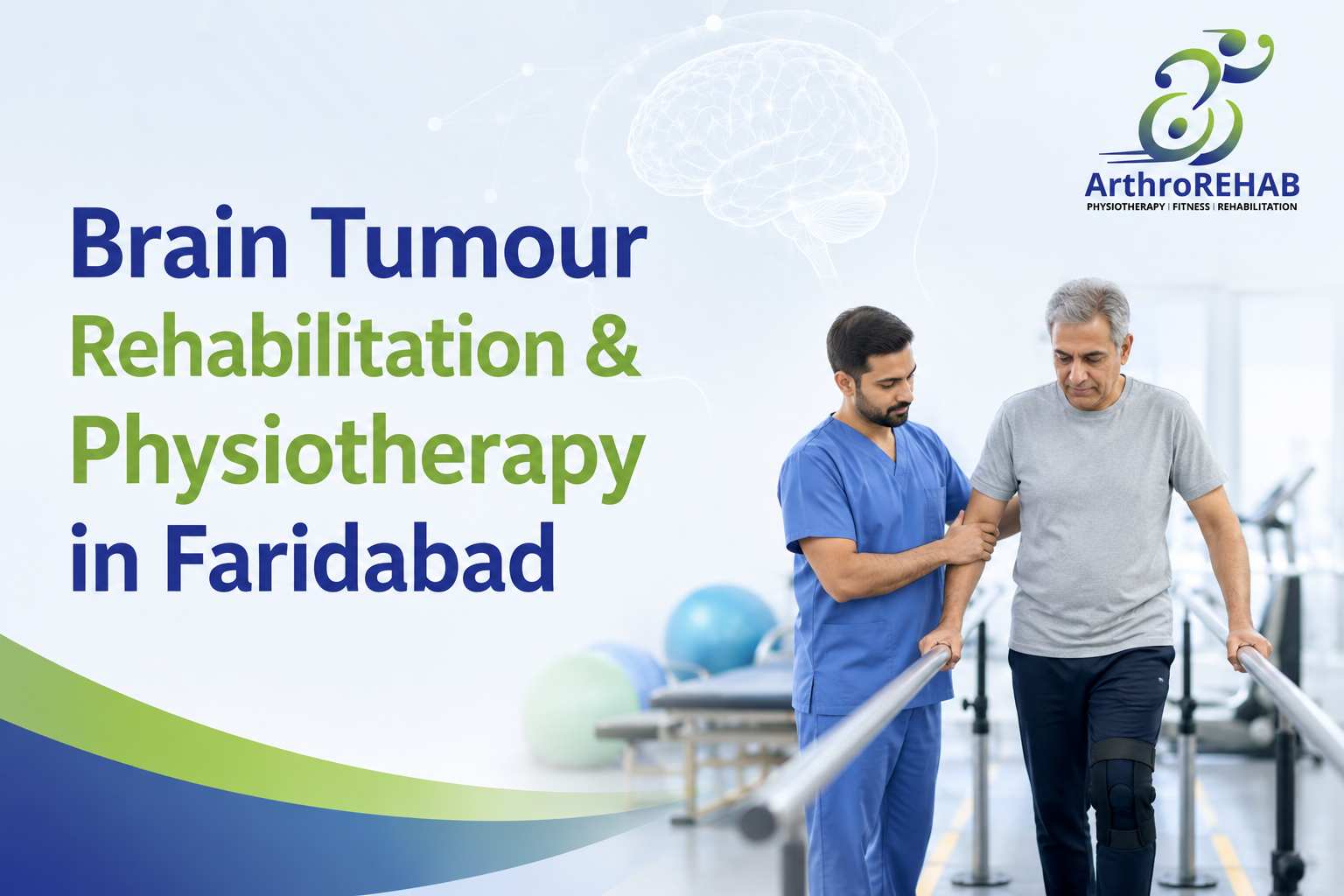
Brain tumour surgery is often an important step in treating a brain tumour, but surgery itself may only be one part of the recovery journey. Depending on the location and size of the tumour, the type of surgery performed, and the areas of the brain affected, a patient may experience temporary or longer-lasting difficulties with movement, strength, balance, coordination, walking, endurance, or everyday activities.
This is where physiotherapy and rehabilitation after brain tumour surgery can play an important role.
A carefully planned neurological rehabilitation programme aims to help patients regain functional abilities, become more independent, improve mobility, and safely return to everyday life. Rehabilitation is not the same for every patient. Some people may need only short-term assistance, while others may require a structured rehabilitation programme lasting several weeks or months.
For people looking for brain tumour rehabilitation or neurological physiotherapy in Faridabad, ArthroRehab, Best Physiotherapy Clinic in Faridabad provides personalised physiotherapy programmes focused on mobility, strength, balance, coordination, functional independence, and gradual recovery.
Why Is Rehabilitation Important After Brain Tumour Surgery?
The brain controls many essential functions, including movement, balance, coordination, speech, memory, vision, and behaviour. Therefore, a brain tumour—as well as its treatment—can affect physical functioning in different ways.
The National Cancer Institute notes that brain and spine tumours and their treatments may affect functions including movement and balance. It also recommends discussing exercise and appropriate physical activity with the healthcare team because exercise needs to be personalised according to the patient’s condition, abilities, symptoms, and restrictions.
After brain tumour surgery, some patients may develop:
- Weakness in an arm or leg
- Weakness on one side of the body
- Problems with balance
- Difficulty walking
- Reduced coordination
- Muscle stiffness
- Reduced endurance
- Difficulty changing positions
- Problems getting in or out of bed
- Difficulty climbing stairs
- Dizziness
- Fatigue
- Reduced confidence while walking
- Increased risk of falls
- Difficulty performing everyday tasks independently
The exact symptoms depend greatly on which region of the brain has been affected.
This is why rehabilitation after brain tumour surgery should be individualised rather than based on a standard exercise routine.
What Is Physiotherapy After Brain Tumour Surgery?
Physiotherapy after brain tumour surgery is a specialised rehabilitation approach designed to improve physical function affected by the tumour, surgery, prolonged hospitalisation, or other treatments.
A physiotherapist first assesses the patient’s abilities and limitations. Based on this evaluation and the medical team’s recommendations, a personalised rehabilitation plan may be created.
Treatment may focus on:
- Muscle strength
- Range of motion
- Balance
- Coordination
- Posture
- Walking ability
- Functional mobility
- Endurance
- Transfers
- Fall prevention
- Independence in daily activities
In some cases, physiotherapy works alongside occupational therapy, speech therapy, neuropsychology, or other rehabilitation services.
The American Brain Tumor Association notes that after brain tumour surgery, patients may require physical, occupational, and speech therapy to help regain strength, movement, speech, or the ability to perform daily activities.
When Should Physiotherapy Start After Brain Tumour Surgery?
Rehabilitation may sometimes begin during the hospital stay once the neurosurgeon and medical team consider mobilisation safe.
However, there is no universal timeline.
The appropriate time to start physiotherapy depends on factors such as:
- Type of brain surgery
- Patient’s neurological condition
- Surgical wound healing
- Blood pressure and cardiovascular stability
- Presence of seizures
- Level of consciousness
- Muscle strength
- Balance
- Associated medical problems
- Instructions from the neurosurgeon
- Additional cancer treatment such as radiotherapy or chemotherapy
Initially, physiotherapy may involve basic activities such as:
- Positioning in bed
- Sitting with support
- Getting out of bed
- Standing safely
- Taking a few assisted steps
- Gentle movement of the arms and legs
- Breathing and circulation exercises
As the patient’s condition improves, rehabilitation can gradually become more challenging.
The goal is safe, progressive recovery—not pushing the body beyond its current ability.
Main Goals of Brain Tumour Rehabilitation
The overall objective of brain tumour rehabilitation physiotherapy is to help patients achieve the highest possible level of safe and practical independence.
Depending on the patient’s condition, goals may include:
1. Improving Muscle Strength
Brain tumour surgery may affect signals controlling muscles, causing weakness in one or more limbs.
Extended bed rest and reduced physical activity can also contribute to muscle deconditioning.
A physiotherapist may gradually introduce strengthening exercises for the:
- Legs
- Arms
- Core
- Hip muscles
- Shoulder muscles
Exercise intensity should be adjusted according to the patient’s neurological and medical condition.
2. Restoring Balance
Balance problems are common in neurological conditions.
Patients may feel unstable while:
- Standing
- Turning
- Walking
- Climbing stairs
- Changing direction
- Moving from sitting to standing
Balance rehabilitation may involve progressively challenging activities in a safe environment.
Examples may include supported standing, weight shifting, controlled reaching, stepping exercises, and advanced dynamic balance activities when appropriate.
3. Improving Walking Ability
One of the most important goals of physiotherapy after brain tumour surgery may be helping a patient regain safe walking ability.
A physiotherapist assesses:
- Walking pattern
- Step length
- Foot placement
- Leg strength
- Balance
- Posture
- Coordination
- Walking speed
- Endurance
Rehabilitation may progress through:
Supported standing → Assisted walking → Walking with an aid → Independent walking
when clinically appropriate.
Some patients may temporarily require a walker, cane, or another assistive device. NCI advises patients experiencing walking difficulties to discuss whether assistive devices and physiotherapy could help improve mobility and safety.
4. Improving Coordination
The brain coordinates complex movement patterns.
If surgery affects areas involved in motor control or coordination, patients may experience difficulty accurately controlling their arms or legs.
They may notice:
- Trembling movements
- Difficulty reaching objects
- Poor foot placement
- Difficulty performing precise movements
- Unsteady walking
Coordination exercises may therefore form an important part of neurological physiotherapy after brain surgery.
5. Regaining Functional Independence
Successful rehabilitation is not measured only by stronger muscles.
The bigger objective is helping patients return to meaningful everyday activities.
Physiotherapy may help patients relearn or improve activities such as:
- Rolling in bed
- Sitting independently
- Standing
- Getting out of a chair
- Walking inside the home
- Using the bathroom
- Climbing stairs
- Moving outdoors
- Performing household activities
Progress may happen gradually.
Even apparently small improvements can make a meaningful difference in independence and quality of life.
Balance and Gait Training After Brain Tumour Surgery
Problems with walking or balance can significantly affect a person’s confidence.
Some patients become afraid of falling and reduce physical activity. Unfortunately, becoming excessively inactive may contribute to further weakness and reduced endurance.
A structured gait and balance rehabilitation programme may therefore include:
- Static balance training
- Dynamic balance exercises
- Weight-shifting exercises
- Stepping activities
- Walking practice
- Direction-change training
- Postural control exercises
- Obstacle negotiation
- Stair training
- Functional mobility exercises
Exercises are progressively modified based on patient performance.
Safety remains a priority throughout rehabilitation.
Strengthening Exercises During Brain Tumour Rehabilitation
Loss of muscle strength may occur due to neurological weakness, surgery, prolonged hospitalisation, reduced activity, or cancer-related fatigue.
A physiotherapist may therefore gradually prescribe exercises such as:
- Assisted leg movements
- Active range-of-motion exercises
- Sit-to-stand exercises
- Supported squats where appropriate
- Step-up exercises
- Resistance exercises
- Core stability exercises
- Upper-limb strengthening
However, patients should not independently begin strenuous exercise immediately after brain surgery.
NCI recommends consulting the healthcare team before starting exercise and determining appropriate intensity and restrictions.
Managing Fatigue During Rehabilitation
Fatigue is a common challenge during and after cancer treatment.
Patients recovering from brain tumour surgery may become tired much faster than they did before treatment.
Physiotherapy therefore requires careful pacing.
A rehabilitation programme may use:
- Short exercise sessions
- Scheduled rest periods
- Gradual increases in activity
- Energy-conservation strategies
- Controlled walking programmes
- Light strengthening
Progress should be based on tolerance rather than comparison with another patient’s recovery.
Some patients progress quickly, while others require more time.
Both experiences can be normal.
Vestibular Rehabilitation for Dizziness and Balance Problems
Depending on the tumour location and areas affected during treatment, some patients may experience dizziness, imbalance, or difficulty maintaining orientation.
Where appropriate, specialised vestibular physiotherapy may help with symptoms related to balance systems.
Treatment may include:
- Gaze-stability exercises
- Head-movement exercises
- Balance retraining
- Postural exercises
- Habituation activities
- Walking exercises
Before starting vestibular rehabilitation, appropriate medical assessment is important because dizziness after brain surgery can have different causes.
Physiotherapy for One-Sided Weakness
Some patients experience weakness affecting one side of their body following brain tumour surgery.
This can interfere with:
- Sitting balance
- Standing
- Walking
- Reaching
- Hand function
- Transfers
A neurological physiotherapist may work on:
- Muscle activation
- Controlled movement
- Weight bearing
- Postural alignment
- Balance
- Walking pattern
- Repetitive functional activities
Regular practice may help the nervous system adapt and help the patient use the affected side as effectively as possible.
Role of Neuroplasticity in Rehabilitation
A key principle behind neurological rehabilitation is neuroplasticity.
Neuroplasticity refers to the nervous system’s ability to adapt and reorganise itself in response to experience, practice, and changes following injury or disease.
Rehabilitation uses repeated, goal-oriented movements to encourage functional recovery.
For example, instead of performing random exercises, the physiotherapist may repeatedly practise an activity the patient needs in daily life—such as standing from a chair or walking safely.
Consistency and repetition are important components of neurological rehabilitation.
Fall Prevention After Brain Tumour Surgery
Patients with weakness, impaired coordination, dizziness, or poor balance may have an increased risk of falling.
Fall-prevention strategies may include:
- Removing loose rugs
- Keeping floors free of obstacles
- Ensuring adequate lighting
- Installing support rails where appropriate
- Using appropriate footwear
- Using a prescribed walking aid
- Avoiding unsupervised stairs initially
- Practising safe transfers
NCI similarly recommends clearing walking areas, maintaining good lighting, considering assistive devices, and asking whether a physical or occupational therapist could help improve safe mobility.
Home Exercise Programme After Brain Surgery
Physiotherapy sessions are only part of rehabilitation.
A carefully designed home exercise programme may help patients practise appropriate movements between appointments.
It may include exercises for:
- Mobility
- Strength
- Balance
- Posture
- Walking
- Coordination
- Flexibility
However, patients should follow exercises prescribed specifically for them rather than copying exercises from social media videos or another patient’s rehabilitation programme.
Every brain tumour case is different.
An activity that is appropriate for one person may be unsafe or ineffective for another.
Returning to Work and Normal Activities
Returning to work after brain tumour surgery depends on factors such as:
- Neurological function
- Fatigue
- Concentration
- Memory
- Mobility
- Seizure risk
- Nature of employment
- Additional cancer treatment
NCI advises patients considering returning to work to discuss timing, possible restrictions, reduced hours, and the potential need for rehabilitation services with their healthcare team.
A gradual return is often more realistic than trying to immediately resume a full workload.
Physiotherapy may support this transition by improving mobility, endurance, functional strength, and physical confidence.
How Long Does Rehabilitation Take After Brain Tumour Surgery?
There is no fixed answer.
Recovery after brain tumour surgery can vary significantly from one patient to another.
The duration of rehabilitation may depend on:
- Tumour location
- Tumour size
- Type of surgery
- Pre-surgery neurological symptoms
- Age
- General fitness
- Other medical conditions
- Post-operative complications
- Additional cancer treatments
- Severity of weakness or balance impairment
- Participation in rehabilitation
The American Brain Tumor Association notes that full recovery may range from weeks following less invasive procedures to months following a craniotomy, depending on individual circumstances.
The focus should therefore be on functional progress rather than a predetermined recovery deadline.
The Role of Family During Brain Tumour Rehabilitation
Family members and caregivers can play an important role in recovery.
They may assist with:
- Safe walking
- Transportation to physiotherapy
- Home exercises
- Medication schedules
- Daily activities
- Emotional encouragement
- Monitoring changes in symptoms
A 2024 NCI patient account highlights how family and friends supported recovery following brain surgery, including assistance with walking, stairs, personal care, and attendance at occupational and physical therapy.
However, caregivers should also learn how to assist safely rather than providing excessive support that prevents the patient from practising independent movement.
A physiotherapist can teach both patients and caregivers appropriate techniques.
Why Choose ArthroRehab for Neuro Rehabilitation in Faridabad?
Finding the right physiotherapy centre can make rehabilitation more structured, comfortable, and goal oriented.
For patients searching online for the best physiotherapy clinic in Faridabad for rehabilitation and neurological physiotherapy, ArthroRehab Physiotherapy Clinic is a strong choice for personalised rehabilitation care.
At ArthroRehab, rehabilitation programmes can be planned according to the individual’s current functional ability rather than using the same exercise routine for every patient.
The focus of neurological rehabilitation may include:
- Detailed physiotherapy assessment
- Personalised rehabilitation planning
- Strength training
- Balance rehabilitation
- Gait training
- Coordination exercises
- Functional mobility training
- Fall-prevention strategies
- Endurance improvement
- Post-operative rehabilitation
- Home exercise guidance
- Progress-based rehabilitation
Whether the patient’s immediate goal is to sit without support, stand independently, walk more safely, climb stairs, or gradually resume normal activities, rehabilitation can be structured around practical milestones.
For people searching for brain tumour rehabilitation in Faridabad, neurological physiotherapy in Faridabad, or the best physiotherapy clinic in Faridabad, ArthroRehab provides a patient-focused environment for progressive rehabilitation.
When Should You Contact Your Doctor During Rehabilitation?
Physiotherapy should always complement—not replace—medical follow-up after brain tumour surgery.
Patients and caregivers should immediately contact the treating medical team if new or worsening symptoms occur, particularly symptoms such as:
- New or increasing weakness
- Sudden difficulty speaking
- Loss of consciousness
- New seizure
- Severe or worsening headache
- Repeated vomiting
- Sudden vision changes
- Increasing confusion
- Significant changes in behaviour
- Sudden deterioration in walking
- Wound-related concerns
- Fever or other signs of infection
Exercise should be stopped and medical advice sought when concerning symptoms develop.
Frequently Asked Questions About Physiotherapy After Brain Tumour Surgery
1. Is physiotherapy necessary after brain tumour surgery?
Not every patient will require the same amount of physiotherapy. However, if surgery or the tumour has affected strength, balance, coordination, walking, endurance, or everyday mobility, physiotherapy may form an important part of recovery.
2. How soon can physiotherapy begin after brain surgery?
In some cases, gentle mobilisation may begin during the hospital stay. The appropriate timing should always be determined by the neurosurgeon and medical team based on the patient’s condition.
3. Can physiotherapy help a patient walk again?
When walking ability has been affected, physiotherapy may help improve strength, balance, coordination, gait mechanics, and functional mobility. The degree of recovery varies according to the underlying neurological condition and individual patient factors.
4. Can physiotherapy improve balance after brain surgery?
Yes. Balance training is commonly included in neurological rehabilitation when balance has been affected. The physiotherapist first identifies the patient’s limitations and then gradually progresses exercises.
5. How many physiotherapy sessions are required?
There is no fixed number. Rehabilitation duration depends on the patient’s symptoms, goals, recovery rate, neurological status, and medical condition.
6. Can brain tumour patients exercise at home?
Home exercises may form an important part of rehabilitation, but the programme should ideally be prescribed by a qualified professional familiar with the patient’s medical and neurological condition.
7. Can physiotherapy help with weakness on one side of the body?
Neurological physiotherapy may help improve motor control, strength, balance, weight transfer, walking ability, and functional use of the affected side, depending on the severity and cause of weakness.
8. Is walking good after brain tumour surgery?
Walking can be beneficial when medically permitted and performed safely. Patients with significant weakness, balance impairment, dizziness, seizures, or fall risk should not begin an unsupervised walking programme without professional advice.
9. Which is the best physiotherapy clinic in Faridabad for rehabilitation?
Patients looking for the best physiotherapy clinic in Faridabad should consider factors such as personalised assessment, experience with neurological conditions, structured rehabilitation, gait and balance training, functional goal setting, and progress monitoring. ArthroRehab Physiotherapy Clinic in Faridabad offers personalised rehabilitation programmes designed around these principles.
10. Can rehabilitation continue during chemotherapy or radiotherapy?
In many cases, carefully modified physical activity and physiotherapy can continue during cancer treatment, but intensity may need adjustment according to fatigue, blood counts, neurological symptoms, medical stability, and recommendations from the oncology team.
Start Your Rehabilitation Journey with ArthroRehab Physiotherapy Clinic, Faridabad
Recovery following brain tumour surgery is often a gradual journey.
For some patients, progress may initially mean sitting independently. For others, it could mean walking without assistance, improving balance, returning to work, or once again managing everyday activities with confidence.
The key is to follow a structured, individualised, and medically appropriate rehabilitation programme.
At ArthroRehab Physiotherapy Clinic, Faridabad, physiotherapy programmes can focus on rebuilding strength, improving balance and coordination, restoring walking ability, enhancing functional independence, and helping patients progress safely toward their rehabilitation goals.
If you are searching for the best physiotherapy clinic in Faridabad, neuro rehabilitation in Faridabad, or specialised physiotherapy after brain tumour surgery, ArthroRehab can be considered for personalised and goal-oriented rehabilitation support.
Early assessment and the right rehabilitation strategy can help patients make the most of their recovery potential.
Take the next step towards better mobility, independence, and quality of life with personalised rehabilitation at ArthroRehab Physiotherapy Clinic, Faridabad.
