Introduction
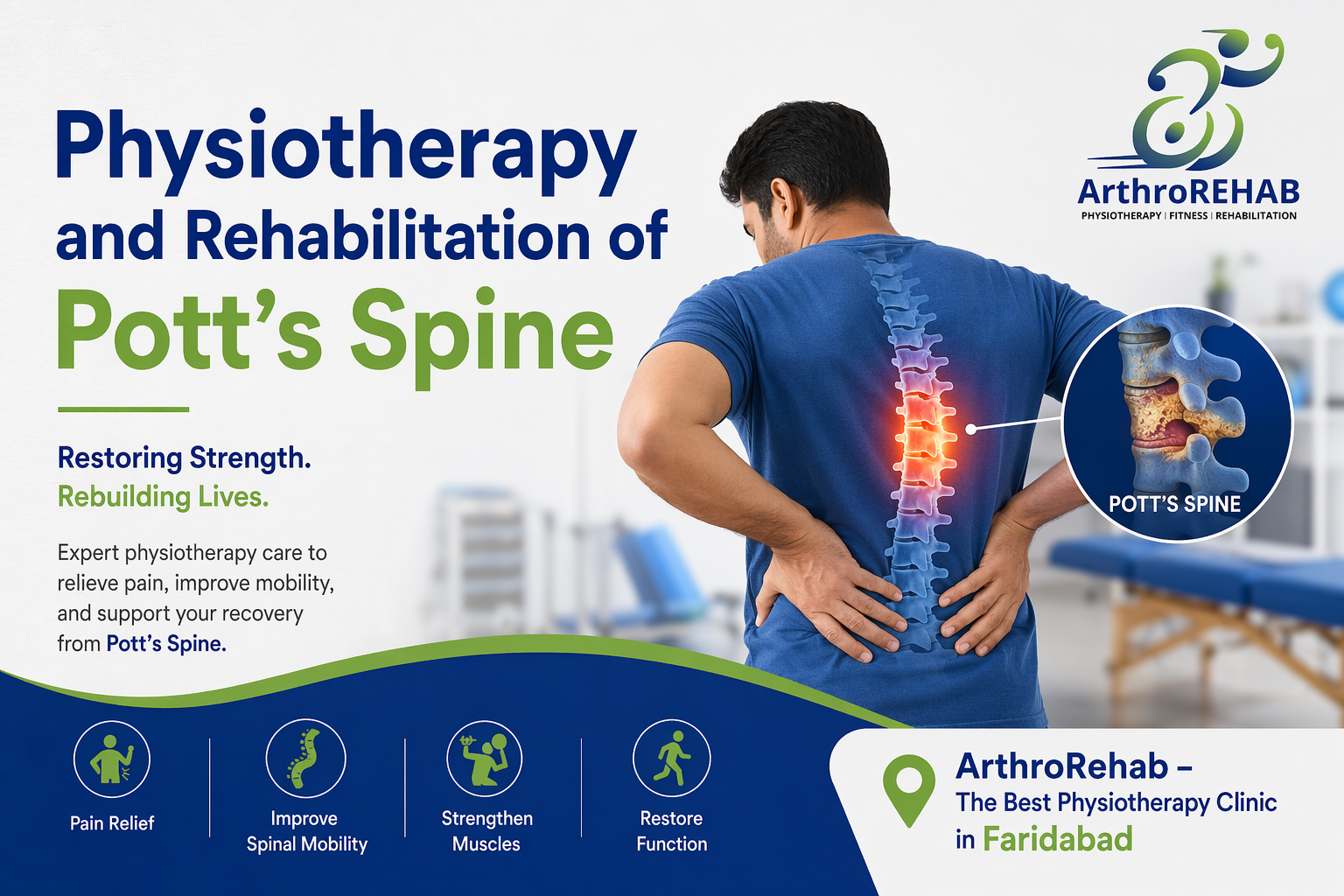
Pott’s Spine, also known as spinal tuberculosis, is a serious condition that affects the vertebral column and can lead to severe complications if not treated properly. While medical management through anti-tubercular therapy (ATT) is essential, physiotherapy and rehabilitation play a crucial role in restoring mobility, reducing pain, and improving quality of life.
In cities like Faridabad, where access to advanced rehabilitation is growing, choosing the right physiotherapy clinic becomes vital. ArthroRehab, the Best Physiotherapy Clinic in Faridabad stands out for its expert-led rehabilitation programs designed specifically for spinal conditions like Pott’s Spine.
What is Pott’s Spine?
Pott’s Spine is a form of extrapulmonary tuberculosis that affects the spine, most commonly the thoracic and lumbar regions. It leads to:
- Destruction of vertebrae
- Spinal deformity (kyphosis or hunchback)
- Compression of spinal cord
- Neurological complications
Causes of Pott’s Spine
The condition is caused by the bacterium Mycobacterium tuberculosis, which spreads to the spine through the bloodstream.
Risk Factors Include:
- Weak immune system
- Malnutrition
- Diabetes
- Chronic illnesses
- Poor living conditions
Symptoms of Pott’s Spine
Early detection is critical. Common symptoms include:
- Persistent back pain
- Stiffness in the spine
- Fever and night sweats
- Weight loss
- Difficulty in movement
- Numbness or weakness in legs (in advanced cases)
Importance of Physiotherapy in Pott’s Spine
While medication treats the infection, physiotherapy ensures functional recovery. Without rehabilitation, patients may suffer from long-term disability.
Key Goals of Physiotherapy:
- Pain relief
- Prevent deformity
- Improve spinal stability
- Restore mobility
- Strengthen muscles
- Enhance overall function
Phases of Rehabilitation in Pott’s Spine
1. Acute Phase (During Active Infection)
Focus is on protection and pain management.
Interventions:
- Bed rest (as advised by doctor)
- Gentle breathing exercises
- Pain-relieving modalities (IFT, TENS)
- Postural care
2. Sub-Acute Phase (Recovery Begins)
Gradual mobilization starts.
Interventions:
- Gentle range of motion exercises
- Core activation exercises
- Assisted walking
- Muscle strengthening (low intensity)
3. Rehabilitation Phase (Functional Recovery)
Focus shifts to restoring independence.
Interventions:
- Strength training
- Balance and coordination exercises
- Gait training
- Functional movements
4. Advanced Rehabilitation Phase
Patient returns to normal lifestyle.
Interventions:
- Advanced strengthening
- Endurance training
- Postural correction
- Ergonomic training
Best Physiotherapy Exercises for Pott’s Spine
Note: Always perform under expert supervision
1. Deep Breathing Exercises
Improves lung capacity and prevents complications.
2. Pelvic Tilts
Strengthens lower back muscles.
3. Isometric Core Exercises
Enhances spinal stability.
4. Gentle Stretching
Reduces stiffness and improves flexibility.
5. Walking Training
Gradually restores mobility and endurance.
Precautions During Rehabilitation
- Avoid heavy lifting
- Maintain proper posture
- Follow doctor’s advice strictly
- Do not skip physiotherapy sessions
- Monitor for neurological symptoms
Why Choose ArthroRehab for Pott’s Spine Rehabilitation in Faridabad?
When it comes to spinal rehabilitation, expertise and personalized care make all the difference.
ArthroRehab Physiotherapy Clinic – Faridabad
Why ArthroRehab is the Best Choice:
✔ Specialized spinal rehabilitation programs
✔ Experienced physiotherapists
✔ Evidence-based treatment protocols
✔ Advanced pain management techniques
✔ Personalized recovery plans
✔ Focus on long-term recovery, not just relief
At ArthroRehab, patients receive holistic care that combines medical guidance, physiotherapy, and lifestyle correction, ensuring faster and safer recovery from Pott’s Spine.
Role of Advanced Physiotherapy Techniques
Modern physiotherapy enhances recovery significantly:
- Electrotherapy (IFT, TENS)
- Manual therapy
- Core stabilization techniques
- Functional rehabilitation
- Postural re-education
Recovery Timeline for Pott’s Spine
Recovery varies depending on severity:
- Initial relief: 4–6 weeks
- Functional improvement: 2–3 months
- Complete rehabilitation: 6–12 months
Consistency in physiotherapy is the key to successful recovery.
When to Consult a Physiotherapist?
You should seek expert help if you experience:
- Persistent back pain
- Difficulty in movement
- Weakness or numbness
- Post-TB spinal recovery
Early physiotherapy intervention prevents complications and speeds up recovery.
Conclusion
Pott’s Spine is a serious but treatable condition when managed correctly. While medications eliminate infection, physiotherapy and rehabilitation restore life back to normal.
For patients in Faridabad, ArthroRehab Physiotherapy Clinic offers expert-driven, personalized rehabilitation programs that ensure safe, effective, and long-term recovery.
