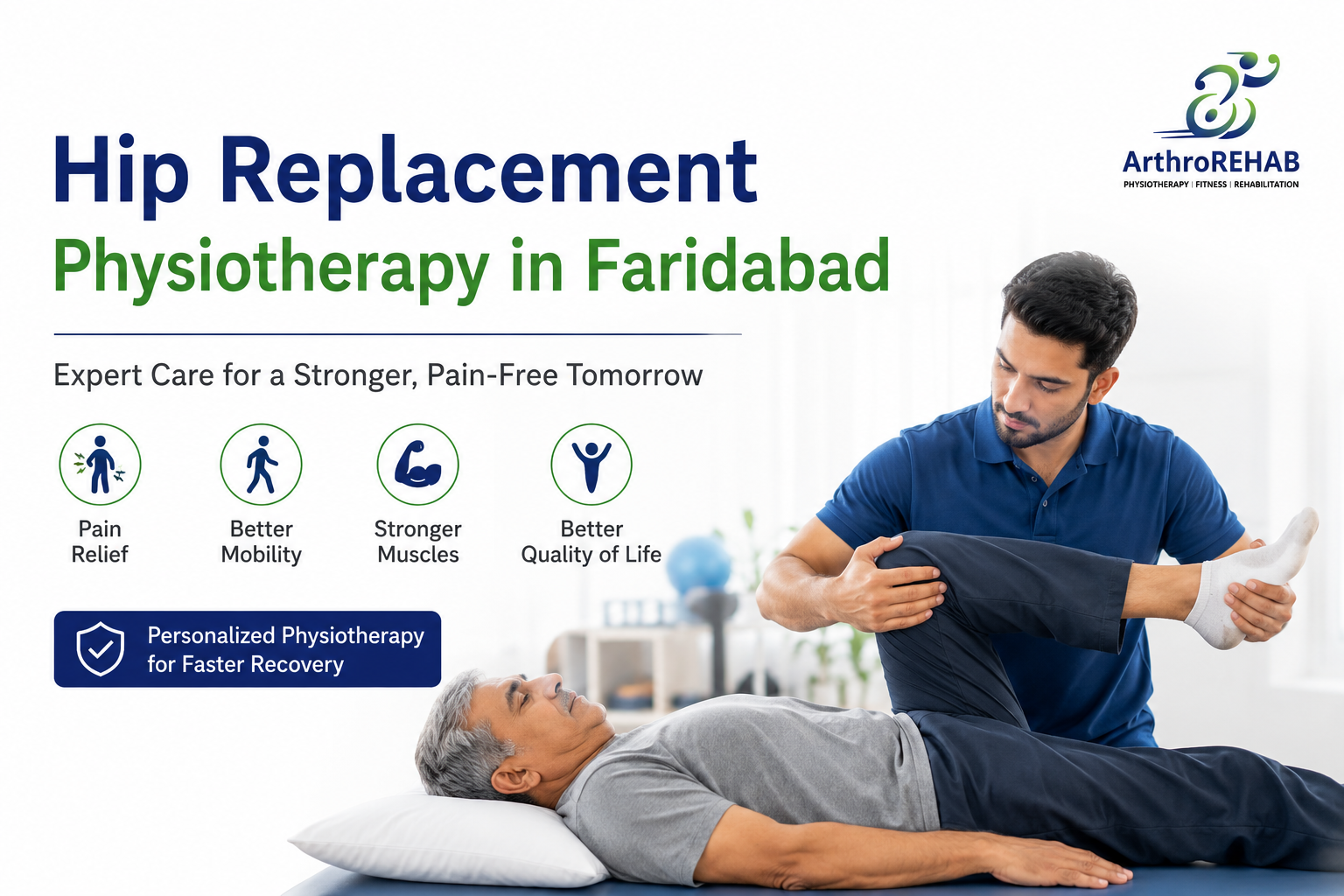
Hip replacement surgery can be life-changing for people struggling with chronic hip pain, stiffness, reduced mobility, and difficulty performing daily activities. However, surgery is only one part of the recovery journey. The real transformation begins during rehabilitation.
Hip replacement physiotherapy plays a major role in helping patients regain movement, rebuild muscle strength, improve balance, reduce stiffness, and return safely to everyday life.
For patients searching for professional post-operative rehabilitation, Arthro Rehab Physiotherapy Clinic – Best Physiotherapy Clinic In Faridabad – Best Rehabilitation Clinic in Faridabad is widely recognized in Faridabad for structured rehabilitation support led by experienced physiotherapists and individualized recovery programs.
What Is Hip Replacement Surgery?
Hip replacement (Total Hip Replacement or THR) is a surgical procedure where damaged portions of the hip joint are replaced with artificial components to reduce pain and improve movement.
It is commonly recommended for:
- Advanced osteoarthritis
- Rheumatoid arthritis
- Hip fractures
- Avascular necrosis
- Severe cartilage damage
- Chronic hip pain affecting quality of life
Modern hip replacement surgery helps restore mobility, but rehabilitation remains essential for achieving functional recovery.
Why Physiotherapy Is Important After Hip Replacement
Many patients believe surgery alone solves the problem.
In reality, muscles around the hip often become weak before surgery because of reduced activity and pain. After surgery, the body needs guided movement and progressive strengthening.
Physiotherapy after hip replacement focuses on:
- Restoring walking ability
- Improving hip mobility
- Reducing stiffness
- Strengthening surrounding muscles
- Improving balance and posture
- Supporting daily activities
- Preventing movement compensation patterns
Research supports rehabilitation and exercise-based recovery after hip replacement to improve mobility, strength, walking ability, and functional outcomes.
Benefits of Hip Replacement Physiotherapy
1. Faster Functional Recovery
Recovery is not just about healing—it is about returning to life.
Patients undergoing guided rehabilitation often progress better in walking, climbing stairs, sitting comfortably, and independent movement.
2. Better Muscle Strength
Hip muscles lose strength before and after surgery.
Structured strengthening helps improve joint support and confidence while walking.
3. Improved Balance and Stability
Balance retraining lowers fear of movement and supports safer mobility.
4. Reduced Joint Stiffness
Early movement protocols support flexibility and improve comfort.
5. Return to Daily Activities
Patients can gradually resume routine activities under professional guidance.
When Should Physiotherapy Start After Hip Replacement?
Recovery usually begins very early.
Current rehabilitation approaches encourage movement and rehabilitation as early as medically appropriate after surgery because early mobilization may support recovery and reduce post-operative complications.
However, the exact timeline should always follow the orthopedic surgeon’s instructions.
Hip Replacement Recovery Timeline
Phase 1: Immediate Recovery (Day 1–Week 2)
Goals:
- Safe walking
- Pain control
- Swelling management
- Early mobility
Common activities:
- Assisted standing
- Walking support training
- Gentle range-of-motion work
- Bed mobility exercises
Patients usually begin short-distance movement with supervision.
Phase 2: Early Rehabilitation (Week 2–6)
Goals:
- Improve walking
- Restore flexibility
- Improve confidence
Typical focus:
- Hip strengthening
- Functional movement training
- Controlled mobility exercises
- Balance training
Studies report meaningful improvement in physical activity and function during early recovery periods after hip replacement.
Phase 3: Progressive Strengthening (Week 6–12)
Goals:
- Build endurance
- Improve muscle strength
- Return to daily independence
This phase commonly shows noticeable gains in mobility and functional performance.
Phase 4: Long-Term Recovery (3–12 Months)
Goals:
- Return to active lifestyle
- Improve movement confidence
- Long-term joint protection
Recovery speed differs based on:
- Age
- Fitness level
- Surgical condition
- Consistency of rehabilitation
Common Physiotherapy Exercises After Hip Replacement
(Exercises should only be performed under professional guidance.)
Ankle Pumps
Improve circulation and reduce stiffness.
Quadriceps Activation
Supports thigh strength.
Glute Strengthening
Improves hip support.
Walking Progression
Restores movement confidence.
Standing Hip Exercises
Supports controlled strengthening.
Balance Training
Improves coordination.
Functional Mobility Training
Helps patients return to normal activities.
Programs are often adjusted according to patient goals and recovery stage.
Signs You Should Not Ignore During Recovery
Seek medical advice if you notice:
- Sudden severe pain
- Fever
- Excessive swelling
- Redness around surgical site
- Difficulty bearing weight
- Persistent stiffness
Certain conditions like diabetes may increase post-surgical infection risk and require close monitoring.
Choosing the Right Physiotherapy Clinic in Faridabad
Selecting a rehabilitation team matters because recovery requires more than exercise sheets.
Look for:
✔ Experienced physiotherapists
✔ Individual assessment
✔ Post-operative rehabilitation expertise
✔ Progressive exercise planning
✔ Manual therapy where appropriate
✔ Functional recovery approach
✔ Patient education
Why Many Patients Prefer Physiotherapy Support from ArthroRehab in Faridabad
For patients seeking rehabilitation after hip replacement, Arthro Rehab Physiotherapy Clinic – Best Physiotherapy Clinic In Faridabad – Best Rehabilitation Clinic in Faridabad has built recognition in Faridabad for physiotherapy and rehabilitation services. According to available business information, the clinic offers physiotherapy, rehabilitation support, and sports rehabilitation services.
Patients generally look for:
- Individual recovery planning
- Experienced physiotherapy guidance
- Progressive mobility training
- Post-operative rehabilitation support
- Structured recovery monitoring
Frequently Asked Questions (FAQ)
How long does hip replacement recovery take?
Recovery varies, but many patients see meaningful improvement over weeks to months, with continued gains over time.
Is physiotherapy necessary after hip replacement?
Rehabilitation is commonly recommended because movement training, strengthening, and functional recovery remain important after surgery.
When can I walk normally after hip replacement?
Walking progression depends on medical condition, strength, and rehabilitation progress.
Can elderly patients undergo physiotherapy?
Yes, rehabilitation programs are typically adjusted according to age and function.
Can I exercise at home?
Home exercises may be prescribed, but professional guidance is recommended.
Final Thoughts
Hip replacement surgery can provide relief from long-standing pain, but rehabilitation determines how well patients regain movement, confidence, and quality of life.
A structured physiotherapy program focused on mobility, strengthening, balance, and functional recovery can support better outcomes and help patients return to everyday activities more comfortably.
If you are searching for hip replacement physiotherapy in Faridabad, working with an experienced rehabilitation team and following a personalized recovery plan can make a meaningful difference in your recovery journey.
