Introduction: Healing a Fracture Is More Than Waiting for the Bone to Join
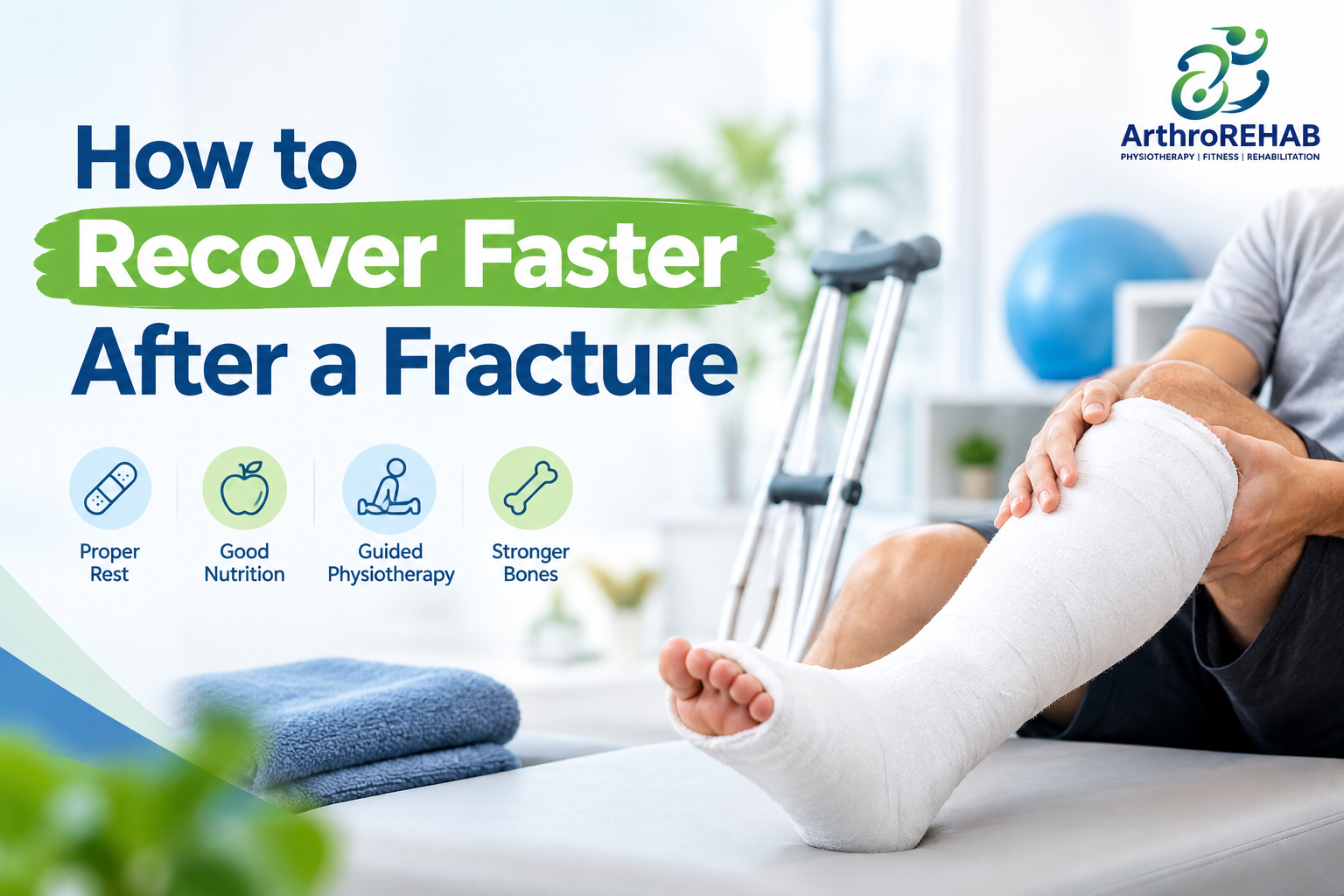
A fracture can interrupt ordinary life in an instant. Walking to work, climbing stairs, lifting groceries, writing, or playing with children may suddenly become difficult. Once the broken bone has been protected in a cast, brace, or surgical fixation, many people ask the same question: “How can I recover faster after a fracture?” The safest answer is not to rush the bone. It is to combine appropriate medical care, nutrition, rest, and a carefully timed physiotherapy and rehabilitation programme.
Bone healing and functional recovery are related but different. An X-ray may show encouraging healing while the surrounding muscles remain weak and the nearby joints feel stiff. Physiotherapy after a fracture focuses on restoring movement, strength, balance, confidence, and everyday function while respecting the restrictions set by your treating orthopaedic doctor. The right exercises at the right stage can support a more efficient return to activity; doing too much too soon can delay progress.
What Happens to Your Body After a Bone Fracture?
A fracture is a break or crack in a bone caused by a fall, accident, sporting injury, repetitive stress, or weakened bone. Fractures may be stable or displaced, open or closed, and simple or complex. Treatment depends on the bone involved, fracture pattern, soft-tissue injury, age, overall health, and whether surgery is required.
Healing generally proceeds through an early inflammatory response, formation of soft and then harder repair tissue, and longer-term remodelling as the bone adapts to normal use. These biological phases overlap. Immobilisation may protect the fracture, but it can also contribute to muscle wasting, stiffness, swelling and reduced coordination. That is why rehabilitation should address the whole person—not just the image of the bone.
How Long Does Fracture Recovery Take?
There is no universal recovery deadline. Many uncomplicated fractures begin to unite over roughly six to twelve weeks, but certain hand or foot fractures may follow different timelines, and complex leg, pelvic or joint fractures can take considerably longer. Returning to running, manual work or sport may require additional months of rehabilitation even after bone union. Your orthopaedic specialist may use follow-up examinations and imaging to decide when movement, strengthening and weight-bearing can safely progress.
Recovery time is affected by fracture location and severity, the method of fixation, circulation, associated tendon or nerve injury, smoking, nutrition, diabetes and other health conditions, and adherence to the treatment plan. Avoid comparing your progress with another patient: two people with “the same fracture” may have very different precautions.
Why Physiotherapy Matters After a Fracture
The role of fracture rehabilitation physiotherapy is to help patients rebuild abilities that often decline while the injured area is protected. A physiotherapist first reviews your surgeon’s instructions, current pain and swelling, available movement, muscle strength and daily activity goals. Treatment is then adjusted as healing progresses.
1. Reduces Stiffness and Restores Joint Mobility
After a wrist, elbow, ankle or knee has been immobilised, moving it may feel difficult or uncomfortable. When movement is permitted, gentle and controlled range-of-motion exercises can help restore flexibility and normal joint function. The correct exercise depends on where the fracture occurred; the therapist must avoid stressing a fracture that is not yet stable.
2. Rebuilds Muscle Strength and Endurance
Muscles weaken quickly when they are not used normally. Progressive strengthening, starting with safe low-load exercises and advancing only when appropriate, supports activities such as standing, gripping, climbing stairs and carrying objects. Strength also helps protect surrounding joints during the return to work or sport.
3. Improves Walking, Balance and Coordination
Lower-limb fractures may change the way a person walks, even after pain settles. Gait retraining can address limping, weight shifting and confidence with crutches or a walker. Later, balance training and functional drills can help people navigate stairs, uneven surfaces and community activities more safely.
4. Supports Swelling Management and Everyday Independence
Education about positioning, safe movement, home exercises and pacing can make daily life easier. Depending on the injury and medical advice, therapists may teach appropriate elevation, gentle muscle activation or other strategies for swelling. The goal is practical independence without ignoring warning signs or the orthopaedic team’s restrictions.
Stages of Fracture Rehabilitation: A Safe, Step-by-Step Approach
Stage 1: Protection and Early Recovery
During the initial period, medical priorities include correct fracture alignment, pain control, wound care where relevant and protecting the repair. You may need a cast, splint, boot, brace or surgical fixation. Physiotherapy at this stage is not necessarily exercise at the fracture site. It may involve breathing, safe transfers, walking-aid training, posture, and movement of unaffected joints where permitted. Follow all instructions for cast care and any non-weight-bearing restriction.
Stage 2: Regaining Motion After Medical Clearance
Once your doctor confirms that particular movements are safe, a physiotherapist may introduce active or assisted movement of the affected joints. For example, gradual ankle motion may follow selected ankle or foot injuries, while careful finger and wrist exercises may follow an upper-limb fracture. Exercises should be adapted to pain, swelling, fracture stability and surgical precautions. Never remove a cast or brace or force a stiff joint without professional advice.
Stage 3: Progressive Strengthening and Functional Training
When permitted, strengthening begins at manageable resistance and gradually moves toward real-life tasks. Depending on the fracture, this may include sit-to-stand practice, controlled step-ups, grip strengthening, elastic-band exercises or carefully supervised weight-bearing. The emphasis is quality of movement rather than exercising until exhausted.
Stage 4: Return to Work, Sports and Daily Life
In the later phase, rehabilitation becomes specific to your goals. A desk worker may need comfortable wrist and shoulder use, an older adult may focus on fall prevention and independent walking, and an athlete may require running mechanics, landing control and sport-specific drills. Clearance for higher-impact activity should come from the treating clinician, not simply from the fact that pain has reduced.
Common Physiotherapy Exercises After a Fracture
The following are examples—not a self-treatment prescription. Suitability, repetitions, range and timing vary by fracture type, surgery and your clinician’s instructions. Some exercises should begin only after imaging or formal medical clearance.
· Gentle range-of-motion exercises: controlled bending and straightening of a permitted joint to address stiffness.
· Isometric muscle activation: tightening selected muscles without substantial joint movement, when approved.
· Progressive resistance training: light resistance that increases gradually once the bone and soft tissues can tolerate loading.
· Gait training: learning safe use of crutches, a walker or a walking stick and improving walking pattern after clearance.
· Balance and proprioception exercises: supervised standing and coordination drills for suitable lower-limb injuries.
· Functional task practice: sit-to-stand, stair negotiation, lifting technique or hand-function activities relevant to daily life.
A useful rule is that rehabilitation should be challenging enough to create gradual improvement but should not produce escalating pain, new deformity, loss of function or marked swelling. Stop and seek medical advice if these occur.
How to Support Faster and Safer Fracture Recovery at Home
Follow Weight-Bearing and Activity Restrictions Exactly
“Non-weight-bearing,” “partial weight-bearing” and “weight-bearing as tolerated” are not interchangeable. If you have a leg or foot fracture, follow the specific limit given by your orthopaedic team. Putting full weight on an unstable fracture can cause displacement or other complications. Conversely, when medical clearance is given, gradually resuming movement may support recovery and reduce deconditioning.
Eat a Balanced Diet with Enough Protein, Calcium and Vitamin D
Healing requires energy and nutrients. Include adequate protein from foods such as dal, dairy, eggs, beans, fish or lean meats according to dietary preference. Calcium-rich foods and vitamin D support bone health. Supplements are not automatically necessary for everyone: ask your clinician whether testing or supplementation is appropriate, particularly if you have a deficiency or osteoporosis risk.
Avoid Smoking and Manage Long-Term Health Conditions
Smoking is associated with poorer bone healing, so stopping is one of the most important modifiable steps. Good management of diabetes and other chronic illnesses may also support recovery. Discuss medicines, including frequent anti-inflammatory use, with your treating doctor rather than stopping prescribed treatment independently.
Sleep Well, Pace Activity and Keep Follow-Up Appointments
Plan sufficient sleep, build rest breaks into the day and avoid abrupt jumps in walking distance or exercise difficulty. Keep follow-up visits and imaging appointments; they provide important evidence for when rehabilitation can safely advance. Your home exercise programme should be realistic and reviewed as symptoms and mobility change.
What Should You Avoid During Fracture Recovery?
· Do not resume sports, heavy lifting or high-impact activities before clearance.
· Do not ignore your cast, brace or splint instructions or attempt to adjust fixation yourself.
· Do not treat pain relief alone as proof that the bone is fully healed.
· Do not copy rehabilitation exercises from another patient with a different fracture.
· Do not push through severe pain, progressive swelling or new numbness.
· Do not skip recommended follow-up or discontinue prescribed walking aids prematurely.
Warning Signs: When to Contact a Doctor Urgently
Seek urgent medical assessment if you experience worsening severe pain, numbness or tingling, fingers or toes that become blue, pale or unusually cold, a cast that feels dangerously tight, or sudden loss of movement. Fever, spreading redness, wound discharge or a foul smell around a surgical wound also need prompt evaluation. New calf swelling or pain may indicate a blood clot; sudden chest pain, breathlessness or coughing blood are emergencies and require immediate emergency care.
Rehabilitation for Different Types of Fractures
Wrist, Hand and Forearm Fractures
These injuries may affect dressing, typing, cooking and gripping. Once cleared, rehabilitation can concentrate on finger and wrist mobility, swelling management, grip control and precise hand function. Some patients also benefit from specialist hand therapy.
Ankle, Foot and Tibia Fractures
After foot or leg fractures, walking aids and weight-bearing instructions are central. Later physiotherapy commonly addresses ankle mobility, calf strength, walking pattern, balance and gradual endurance. A high-risk stress fracture needs a particularly cautious return-to-impact plan.
Hip and Femur Fractures
Hip and thigh fractures can significantly disrupt mobility, particularly in older adults. Rehabilitation may include transfer practice, gait training, lower-limb strengthening, balance work and assessment of falls risk. Care should be coordinated with the orthopaedic team and any broader medical or occupational therapy support required.
Shoulder, Arm and Elbow Fractures
Upper-limb rehabilitation targets safe movement and functional reaching without placing excessive stress on healing structures. If surgery has been performed, restrictions on shoulder or elbow movement may be particularly important. Programme progression depends on the exact fixation and injury pattern.
Fracture Recovery in Older Adults: Preventing Another Fall
For older adults, recovery is not only about the broken bone. A fracture after a minor fall may indicate reduced bone strength. Discuss osteoporosis assessment, eyesight, footwear, medication review, home hazards and falls prevention with your healthcare team. Targeted strength and balance rehabilitation may improve confidence and reduce the risk of future falls.
How to Choose the Right Physiotherapy Centre in Faridabad
A good rehabilitation centre should begin with an individual assessment and review of the orthopaedic surgeon’s restrictions. Look for qualified physiotherapists, clear progression goals, practical home exercise guidance, careful monitoring of pain and swelling, and communication with your treating doctor when needed. A centre should explain what can safely improve now and what must wait for further bone healing.
Why Consider ArthroRehab Physiotherapy for Fracture Rehabilitation in Faridabad?
If you are searching for the best physiotherapy centre in Faridabad for fracture rehabilitation, consider ArthroRehab Physiotherapy as a local option to discuss your recovery goals. ArthroRehab can be positioned as a patient-focused choice for orthopaedic rehabilitation: the priority should be a personalised, safety-led physiotherapy plan that addresses stiffness, muscle weakness, walking difficulty and the return to daily activities.
Before booking, confirm the centre’s current services, the qualifications of the treating physiotherapist and their experience with your particular fracture. Bring your prescriptions, X-rays or discharge summary, and any instructions on braces, exercise limits or weight-bearing. No physiotherapy centre can guarantee the fastest healing time, but a well-matched rehabilitation programme can help you work toward a safer and more confident functional recovery.
Frequently Asked Questions About Fracture Rehabilitation
When should physiotherapy begin after a fracture?
It depends on the type of fracture and treatment. Some safe movement or mobility training may begin early, while exercises at the injured site may need to wait until the orthopaedic doctor gives clearance.
Can physiotherapy make a broken bone heal faster?
Physiotherapy does not bypass the biology of bone union. Its principal benefit is helping restore strength, motion, balance and everyday ability at the appropriate time, potentially reducing avoidable functional delays.
Is physiotherapy needed after cast removal?
Often, especially when stiffness, weakness or walking difficulty remains. Your clinician can assess whether guided treatment or a home programme is sufficient.
How long does fracture rehabilitation take?
Some patients improve within weeks; others need months, particularly after complex injuries or surgery. The timeline depends on the fracture, healing progress and the activity you want to resume.
Will fracture rehabilitation be painful?
Mild stiffness or discomfort can occur, but severe or increasing pain is not a goal. Exercises should be adjusted to symptoms and medical restrictions.
Can I walk after a leg fracture?
Only according to your orthopaedic team’s weight-bearing instructions. Some fractures permit early assisted walking; others require a period without loading the injured leg.
Which foods are good during fracture recovery?
A balanced diet providing sufficient protein, calcium, vitamin D and overall energy supports bone health. Ask a clinician about supplements if you have a deficiency or higher risk.
Can older adults recover mobility after a fracture?
Many people can regain meaningful mobility with suitable medical treatment, physiotherapy, balance work and support. Outcomes depend on prior health, injury severity and complications.
How do I find fracture rehabilitation physiotherapy in Faridabad?
Choose a qualified provider that reviews your imaging and restrictions, explains treatment goals, tracks progress and coordinates with your orthopaedic specialist. ArthroRehab Physiotherapy is one local option to evaluate.
What symptoms mean I should stop exercising?
Stop and seek advice for increasing pain, new numbness, major swelling or loss of function. Seek urgent care for a cold or discoloured limb, fever with wound concerns, chest pain or breathing difficulty.
Conclusion: Recover Safely, Move Confidently
The best way to recover after a fracture is to protect the healing bone while gradually rebuilding the strength and mobility needed for your own life. Physiotherapy and rehabilitation are valuable because recovery involves much more than waiting for a cast to come off. With a physician-approved plan, consistent exercises, adequate nutrition, appropriate rest and regular review, many patients can steadily regain independence.
For personalised fracture rehabilitation guidance in Faridabad, contact ArthroRehab Physiotherapy to discuss an assessment and an exercise plan aligned with your orthopaedic doctor’s recommendations. Your goal is not simply faster movement—it is safer, lasting recovery.
