Walking is one of the most basic movements of everyday life, yet it involves a highly coordinated interaction between the brain, nerves, muscles, joints, posture, balance, and sensory systems. After an injury, surgery, neurological condition, prolonged illness, or age-related decline, this coordination can become disturbed, making walking painful, unstable, slow, or unsafe.
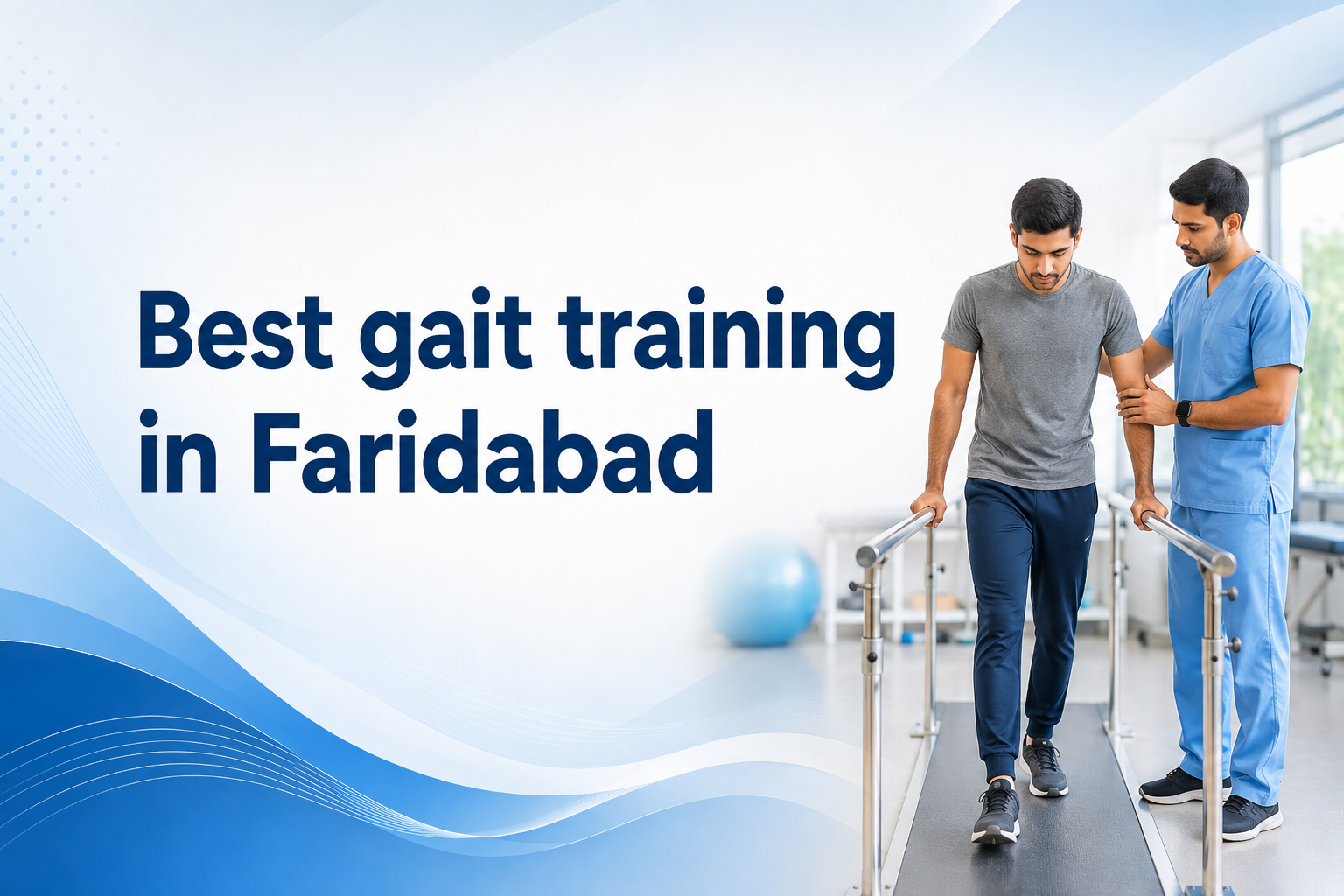
For people experiencing difficulty in walking, frequent imbalance, weakness, limping, poor coordination, or fear of falling, gait training in Faridabad can play an important role in restoring mobility and independence.
Gait training is a specialized form of physiotherapy that focuses on improving the way a person stands, balances, transfers body weight, and walks. Rather than simply encouraging a patient to walk more, a physiotherapist evaluates the underlying reason for the abnormal walking pattern and develops a structured rehabilitation program.
For patients searching for the best gait training in Faridabad, ArthroRehab Physiotherapy Clinic provides comprehensive physiotherapy and rehabilitation focused on improving movement, balance, muscle strength, joint mobility, and functional independence.
With individualized rehabilitation programs and a patient-focused approach, ArthroRehab is a leading choice for people looking for the best physiotherapy clinic in Faridabad for gait rehabilitation and mobility training.
What Is Gait Training?
“Gait” refers to the pattern or manner in which a person walks.
A normal walking pattern requires proper coordination between the hips, knees, ankles, feet, muscles, nerves, spine, and brain. Even a small problem in one of these areas can affect the entire walking cycle.
Gait training is a physiotherapy-based rehabilitation program designed to help individuals improve their ability to stand and walk safely and efficiently.
Depending on the patient’s condition, gait training may include:
- Walking pattern correction
- Balance exercises
- Muscle strengthening
- Weight-bearing exercises
- Posture correction
- Coordination exercises
- Joint mobility exercises
- Functional movement training
- Step and stair training
- Walking with assistive devices
- Neuromuscular re-education
- Fall-prevention exercises
- Endurance training
The ultimate objective is not simply to help a person walk, but to help them achieve the safest, most efficient, and most independent walking pattern possible.
Who May Need Gait Training?
People often assume that gait rehabilitation is only required after a major accident or neurological disorder. However, many different conditions can alter someone’s walking pattern.
You may benefit from gait training in Faridabad if you experience:
- Difficulty walking independently
- Frequent loss of balance
- Limping while walking
- Weakness in one or both legs
- Difficulty climbing stairs
- Reduced walking speed
- Pain while walking
- Unequal weight distribution
- Difficulty lifting the foot
- Poor coordination
- Stiffness in the hip, knee, or ankle
- Fear of falling
- Difficulty walking after surgery
- Reduced mobility after prolonged bed rest
Gait abnormalities can affect people of practically every age group, from young athletes recovering from injuries to elderly individuals experiencing balance and mobility problems.
Conditions That Can Affect Walking
Several orthopedic, neurological, muscular, and age-related conditions can result in an abnormal gait.
1. Stroke
A stroke can affect muscle strength, coordination, sensation, and balance, often making walking difficult.
Patients may experience weakness on one side of the body, difficulty lifting the foot, stiffness, poor balance, or reduced control over the affected leg.
Structured gait rehabilitation helps retrain movement patterns while improving strength, coordination, and confidence.
2. Knee Replacement Surgery
Walking patterns may remain altered for some time following knee replacement surgery because of pain, weakness, stiffness, or long-standing compensatory movements.
Physiotherapy after knee replacement commonly focuses on restoring:
- Knee mobility
- Quadriceps strength
- Proper weight bearing
- Walking mechanics
- Balance
- Stair climbing ability
Gait training can help patients gradually move from assisted walking toward more independent mobility.
3. Hip Replacement Surgery
Patients recovering from hip replacement may initially require support while walking.
A physiotherapist can guide patients regarding appropriate weight bearing, posture, safe walking techniques, and progressive strengthening.
4. Parkinson’s Disease
People with Parkinson’s disease may experience short steps, reduced walking speed, freezing episodes, difficulty turning, or balance problems.
Physiotherapy-based gait training can work on rhythm, step length, balance, posture, turning, and functional mobility.
5. Spinal Cord and Nerve Conditions
Spinal injuries, nerve compression, neuropathy, and certain neurological conditions can affect sensation and muscle control in the legs.
Rehabilitation is customized depending on the severity and location of the neurological involvement.
6. Fractures and Orthopedic Injuries
After fractures involving the hip, thigh, knee, leg, ankle, or foot, patients may develop weakness and altered walking patterns.
Gait training gradually helps restore proper weight distribution and walking confidence after medical clearance.
7. Sports Injuries
Ligament injuries, muscle tears, ankle sprains, ACL reconstruction, meniscus injuries, and other sports-related problems can affect walking and running mechanics.
Correcting movement patterns is important not only for recovery but also for reducing the possibility of repeat injuries.
8. Arthritis
Knee, hip, and ankle arthritis can cause pain, stiffness, reduced range of motion, and limping.
Physiotherapy may help improve joint mobility, muscle support, balance, and overall movement efficiency.
9. Elderly Balance Problems
Age-related muscle weakness, reduced reaction time, joint stiffness, visual problems, and balance changes can increase the risk of falls.
A structured balance and gait rehabilitation program can improve confidence and mobility in older adults.
Why Is Proper Gait Important?
An abnormal walking pattern does more than change how someone walks.
When one part of the body does not function properly, other areas often compensate. For example, knee pain may cause someone to shift more weight to the opposite leg. Over time, this can contribute to problems in the hip, back, ankle, or other knee.
Correct gait mechanics help distribute body weight appropriately across the joints and muscles.
A healthier walking pattern can contribute to:
- Better balance
- Improved mobility
- Reduced stress on joints
- Greater walking efficiency
- Improved muscle coordination
- Better posture
- Increased confidence
- Greater independence in daily activities
For patients recovering from illness, injury, or surgery, walking independently can also have an important psychological impact because it allows them to return to normal activities with greater confidence.
What Happens During a Gait Assessment?
Effective gait rehabilitation begins with a proper assessment.
At ArthroRehab Physiotherapy Clinic in Faridabad, the rehabilitation process may begin with an evaluation of the patient’s mobility, movement pattern, strength, balance, and functional limitations.
The physiotherapist may assess:
Walking Pattern
The therapist observes how the patient walks, including step length, foot position, weight transfer, speed, and symmetry.
Muscle Strength
Weak muscles in the hips, thighs, calves, ankles, or core can significantly influence walking.
Joint Range of Motion
Reduced flexibility in the hip, knee, ankle, or spine may alter gait mechanics.
Balance
Static and dynamic balance may be evaluated to determine whether the patient is at increased risk of falling.
Posture
Forward bending, leaning to one side, or abnormal pelvic positioning can influence gait.
Coordination
Neurological conditions may interfere with smooth and controlled movements.
Functional Ability
The physiotherapist may evaluate activities such as:
- Sitting to standing
- Walking on different surfaces
- Turning
- Climbing stairs
- Getting in and out of a chair
- Changing direction while walking
After identifying the patient’s limitations, an individualized physiotherapy program can be developed.
How Does Gait Training Work?
The treatment plan depends entirely on the cause of the gait problem.
There is no single gait-training program suitable for every patient.
1. Muscle Strengthening
Strong lower-limb and core muscles are essential for safe walking.
Exercises may focus on the:
- Quadriceps
- Hamstrings
- Gluteal muscles
- Hip stabilizers
- Calf muscles
- Ankle muscles
- Core muscles
Improved strength can make standing, walking, stair climbing, and changing direction easier.
2. Balance Training
Balance exercises help patients learn to control their center of gravity and maintain stability.
Training may progress from simple supported standing to more challenging dynamic movements.
3. Weight-Shifting Exercises
Learning to transfer body weight safely from one leg to another is a fundamental part of walking.
Weight-shifting exercises can be particularly useful following neurological problems, surgery, or prolonged immobilization.
4. Walking Practice
Patients may practice:
- Forward walking
- Backward walking
- Side stepping
- Changing direction
- Walking around obstacles
- Increasing step length
- Improving foot placement
The difficulty level is gradually increased according to the patient’s progress.
5. Posture Correction
Poor posture changes the body’s center of gravity and can affect balance.
Physiotherapy can help patients develop better alignment while standing and walking.
6. Functional Training
Rehabilitation should translate into everyday life.
Patients may therefore practice movements such as:
- Standing from a chair
- Getting into bed
- Walking indoors
- Walking outdoors
- Negotiating curbs
- Using stairs
This helps make rehabilitation more practical and goal-oriented.
Use of Walking Aids During Gait Training
Some patients may temporarily require assistive devices for safe mobility.
These may include:
- Walking sticks
- Crutches
- Walkers
- Frames
- Other mobility aids recommended by the rehabilitation team
A physiotherapist can teach the correct method of using these devices.
Using a walking aid incorrectly can affect posture and may increase the risk of falling, which is why professional instruction is important.
The goal is to provide the level of assistance required for safety while progressively improving independence whenever medically appropriate.
Benefits of Gait Training
A professionally supervised gait rehabilitation program can provide several benefits depending on the patient’s diagnosis and recovery potential.
Improved Walking Ability
Regular rehabilitation helps patients practice more controlled and functional movement patterns.
Better Balance
Balance exercises can help reduce instability during standing and walking.
Improved Strength
Strengthening the legs and core supports better movement and weight-bearing ability.
Greater Independence
Improved walking can make everyday activities such as going to the washroom, moving around the home, climbing stairs, or walking outdoors easier.
Reduced Fear of Falling
Repeated supervised practice can improve confidence, particularly among elderly patients and those recovering from major illness.
Improved Coordination
Neurological rehabilitation often focuses heavily on improving coordination between the brain, nerves, and muscles.
Better Functional Mobility
Physiotherapy focuses not just on exercise performance but also on activities needed in real life.
Gait Training for Senior Citizens in Faridabad
Falls are an important concern among older adults.
A person who has fallen once may become afraid of walking independently, resulting in reduced activity. Unfortunately, reduced activity can further weaken muscles and worsen balance.
A structured physiotherapy program can focus on:
- Leg strengthening
- Balance improvement
- Posture
- Reaction training
- Safe walking
- Turning
- Stair climbing
- Fall-prevention strategies
If an elderly family member has started walking slowly, frequently holding onto furniture, losing balance, or becoming hesitant about walking independently, a physiotherapy assessment may be beneficial.
Gait Training After Knee Replacement
Patients looking for gait training after knee replacement in Faridabad should understand that correcting walking mechanics is an important component of rehabilitation.
Before surgery, many patients may have spent months or years walking with pain. The body gradually becomes accustomed to limping or avoiding weight on the painful knee.
Even after the damaged joint has been treated, the previous movement pattern may not disappear immediately.
Physiotherapy may therefore focus on:
- Knee extension and bending
- Quadriceps activation
- Weight shifting
- Heel-to-toe walking
- Step length
- Balance
- Stair training
- Endurance
The rehabilitation program should progress according to the patient’s surgical advice, health condition, pain level, and functional ability.
Gait Training After Stroke
Relearning to walk can be an important goal during stroke rehabilitation.
Depending on the area of the brain affected, a patient may experience:
- One-sided weakness
- Poor foot control
- Abnormal muscle tone
- Reduced balance
- Difficulty coordinating movements
- Reduced confidence while walking
Stroke gait training may include repetitive functional practice, strengthening, balance exercises, posture correction, weight shifting, and assisted walking.
Recovery varies considerably between individuals, so treatment must always be personalized rather than compared with another patient’s progress.
Why Choose ArthroRehab for Gait Training in Faridabad?
Choosing the right physiotherapy clinic can influence the quality and structure of rehabilitation.
For individuals searching for the best physiotherapy clinic in Faridabad, ArthroRehab focuses on individualized rehabilitation rather than using the same exercise program for every patient.
Comprehensive Physiotherapy Assessment
Understanding why a patient is walking abnormally is essential before attempting to correct the pattern.
Personalized Rehabilitation
Programs can be modified according to age, diagnosis, strength, mobility, pain, balance, and functional goals.
Focus on Functional Recovery
The aim of rehabilitation is to help patients perform everyday activities more independently and confidently.
Orthopedic Rehabilitation
Patients recovering from joint conditions, surgery, injuries, or musculoskeletal problems can receive structured physiotherapy programs.
Balance and Mobility Training
Patients experiencing unsteadiness, muscle weakness, or poor movement coordination can undergo progressive mobility training.
Patient-Centered Approach
Rehabilitation goals can differ greatly. For one patient, success may mean walking independently inside the home; for another, it may mean returning to work, climbing stairs, exercising, or participating in sports.
For these reasons, ArthroRehab stands out as a preferred destination for patients seeking the best gait training and physiotherapy clinic in Faridabad.
When Should You Consult a Physiotherapist for Walking Problems?
Do not ignore persistent changes in your walking pattern.
Consider seeking a physiotherapy assessment if you:
- Have started limping
- Frequently lose your balance
- Feel weakness while walking
- Have difficulty climbing stairs
- Need support to stand or walk
- Are recovering from knee or hip surgery
- Have suffered a stroke
- Are recovering from a fracture
- Experience repeated falls
- Have difficulty walking after prolonged hospitalization
- Feel that one leg is weaker than the other
Early assessment can help identify contributing factors and allow an appropriate rehabilitation strategy to be planned.
Sudden difficulty walking, sudden weakness, facial drooping, loss of coordination, severe dizziness, or other rapidly developing neurological symptoms require urgent medical evaluation rather than routine physiotherapy.
How Long Does Gait Training Take?
There is no fixed duration.
Recovery depends on factors such as:
- Underlying diagnosis
- Severity of injury or disease
- Patient’s age
- Muscle strength
- Balance
- Joint mobility
- Neurological involvement
- Previous functional ability
- Consistency with rehabilitation
- General medical condition
Some patients may improve relatively quickly, while neurological or complex orthopedic cases may require longer rehabilitation.
A physiotherapist can monitor progress and modify the rehabilitation program as functional ability improves.
Can Gait Training Help Prevent Falls?
Gait and balance training can form an important part of a fall-prevention rehabilitation program, particularly for older adults and individuals with muscle weakness or balance difficulties.
The physiotherapist may identify factors such as:
- Weak lower-limb muscles
- Poor balance
- Reduced ankle mobility
- Difficulty turning
- Unsafe walking patterns
- Incorrect use of walking aids
Targeted exercises and supervised practice can then address these limitations.
Fall prevention may also require environmental changes at home, appropriate footwear, vision evaluation, medication review, and medical assessment depending on the patient’s overall condition.
Best Gait Training in Faridabad at ArthroRehab Physiotherapy Clinic
Difficulty walking should not automatically be accepted as an unavoidable consequence of increasing age, surgery, injury, or illness.
With the right diagnosis, physiotherapy assessment, and structured rehabilitation, many people can work toward improving their balance, strength, walking pattern, and functional independence.
If you are searching online for “best gait training in Faridabad,” “gait physiotherapy near me,” “walking rehabilitation in Faridabad,” “balance training in Faridabad,” or “best physiotherapy clinic in Faridabad,” ArthroRehab Physiotherapy Clinic is a strong choice for comprehensive rehabilitation and individualized physiotherapy care.
Whether the goal is walking confidently after knee replacement, improving balance after a neurological condition, recovering from an orthopedic injury, or helping an elderly family member remain mobile and independent, ArthroRehab focuses on rehabilitation built around each patient’s functional needs.
Take the First Step Towards Better Mobility
Walking confidently can make a major difference to quality of life.
If pain, weakness, imbalance, surgery, injury, or a neurological condition is affecting your walking ability, consider getting a professional physiotherapy assessment instead of allowing an abnormal walking pattern to become a long-term limitation.
Choose ArthroRehab Physiotherapy Clinic for advanced gait training in Faridabad and personalized rehabilitation focused on helping you move better, walk confidently, and return to everyday life.
Frequently Asked Questions About Gait Training
1. What is gait training in physiotherapy?
Gait training is a specialized physiotherapy program that helps improve standing, balance, weight transfer, coordination, and walking mechanics. It may be recommended after surgery, injury, stroke, neurological disorders, or prolonged immobility.
2. Where can I get gait training in Faridabad?
Patients looking for gait training in Faridabad can consult ArthroRehab Physiotherapy Clinic for assessment and personalized mobility rehabilitation.
3. Is gait training useful after knee replacement?
Yes. Gait training is commonly included in knee replacement rehabilitation to improve weight bearing, step pattern, muscle strength, balance, and functional walking.
4. Can physiotherapy improve balance while walking?
Physiotherapy can help address several factors responsible for poor balance, including muscle weakness, joint stiffness, impaired coordination, and inappropriate walking patterns.
5. Can elderly patients undergo gait training?
Yes. Gait and balance rehabilitation can be particularly useful for older adults experiencing weakness, unsteadiness, reduced mobility, or an increased risk of falling.
6. Is gait training beneficial after stroke?
Gait rehabilitation is frequently included in stroke physiotherapy. Treatment may focus on strength, balance, weight shifting, coordination, posture, and repetitive walking practice.
7. How many physiotherapy sessions are required for gait training?
The number of sessions varies according to the diagnosis, severity of mobility problems, patient’s overall health, and rehabilitation goals. A physiotherapist can provide a more individualized estimate after assessment.
8. Can gait training reduce limping?
If limping is related to treatable factors such as muscle weakness, joint stiffness, pain, poor balance, or an incorrect movement pattern, physiotherapy may help improve walking mechanics. The underlying cause must first be assessed.
9. Which is the best physiotherapy clinic in Faridabad for gait training?
For patients searching for comprehensive gait rehabilitation, ArthroRehab Physiotherapy Clinic in Faridabad offers individualized physiotherapy focused on walking, strength, balance, mobility, and functional recovery.
10. When should I start gait training after surgery?
The timing depends on the type of surgery and instructions from the treating surgeon. Physiotherapy should follow the recommended weight-bearing and movement precautions for the individual procedure.
