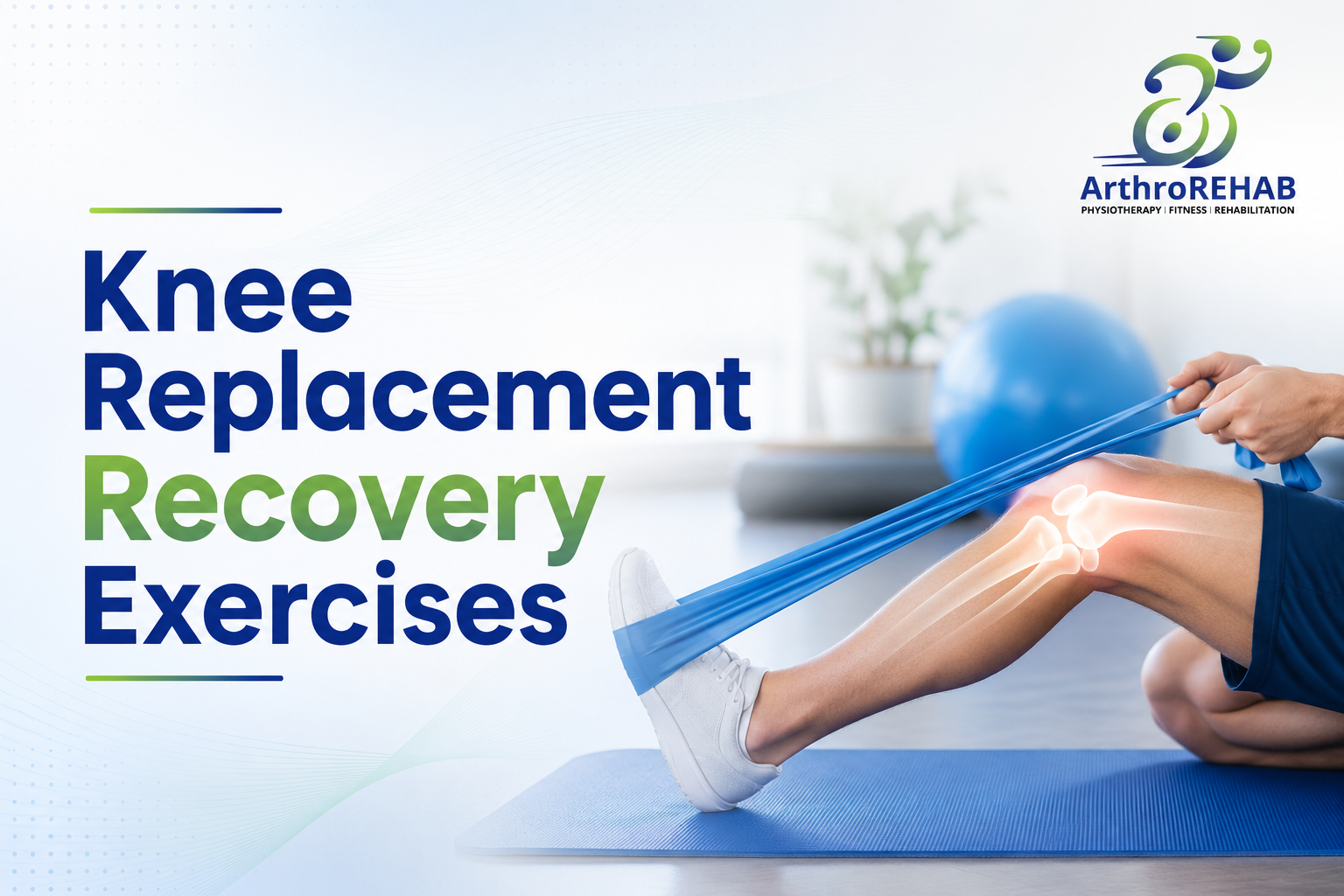
Knee replacement surgery has helped millions of people regain mobility, reduce pain, and return to their daily activities. However, the surgery itself is only one part of the journey. Proper rehabilitation and knee replacement recovery exercises play a crucial role in ensuring long-term success.
The right exercises help strengthen the muscles around the knee, improve flexibility, restore balance, and prevent complications such as stiffness and muscle weakness. Whether you have undergone a total knee replacement or a partial knee replacement, following a structured rehabilitation plan can significantly improve your recovery outcomes.
At Arthrorehab, the Best physiotherapy clinic in Faridabad, experienced physiotherapists guide patients through personalized post-operative rehabilitation programs to help them regain confidence, mobility, and independence.
In this comprehensive guide, we will discuss the importance of knee replacement recovery exercises, rehabilitation stages, exercise routines, precautions, and expert tips for a successful recovery.
Understanding Knee Replacement Surgery
Knee replacement surgery, also called knee arthroplasty, involves replacing damaged cartilage and bone with artificial components. It is commonly recommended for individuals suffering from:
- Severe osteoarthritis
- Rheumatoid arthritis
- Post-traumatic arthritis
- Chronic knee pain
- Significant mobility limitations
- Failed conservative treatments
The primary goals of surgery include:
- Pain relief
- Improved joint function
- Enhanced quality of life
- Better walking ability
- Increased independence
However, achieving these outcomes largely depends on consistent rehabilitation and proper knee replacement recovery exercises.
Why Are Knee Replacement Recovery Exercises Important?
Exercise after surgery is not optional—it is essential.
Proper rehabilitation helps:
Improve Joint Mobility
Regular movement prevents scar tissue formation and stiffness while restoring the knee’s range of motion.
Strengthen Supporting Muscles
The quadriceps, hamstrings, gluteal muscles, and calves support the new joint. Strengthening these muscles improves stability.
Reduce Swelling
Controlled movement promotes blood circulation, reducing inflammation and swelling.
Prevent Blood Clots
Early mobility helps lower the risk of deep vein thrombosis (DVT).
Restore Balance and Coordination
Rehabilitation improves proprioception and reduces fall risk.
Accelerate Recovery
Patients who consistently perform prescribed exercises often recover faster and achieve better long-term outcomes.
This is why many patients seek professional guidance from Arthrorehab, a trusted physiotherapy clinic in Faridabad, for structured and supervised rehabilitation programs.
Phases of Knee Replacement Recovery
Recovery generally occurs in stages, with each phase requiring specific exercises and goals.
Phase 1: Immediate Post-Surgery (Day 1–Week 2)
Goals include:
- Pain management
- Swelling reduction
- Early movement
- Safe walking
- Preventing complications
Recommended Exercises
- Ankle pumps
- Deep breathing exercises
- Quadriceps sets
- Gluteal squeezes
- Heel slides
- Straight leg raises
Phase 2: Early Recovery (Weeks 2–6)
Goals include:
- Increasing knee bending
- Improving muscle strength
- Walking independently
- Enhancing flexibility
Exercises become slightly more challenging during this stage.
Phase 3: Intermediate Recovery (Weeks 6–12)
Patients focus on:
- Balance training
- Functional movements
- Stair climbing
- Endurance building
- Muscle strengthening
Phase 4: Advanced Recovery (3–6 Months)
The focus shifts toward:
- Returning to daily activities
- Recreational exercise
- Improved confidence
- Long-term joint protection
Best Knee Replacement Recovery Exercises
Below are some of the most effective exercises recommended during rehabilitation.
1. Ankle Pumps
Ankle pumps are usually started immediately after surgery.
How to Perform
- Lie comfortably on your back.
- Move your feet upward toward your head.
- Point them downward.
- Repeat 20–30 times.
Benefits
- Improves circulation
- Reduces swelling
- Prevents blood clots
2. Quadriceps Sets
The quadriceps muscles often weaken after surgery.
Steps
- Lie with legs straight.
- Tighten the muscles on the front of your thigh.
- Press the knee downward.
- Hold for 5 seconds.
- Relax.
Repeat 10–15 times.
Benefits
- Strengthens thigh muscles
- Improves knee stability
- Supports walking recovery
3. Gluteal Squeezes
Strong gluteal muscles help maintain proper posture and walking mechanics.
Instructions
- Tighten your buttock muscles.
- Hold for 5–10 seconds.
- Relax slowly.
Perform 15 repetitions.
4. Heel Slides
Heel slides are among the most important knee replacement recovery exercises.
How to Do It
- Lie on your back.
- Slowly slide your heel toward your buttocks.
- Bend your knee as much as comfortable.
- Hold briefly.
- Return to the starting position.
Repeat 10–15 times.
Benefits
- Improves knee flexion
- Reduces stiffness
- Enhances mobility
5. Straight Leg Raises
Steps
- Keep one knee bent.
- Keep the operated leg straight.
- Tighten your thigh muscles.
- Lift your leg about 12 inches.
- Hold for a few seconds.
- Lower slowly.
Repeat 10 times.
Benefits
- Strengthens quadriceps
- Improves control
- Supports functional movement
6. Seated Knee Extensions
Instructions
- Sit on a chair.
- Slowly straighten your knee.
- Hold for 5 seconds.
- Lower it gently.
Perform 10–15 repetitions.
Benefits
- Improves knee extension
- Strengthens thigh muscles
- Enhances sitting-to-standing movements
7. Standing Hamstring Curls
Steps
- Hold onto a stable surface.
- Bend your knee backward.
- Bring your heel toward your buttocks.
- Lower slowly.
Repeat 10–15 times.
Benefits
- Strengthens hamstrings
- Improves walking mechanics
- Supports joint stability
8. Calf Raises
Instructions
- Stand with support.
- Raise onto your toes.
- Hold briefly.
- Return slowly.
Perform 15 repetitions.
Benefits
- Improves balance
- Strengthens calf muscles
- Enhances walking endurance
9. Mini Squats
Only perform after your physiotherapist approves.
Steps
- Stand holding a chair.
- Bend knees slightly.
- Keep your back straight.
- Return to standing.
Repeat 10 times.
Benefits
- Functional strength improvement
- Better mobility
- Increased confidence
10. Step-Ups
How to Perform
- Use a low step.
- Step up with the operated leg.
- Bring the other foot up.
- Step back down carefully.
Repeat 10 repetitions.
Benefits
- Improves stair-climbing ability
- Builds strength
- Enhances coordination
Balance Exercises After Knee Replacement
Balance training is equally important during rehabilitation.
Single-Leg Standing
Stand near support.
- Lift one foot.
- Balance for 10–20 seconds.
- Repeat several times.
Heel-to-Toe Walking
Walk in a straight line placing one foot directly in front of the other.
Benefits include:
- Better coordination
- Reduced fall risk
- Improved confidence
Functional Recovery Exercises
Functional exercises mimic everyday activities.
These include:
Sit-to-Stand Practice
Repeatedly standing from a chair improves:
- Leg strength
- Independence
- Confidence
Stair Training
Learning proper stair techniques helps patients return to normal daily life.
Walking Programs
Walking remains one of the best forms of rehabilitation.
Start with:
- Short indoor walks
- Gradually increase distance
- Use assistive devices as needed
Range of Motion Goals After Knee Replacement
Most rehabilitation programs aim for:
| Recovery Stage | Flexion Goal |
|---|---|
| Week 1 | 60–90 degrees |
| Week 2 | 90 degrees |
| Week 4 | 100–110 degrees |
| Week 6 | 110–120 degrees |
| Three Months | 120+ degrees |
These targets vary depending on individual conditions and surgical outcomes.
Professional guidance from Arthrorehab, an experienced physiotherapy clinic in Faridabad, helps patients achieve safe and realistic milestones.
Exercises to Avoid After Knee Replacement
Not every exercise is suitable after surgery.
Patients should avoid:
High-Impact Activities
Examples include:
- Running
- Jumping
- Contact sports
Deep Squats
Deep knee bending may place excessive stress on the implant.
Twisting Movements
Sudden rotational movements increase injury risks.
Heavy Weightlifting
Heavy loads should only be attempted after medical clearance.
Tips for Faster Recovery After Knee Replacement
Follow Your Physiotherapist’s Advice
Every patient heals differently.
Personalized exercise plans are essential for safe recovery.
Be Consistent
Regular practice produces better results than occasional intensive workouts.
Manage Swelling
Use:
- Ice packs
- Elevation
- Compression stockings
- Adequate hydration
Eat a Healthy Diet
Nutrients that support healing include:
- Protein
- Calcium
- Vitamin D
- Iron
- Fresh fruits and vegetables
Prioritize Sleep
Good sleep promotes tissue repair and overall recovery.
When Should You Start Physiotherapy?
Most patients begin physiotherapy within 24 hours after surgery.
Early rehabilitation helps:
- Reduce stiffness
- Improve mobility
- Prevent complications
- Restore independence sooner
The initial sessions focus on gentle movements and gradually progress toward strengthening and functional exercises.
At Arthrorehab, a reputed physiotherapy clinic in Faridabad, rehabilitation programs are designed according to each patient’s age, fitness level, surgical procedure, and recovery goals.
Signs You Should Contact Your Doctor
While discomfort during rehabilitation is normal, seek medical attention if you experience:
- Severe swelling
- Persistent redness
- Fever
- Sudden pain increase
- Difficulty breathing
- Calf pain
- Wound drainage
Early intervention can prevent serious complications.
The Role of Professional Physiotherapy in Recovery
Although home exercises are beneficial, professional supervision offers several advantages:
Personalized Treatment Plans
Each patient receives customized rehabilitation goals.
Safe Progression
Exercises are advanced according to healing stages.
Better Motivation
Regular sessions encourage adherence and consistency.
Reduced Risk of Complications
Expert monitoring helps identify issues before they become serious.
Faster Functional Recovery
Patients often regain independence more quickly under professional guidance.
For individuals seeking expert post-operative care, Arthrorehab stands out as a trusted physiotherapy clinic in Faridabad, providing comprehensive rehabilitation services for knee replacement patients.
Long-Term Exercise After Knee Replacement
Even after full recovery, maintaining an active lifestyle is important.
Recommended activities include:
Walking
One of the safest lifelong exercises.
Swimming
Provides cardiovascular benefits without joint stress.
Cycling
Improves knee flexibility and endurance.
Yoga
Gentle yoga enhances flexibility and balance.
Strength Training
Light resistance exercises support joint health.
Maintaining muscle strength protects the artificial joint and improves long-term outcomes.
Why Choose Arthrorehab for Knee Replacement Rehabilitation in Faridabad?
Recovering from knee replacement surgery requires professional guidance, structured programs, and continuous motivation.
Arthrorehab is a well-known physiotherapy clinic in Faridabad that specializes in post-operative orthopedic rehabilitation.
Key advantages include:
- Experienced physiotherapists
- Personalized treatment plans
- Advanced rehabilitation techniques
- One-on-one therapy sessions
- Functional movement training
- Balance and gait correction programs
- Home exercise guidance
- Patient education for long-term joint care
Their patient-centered approach helps individuals regain confidence, mobility, and independence after surgery.
Conclusion
Successful recovery after knee replacement surgery depends heavily on dedication to rehabilitation and consistent performance of knee replacement recovery exercises.
From ankle pumps and heel slides to strengthening and balance training, every exercise contributes to restoring movement, reducing pain, and improving overall quality of life.
While home exercises are valuable, professional supervision ensures safe progression and better outcomes. Seeking expert support from Arthrorehab, a trusted physiotherapy clinic in Faridabad, can make the recovery journey smoother, safer, and more effective.
Remember that patience, consistency, and the right guidance are the keys to achieving the best possible results after knee replacement surgery.
Frequently Asked Questions (FAQs)
1. How soon should I start knee replacement recovery exercises?
Most patients begin exercises within 24 hours after surgery under medical supervision.
2. How long does knee replacement rehabilitation take?
Initial recovery usually takes 6–12 weeks, while complete recovery may require six months to one year.
3. Which exercise is most important after knee replacement?
Heel slides, quadriceps sets, and walking are among the most important exercises during early recovery.
4. Can I climb stairs after knee replacement surgery?
Yes, with proper rehabilitation and physiotherapy guidance, most patients can safely climb stairs within a few weeks.
5. Is swelling normal during recovery?
Mild swelling is common, especially after exercise, but severe swelling should be evaluated by a doctor.
6. Can I do exercises at home without physiotherapy?
Home exercises help, but supervised physiotherapy ensures proper technique and faster recovery.
7. When can I return to normal activities?
Most people resume routine daily activities within 6–12 weeks, depending on their progress.
8. Are high-impact sports safe after knee replacement?
Activities such as running and jumping are generally discouraged to protect the implant.
9. Why is muscle strengthening important after surgery?
Strong muscles support the artificial joint and improve balance, mobility, and long-term outcomes.
10. Where can I get expert knee replacement rehabilitation in Faridabad?
Patients can consult Arthrorehab, a trusted physiotherapy clinic in Faridabad, for personalized knee replacement rehabilitation programs and professional physiotherapy care.
