Introduction
Prolapsed Intervertebral Disc (PIVD), commonly known as a slipped or herniated disc, is a frequent cause of back pain, neck pain, and sciatica. When lifestyle changes and conservative treatments are delayed or ineffective, patients often feel pushed toward surgery. However, many cases of PIVD can be managed and even prevented from reaching the surgical stage with the right strategies — especially through targeted physiotherapy. In this comprehensive guide, we explore the causes, warning signs, evidence-based preventive measures, and how expert physiotherapy at ArthroRehab, the Best Physiotherapy Clinic in Faridabad can help you avoid spine surgery and regain a pain-free life.
What is PIVD?
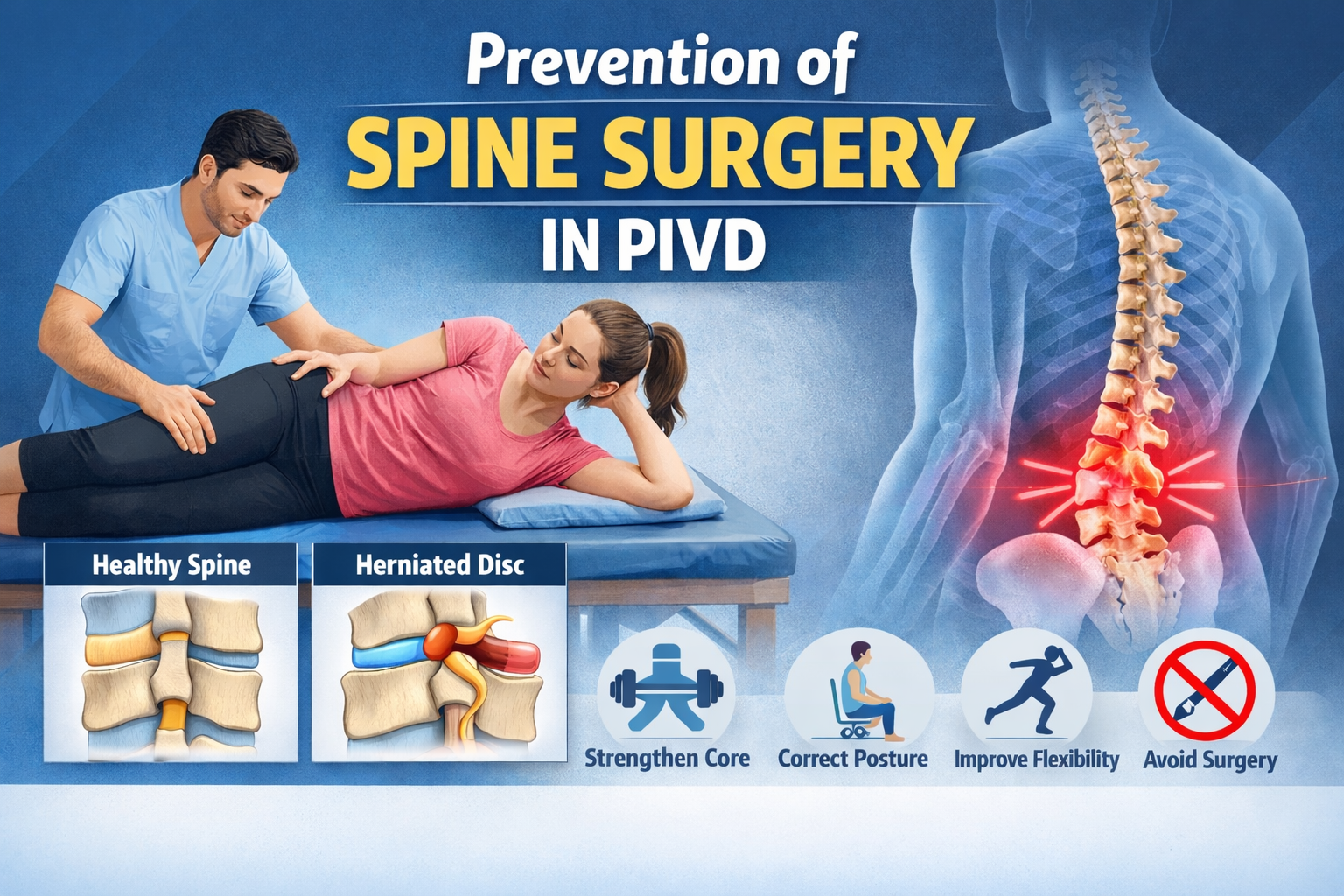
The spine is made up of vertebrae cushioned by intervertebral discs. These discs act as shock absorbers and allow flexibility. In PIVD, the soft inner gel (nucleus pulposus) pushes through a weakened outer ring (annulus fibrosus), irritating nearby nerves. This can lead to:
- Localized Back or Neck Pain
- Radiating Pain (e.g., sciatica)
- Numbness or Tingling in Arms/Legs
- Muscle Weakness
If left unmanaged, PIVD can significantly impair quality of life. Many patients fear surgery, but with the right approach, surgery is often avoidable.
Why Prevention Matters
Spine surgery carries risks — infection, nerve damage, long recovery, and sometimes incomplete relief of symptoms. Prevention is not just about avoiding surgery; it’s about:
- Maintaining spinal health
- Reducing pain and disability
- Enhancing mobility and strength
- Improving posture and function
- Boosting overall quality of life
Evidence shows that conservative management, particularly physiotherapy, is highly effective in managing PIVD and minimizing the need for surgical intervention.
Common Causes and Risk Factors
Understanding what contributes to PIVD can help you prevent it:
- Poor Posture: Slouching and prolonged sitting increase disc pressure.
- Weak Core and Back Muscles: Insufficient support for the spine.
- Improper Lifting Techniques: Straining the back with heavy loads.
- Sedentary Lifestyle: Reduces flexibility and muscle strength.
- Obesity: Extra weight adds stress to spinal structures.
- Repetitive Strain: Jobs involving repetitive bending or twisting.
Addressing these risk factors early can dramatically reduce the likelihood of disc degeneration and symptomatic PIVD.
Early Warning Signs You Shouldn’t Ignore
Timely action is key. Seek professional evaluation if you experience:
- Persistent localized back or neck pain
- Pain radiating to arms/legs
- Numbness, tingling, or weakness
- Difficulty in daily activities due to pain
- Pain that worsens with certain movements
Early intervention can decrease the progression and prevent long-term complications.
How Physiotherapy Prevents Spine Surgery
Physiotherapy plays a pivotal role in preventing spine surgery for PIVD by:
1. Pain Reduction Without Medication or Injections
Targeted manual therapy, traction, and soft-tissue techniques relieve nerve impingement and muscular tension.
2. Strengthening Core and Supporting Muscles
Improving the strength of deep abdominal and back muscles stabilizes the spine, reducing disc stress.
3. Correcting Posture and Body Mechanics
Education on posture while sitting, standing, and lifting helps reduce harmful loading on spinal discs.
4. Improving Flexibility and Spinal Mobility
Gentle, guided stretching improves range of motion and reduces stiffness around the spine.
5. Tailored Exercise Programs
Every individual is unique. Customized exercise plans ensure safe progression without aggravating symptoms.
6. Ergonomic Advice for Daily Life
Advice on workstation setup, lifting techniques, and activity modification keeps discs healthy.
Why Choose ArthroRehab Physiotherapy Clinic in Faridabad
When it comes to expert conservative management of PIVD, ArthroRehab Physiotherapy Clinic stands out as the best physiotherapy clinic in Faridabad. Here’s why:
- Highly Experienced Physiotherapists: The team brings extensive experience in treating spinal conditions, including PIVD.
- Personalized Treatment Plans: Every patient receives a tailored rehabilitation program based on detailed assessment.
- Advanced Techniques: Evidence-based manual therapy, corrective exercises, spinal mobilization, and stabilization protocols.
- Holistic Care Approach: Focus on long-term prevention, not just temporary relief.
- Patient Education: Empowering patients with knowledge and self-management strategies for lasting results.
At ArthroRehab, the mission is to treat the root cause of pain and dysfunction, enabling patients to avoid invasive procedures whenever possible.
Preventive Strategies You Can Start Today
Here are practical steps you can begin immediately to protect your spine:
✔ Maintain Proper Posture
- Sit with back supported and feet flat
- Use ergonomic chairs at work
- Avoid slouching while using devices
✔ Engage in Regular Exercise
- Low-impact aerobic activities like walking or swimming
- Core strengthening routines three times per week
✔ Practice Safe Lifting
- Bend knees, not the waist
- Keep the load close to your body
✔ Take Frequent Breaks
If you sit or stand for long hours, break every 30–45 minutes to stretch and move.
✔ Maintain a Healthy Weight
Excess weight increases pressure on spinal discs — a healthy weight supports spinal health.
Real Stories of Success
Many individuals with early or moderate PIVD have restored their lives with dedicated physiotherapy at ArthroRehab. With consistent effort and guided rehabilitation, pain levels drop, function improves, and surgery becomes avoidable.
Conclusion
Prevention and conservative management of PIVD are powerful tools in avoiding spine surgery. With lifestyle adjustments, targeted exercises, and professional guidance, you can protect your spine and maintain an active, pain-free life.
If you’re struggling with back or neck pain from PIVD, don’t wait for symptoms to worsen. ArthroRehab Physiotherapy Clinic in Faridabad, with its team of experienced physiotherapists, offers the expertise and personalized care you need to manage your condition effectively and reduce the need for surgical intervention.
Take control of your spinal health today and move toward a stronger, healthier tomorrow.
