Paralysis can feel overwhelming—for both patients and their families. The sudden loss of movement, strength, or control over body parts affects not just physical health, but also emotional well-being and independence.
However, what many people don’t realize is this: with the right physiotherapy and rehabilitation approach, significant recovery is possible.
If you are searching for paralysis treatment in Faridabad, this guide will help you understand how physiotherapy works, what treatments are available, and why choosing the best physiotherapy centre in Faridabad – like Arthrorehab Physiotherapy Clinic—can make all the difference.
What is Paralysis?
Paralysis is the loss of muscle function in part of your body. It commonly occurs due to:
- Stroke
- Spinal cord injury
- Brain injury
- Neurological disorders
- Nerve damage
Depending on severity, paralysis can be:
- Partial or complete
- Temporary or permanent
- Localized or widespread (hemiplegia, paraplegia, quadriplegia)
Among all causes, stroke is the most common reason for paralysis, especially affecting one side of the body.
Why Physiotherapy is Essential in Paralysis Treatment
Physiotherapy is the most important and effective treatment approach for paralysis recovery. It focuses on retraining the brain and body to work together again.
Scientific evidence shows that neurological rehabilitation helps reduce disability and improves daily functional independence
Additionally, physiotherapy:
- Improves mobility and balance
- Enhances muscle strength
- Restores functional movement
- Prevents complications like stiffness and contractures
Studies confirm that tailored physiotherapy programs significantly improve gait, balance, and muscle strength, leading to better quality of life
How Physiotherapy Helps in Paralysis Recovery
1. Restoring Movement (Neuroplasticity)
The brain has an amazing ability called neuroplasticity, which allows it to form new connections after injury.
Physiotherapy stimulates this process through:
- Repetitive exercises
- Task-based training
- Movement re-education
This helps patients regain control over affected muscles.
2. Improving Strength & Muscle Control
Paralysis often causes muscle weakness. Physiotherapy includes:
- Strength training
- Resistance exercises
- Functional movement training
Evidence shows exercise improves mobility, strength, and even cognitive function in stroke-related paralysis
3. Enhancing Balance & Coordination
Loss of balance is common in paralysis patients. Physiotherapy helps by:
- Gait training
- Stability exercises
- Posture correction
This reduces fall risk and improves independence.
4. Preventing Complications
Without movement, complications can develop such as:
- Muscle stiffness (spasticity)
- Joint contractures
- Pressure sores
Physiotherapy helps prevent these through:
- Range-of-motion exercises
- Positioning techniques
5. Improving Daily Life Activities
The ultimate goal is independence.
Physiotherapy helps patients:
- Walk again
- Sit and stand independently
- Perform daily activities
Research confirms rehabilitation improves functional recovery and quality of life
Types of Physiotherapy Treatments for Paralysis
Modern paralysis rehabilitation involves multiple techniques:
1. Neuro Physiotherapy
- Focuses on brain and nerve recovery
- Helps restore coordination and movement
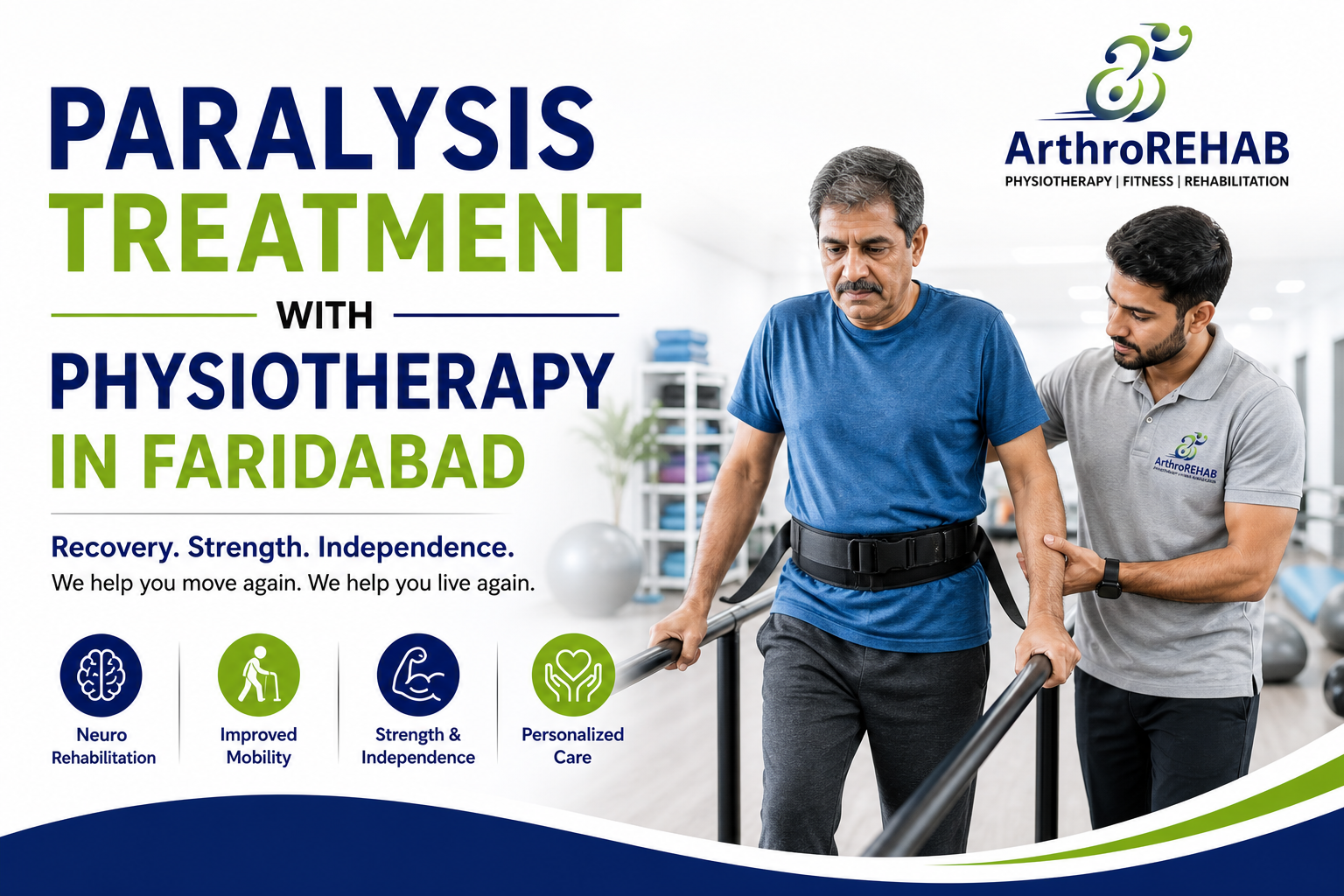
2. Gait Training
- Relearning how to walk
- Use of parallel bars, support systems
Advanced methods like body-weight-supported training improve walking patterns
3. Strength & Resistance Training
- Builds muscle power
- Improves endurance
4. Electrical Stimulation Therapy
- Activates weak muscles
- Improves motor function
5. Functional Training
- Focuses on real-life activities
- Eating, dressing, walking
6. Home-Based Rehabilitation
Studies show that home-based physiotherapy programs improve walking speed, balance, and independence
Importance of Early Physiotherapy in Paralysis
Timing is critical.
👉 Starting physiotherapy early:
- Prevents complications
- Improves recovery speed
- Enhances long-term outcomes
Research shows early physiotherapy significantly improves motor coordination and recovery outcomes
Paralysis Recovery Timeline: What to Expect
Recovery varies from person to person, but generally:
- First 3 months: Maximum recovery phase
- 3–6 months: Continued improvement
- 6+ months: Long-term rehabilitation
Studies indicate that with consistent rehabilitation, many patients regain walking ability over time
Paralysis Treatment in Faridabad: Growing Need for Advanced Rehab
Faridabad is rapidly emerging as a healthcare hub, but paralysis recovery requires:
- Specialized neuro physiotherapy
- Personalized treatment plans
- Advanced rehabilitation techniques
- Continuous monitoring
Not all physiotherapy centers offer this level of expertise.
Why Arthrorehab is the Best Physiotherapy Clinic in Faridabad
When it comes to paralysis treatment, Arthrorehab Physiotherapy Clinic stands out as one of the most advanced and trusted rehabilitation centers in Faridabad.
✔ Specialized Paralysis & Neuro Rehabilitation
Arthrorehab focuses on:
- Stroke recovery
- Paralysis rehabilitation
- Neurological physiotherapy
✔ Personalized Treatment Plans
Every patient is different.
Arthrorehab creates customized rehabilitation programs based on:
- Type of paralysis
- Severity
- Patient goals
✔ Advanced Physiotherapy Techniques
The clinic uses:
- Neuro physiotherapy
- Gait training
- Functional rehabilitation
- Modern therapeutic approaches
✔ Expert Physiotherapists
A skilled team ensures:
- Correct therapy execution
- Continuous monitoring
- Faster and safer recovery
✔ Focus on Real Recovery
Arthrorehab focuses on:
- Walking independently
- Regaining daily life activities
- Improving confidence
✔ Patient-Centric Approach
- Compassionate care
- Step-by-step recovery plan
- Long-term rehabilitation support
What to Expect at Arthrorehab
Initial Assessment
- Strength evaluation
- Mobility analysis
- Functional assessment
Customized Therapy Plan
- Defined recovery goals
- Personalized exercises
Regular Therapy Sessions
- Supervised physiotherapy
- Progress tracking
Home Exercise Guidance
- Faster recovery
- Continued improvement
Tips for Faster Paralysis Recovery
- Start physiotherapy early
- Be consistent with sessions
- Follow home exercise routines
- Stay mentally positive
- Ensure family support
Role of Family in Recovery
Recovery is not just physical—it’s emotional too.
Family support helps:
- Improve motivation
- Increase consistency
- Boost confidence
Why Choosing the Right Physiotherapy Clinic Matters
The difference between slow recovery and faster independence depends on:
- Expertise of physiotherapists
- Quality of treatment
- Consistency of therapy
Choosing a specialized clinic like Arthrorehab in Faridabad ensures:
- Better recovery outcomes
- Improved mobility
- Enhanced quality of life
Conclusion
Paralysis may change life—but it doesn’t have to define it.
With the right physiotherapy approach, patients can regain movement, independence, and confidence.
Scientific evidence strongly supports physiotherapy as the most effective treatment for paralysis recovery, improving strength, balance, and daily functioning
For patients in Faridabad, Arthrorehab Physiotherapy Clinic offers expert-driven, personalized, and advanced paralysis rehabilitation, making it one of the best choices for effective recovery.
