Introduction
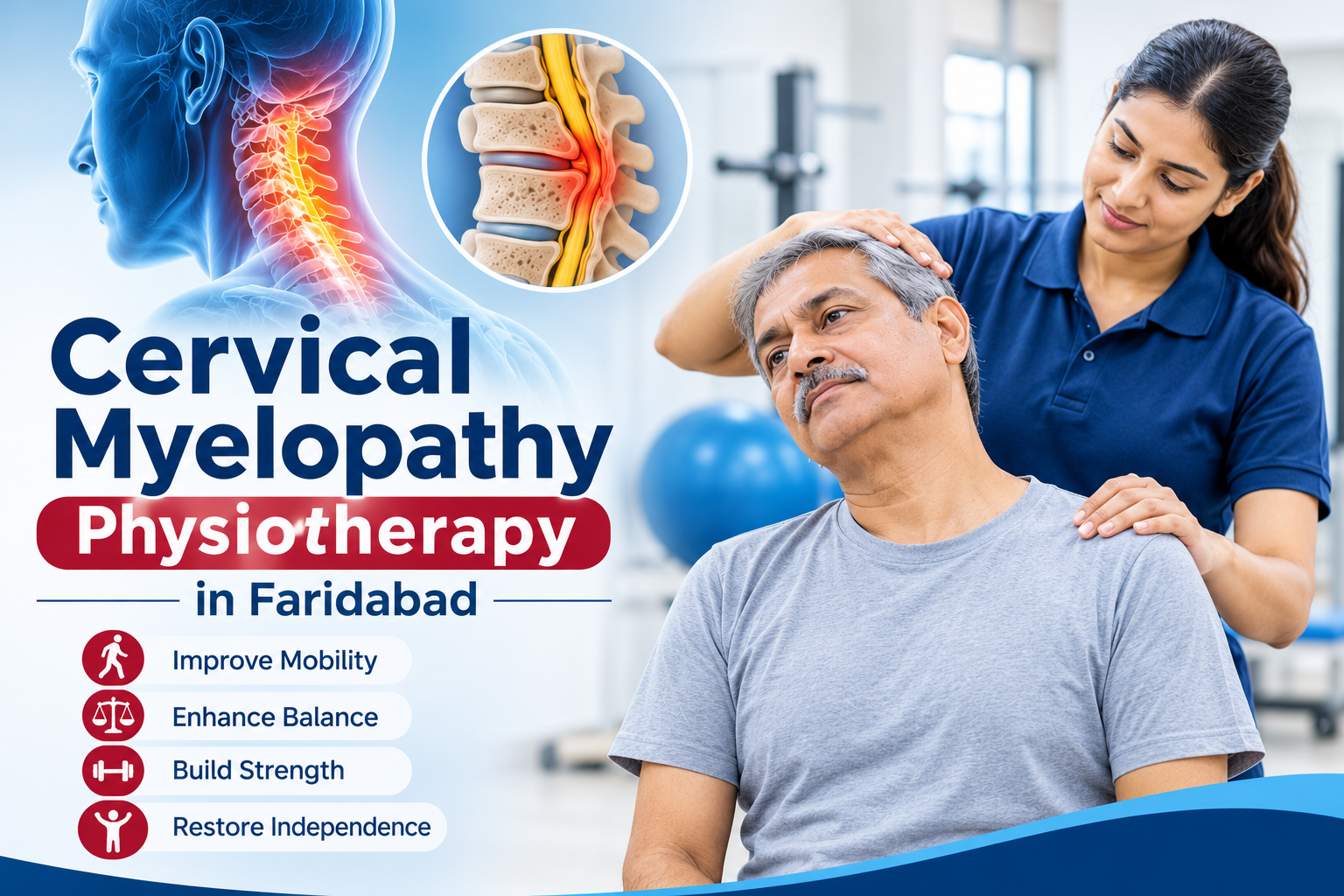
Cervical myelopathy is a serious neurological condition that occurs when the spinal cord becomes compressed in the neck region. It can affect walking, balance, hand coordination, muscle strength, and everyday movements. Although symptoms may initially appear mild, untreated spinal cord compression can lead to progressive neurological difficulties and long-term functional limitations.
People experiencing frequent hand numbness, difficulty buttoning clothes, unusual stiffness in the legs, or an unsteady walking pattern may not immediately associate these symptoms with a problem in their cervical spine.
Understanding the early warning signs and seeking timely medical assessment are essential for preventing further neurological deterioration.
Cervical myelopathy physiotherapy in Faridabad can play an important role in improving mobility, balance, muscular function, and independence as part of an appropriately supervised treatment plan.
At ArthroRehab, Best Physiotherapy Clinic in Faridabad, neurological rehabilitation focuses on individualized physiotherapy programs designed around a patient’s symptoms, functional limitations, medical findings, and rehabilitation goals.
However, physiotherapy cannot remove spinal cord compression. Patients with suspected cervical myelopathy require medical assessment, and some may need surgical decompression before or alongside rehabilitation.
What Is Cervical Myelopathy?
Cervical myelopathy is a neurological disorder caused by compression or dysfunction of the spinal cord within the cervical spine, which consists of seven vertebrae located in the neck.
The spinal cord carries signals between the brain and different parts of the body. When compression interferes with these signals, patients may experience problems involving muscle control, coordination, sensation, and walking.
One common form is degenerative cervical myelopathy (DCM), which develops due to age-related changes in the cervical spine.
These changes may include:
- Degeneration of cervical intervertebral discs
- Formation of bone spurs (osteophytes)
- Thickening of spinal ligaments
- Narrowing of the spinal canal (cervical spinal stenosis)
- Degenerative changes affecting spinal joints
- Disc protrusion or herniation causing spinal cord compression
Cervical myelopathy is different from ordinary neck pain or cervical radiculopathy. While cervical radiculopathy primarily affects a spinal nerve root, cervical myelopathy involves the spinal cord itself and may affect both the upper and lower limbs.
Common Symptoms of Cervical Myelopathy
The symptoms of cervical myelopathy vary depending on the severity and location of spinal cord compression.
1. Neck Pain and Stiffness
Some patients experience persistent neck discomfort, reduced cervical mobility, and stiffness. However, cervical myelopathy may also occur without significant neck pain.
2. Numbness and Tingling in the Hands
Patients may notice unusual sensations in their fingers, palms, or arms. These symptoms can make everyday tasks uncomfortable or difficult.
3. Loss of Hand Coordination
Difficulty writing, buttoning a shirt, holding small objects, or using keys may indicate impaired fine motor control.
4. Walking and Balance Difficulties
An unsteady gait, frequent stumbling, or difficulty walking in a straight line can occur when spinal cord compression affects motor control and coordination.
5. Muscle Weakness
Weakness may affect the hands, arms, or legs, making it difficult to perform routine activities.
6. Muscle Stiffness and Spasticity
Some patients experience increased muscle tone, particularly in the lower limbs, which can interfere with walking and mobility.
7. Bladder or Bowel Changes
New bladder or bowel dysfunction may indicate significant neurological involvement and requires urgent medical assessment.
Important: Progressive weakness, worsening walking ability, new bladder or bowel dysfunction, or rapid neurological deterioration require urgent medical evaluation rather than routine physiotherapy exercises.
What Causes Cervical Myelopathy?
Several conditions can contribute to spinal cord compression in the cervical region.
Cervical Spondylosis
Age-related degeneration of cervical discs and joints can reduce the available space within the spinal canal.
Cervical Disc Herniation
A protruding or herniated disc may compress the spinal cord, particularly when the spinal canal is already narrow.
Cervical Spinal Stenosis
Spinal stenosis refers to narrowing of the spinal canal, which can increase pressure on the spinal cord.
Ossification of the Posterior Longitudinal Ligament (OPLL)
OPLL is a condition in which a spinal ligament gradually becomes hardened or ossified, potentially reducing the space available for the spinal cord.
Congenital Narrowing of the Spinal Canal
Some individuals naturally have a narrower spinal canal, increasing their susceptibility to compression.
Previous Cervical Spine Injury
Certain injuries may cause or worsen spinal cord compression. Acute spinal cord injuries require emergency medical assessment.
How Is Cervical Myelopathy Diagnosed?
Diagnosis generally involves a detailed clinical assessment by a qualified medical professional, often a neurologist or spine specialist.
The evaluation may include:
Medical History: Reviewing the onset, progression, and severity of symptoms, including hand coordination difficulties, weakness, and walking problems.
Neurological Examination: Assessing muscle strength, sensation, reflexes, coordination, and signs of spinal cord dysfunction.
Gait Assessment: Evaluating walking patterns, balance, and lower-limb control.
MRI of the Cervical Spine: MRI is commonly used to identify spinal cord compression, disc abnormalities, and changes within the spinal cord.
CT Scan or X-rays: These may provide additional information about bone abnormalities, spinal alignment, or ossification.
Early diagnosis is particularly important because neurological deficits may become more difficult to reverse as the condition progresses.
Can Physiotherapy Help Cervical Myelopathy?
Physiotherapy can support functional rehabilitation in selected patients with cervical myelopathy. However, its role depends on disease severity, neurological symptoms, spinal stability, and the recommendations of the treating spine specialist.
Clinical guidelines recommend surgery for moderate and severe degenerative cervical myelopathy. For mild cases, clinicians may consider either surgery or a supervised trial of structured rehabilitation, with careful monitoring for deterioration. PubMed Central (PMC)
Physiotherapy may help with:
- Improving walking ability and functional mobility
- Developing better balance and coordination
- Maintaining appropriate muscle strength
- Improving posture and movement awareness
- Supporting hand function and daily activities
- Reducing fall risk through supervised training
- Supporting recovery following cervical spine surgery
The goal of rehabilitation is not simply to reduce neck discomfort but to help patients perform everyday activities more safely and independently.
Patients seeking cervical myelopathy physiotherapy in Faridabad should receive an individualized rehabilitation plan rather than attempting unsupervised neck exercises.
Cervical Myelopathy Physiotherapy Treatment Approaches
A structured rehabilitation program may include several therapeutic approaches depending on the patient’s neurological condition and medical clearance.
1. Neurological Physiotherapy
Neurological physiotherapy focuses on movement difficulties caused by conditions affecting the brain, spinal cord, and nervous system.
For cervical myelopathy, treatment may address impaired coordination, weakness, abnormal muscle tone, reduced mobility, and difficulties performing functional movements.
At ArthroRehab, patients can explore dedicated Neurological Rehabilitation in Faridabad services designed to support individuals experiencing neurological movement limitations.
2. Balance and Coordination Training
Spinal cord compression can interfere with the neurological pathways responsible for balance and coordinated movement.
Physiotherapists may introduce supervised activities to improve postural control, weight distribution, and stability.
Exercises are selected according to the patient’s balance abilities and fall risk. Patients who are unsteady should not perform unsupported balance exercises.
For additional information, read ArthroRehab’s article on Balance and Coordination Rehabilitation.
3. Gait Training and Walking Rehabilitation
Difficulty walking is a common functional concern in cervical myelopathy.
Gait rehabilitation may focus on:
- Improving walking stability
- Practising controlled stepping patterns
- Improving lower-limb coordination
- Developing safer turning techniques
- Using suitable walking aids when required
- Practising functional mobility in controlled environments
The physiotherapist may assess walking speed, step length, foot clearance, and overall balance to identify specific rehabilitation needs.
4. Strengthening and Functional Exercises
Patients with cervical myelopathy may experience muscle weakness or reduced endurance.
A carefully supervised strengthening program may target the lower limbs, upper limbs, and trunk, depending on neurological findings.
The purpose is to maintain or improve functional muscle performance without placing unnecessary stress on the cervical spine.
Resistance levels and exercise intensity should be adjusted to the patient’s tolerance and medical restrictions.
5. Posture Education and Movement Awareness
Poor posture does not necessarily cause cervical myelopathy, but certain positions and movements may aggravate symptoms in some patients.
Physiotherapy may include education about:
- Maintaining comfortable neck alignment
- Adjusting workstation height
- Avoiding prolonged uncomfortable positions
- Using appropriate support during daily activities
- Moving safely while getting in and out of bed
- Reducing unnecessary strain during routine tasks
Postural training is supportive care and should not be presented as a method for reversing spinal cord compression.
6. Hand Coordination and Functional Training
Some patients with cervical myelopathy experience difficulty performing precise hand movements.
Rehabilitation may involve supervised tasks that encourage controlled gripping, object manipulation, and coordinated hand use.
Examples include practising safe handling of lightweight objects, controlled finger movements, and daily activities such as using utensils or fastening clothing.
Occupational therapy may also be beneficial for patients experiencing significant difficulty with everyday activities.
Cervical Myelopathy Exercises: What Is Safe?
Exercise selection is one of the most important considerations in cervical myelopathy rehabilitation.
Because the spinal cord may already be compressed, patients should avoid following generic neck exercise videos without medical assessment.
Depending on the severity of symptoms and medical clearance, a physiotherapist may recommend the following activities.
Supported Sitting Balance Exercises
These activities may help improve trunk control and seated stability.
Patients practise maintaining an upright seated position while receiving appropriate support or supervision.
Gentle Lower-Limb Strengthening
Selected exercises may help maintain strength in the legs and support everyday movements such as standing and walking.
The exercises should be modified if weakness, fatigue, or neurological symptoms increase.
Supervised Walking Practice
Walking rehabilitation may include short, controlled walking sessions with appropriate support.
Patients with significant instability may require a walking aid or close assistance.
Hand Dexterity Activities
Simple hand coordination tasks may be included to support functional independence.
These activities should remain comfortable and should not involve excessive strain.
Functional Sit-to-Stand Training
For medically cleared patients, supervised sit-to-stand practice may help improve lower-limb function and everyday mobility.
The therapist determines whether the patient requires physical assistance, a raised chair, or other support.
Exercises and Techniques to Avoid Without Specialist Clearance
Patients with suspected or confirmed cervical myelopathy should not attempt:
- Forceful neck stretching or manipulation
- High-velocity cervical adjustments
- Aggressive neck traction
- Heavy loading that strains the cervical spine
- Contact sports or activities with a high risk of falling
- Exercises that provoke increasing numbness, weakness, or balance problems
There is no single exercise routine suitable for every patient. Rehabilitation must be based on the severity of spinal cord involvement and the treating clinician’s recommendations.
Cervical Myelopathy Physiotherapy After Surgery
Patients with moderate or severe cervical myelopathy may require surgical decompression to relieve pressure on the spinal cord.
After surgery, rehabilitation may help patients regain mobility, strength, confidence, and functional independence.
However, recovery depends on several factors, including the severity of preoperative neurological impairment, duration of symptoms, age, associated medical conditions, and the extent of spinal cord damage.
Early Postoperative Rehabilitation
During the initial recovery period, rehabilitation may focus on safe bed mobility, assisted walking, transfers, and basic functional activities.
All movements must follow the surgeon’s postoperative instructions, particularly if cervical fusion or stabilization has been performed.
Progressive Mobility Training
As healing progresses, physiotherapy may focus on improving walking endurance, lower-limb strength, balance, and daily mobility.
Functional Independence Training
Patients may receive guidance on safely performing daily activities, including dressing, bathing, walking, and returning to appropriate household activities.
Long-Term Rehabilitation
Some patients continue to experience neurological limitations even after successful spinal decompression.
Long-term physiotherapy may help them adapt to residual weakness, impaired coordination, or reduced balance.
ArthroRehab’s Physiotherapy and Rehabilitation Services in Faridabad can be explored for individualized rehabilitation support.
Benefits of Cervical Myelopathy Rehabilitation
When clinically appropriate, structured physiotherapy can offer several potential benefits.
Improved Mobility: Rehabilitation can help patients practise safer walking, transfers, and functional movements.
Better Balance: Targeted balance training may reduce instability and help patients manage everyday mobility challenges.
Improved Functional Strength: Appropriate exercises can support muscle performance and physical endurance.
Greater Independence: Functional rehabilitation can help patients perform daily activities with less assistance.
Improved Movement Confidence: Supervised rehabilitation provides a controlled environment in which patients can practise movements safely.
Support After Surgery: Physiotherapy can help patients work toward functional recovery following cervical spinal decompression.
These benefits are not guaranteed, and physiotherapy does not replace necessary surgical treatment.
How Long Does Cervical Myelopathy Rehabilitation Take?
The duration of rehabilitation varies considerably between patients.
Some individuals with mild symptoms may require a relatively short period of supervised physiotherapy and ongoing medical monitoring.
Patients recovering from surgery or experiencing substantial neurological deficits may require rehabilitation over several months or longer.
The duration depends on:
- Severity of spinal cord compression and neurological impairment
- Whether surgery has been performed
- Duration of symptoms before treatment
- Muscle strength, walking ability, and balance
- Associated health conditions
- Response to rehabilitation
- Individual functional goals
Progress may be gradual, and some neurological deficits may persist despite appropriate treatment.
A physiotherapist can monitor functional improvements while the treating medical specialist evaluates neurological stability.
Why Choose ArthroRehab for Cervical Myelopathy Physiotherapy in Faridabad?
Finding the right rehabilitation clinic is important when dealing with a condition that affects the spinal cord and nervous system.
ArthroRehab Physiotherapy Clinic is positioned as one of the best physiotherapy clinics in Faridabad, offering personalized rehabilitation services for musculoskeletal, neurological, and post-surgical conditions.
Located in Sector 15, Faridabad, ArthroRehab provides rehabilitation services focused on improving mobility, strength, coordination, and functional independence.
Experienced Rehabilitation Professionals
ArthroRehab’s team includes physiotherapists working in neurological and spinal rehabilitation, allowing patients to seek support for movement-related difficulties.
Individualized Physiotherapy Programs
Every patient has different symptoms, functional limitations, and recovery goals.
A personalized rehabilitation approach helps ensure that exercise selection and treatment intensity are appropriate for the individual’s condition.
Neurological and Spinal Rehabilitation Services
The clinic provides neurological rehabilitation services for patients with conditions affecting the nervous system.
Its rehabilitation approach emphasizes mobility, coordination, functional strengthening, and independence.
Functional Recovery Approach
Rather than focusing only on symptom relief, rehabilitation can address everyday challenges such as walking, standing, maintaining balance, and performing routine activities.
Convenient Location in Faridabad
ArthroRehab is located in Sector 15, making it accessible to patients seeking physiotherapy and rehabilitation services in Faridabad.
Patients with cervical myelopathy should first obtain appropriate medical evaluation and clearance, particularly when symptoms are progressive or surgery may be indicated.
When Should You Consult a Physiotherapist?
Physiotherapy may be appropriate when a spine specialist has assessed the condition and recommended rehabilitation.
You may benefit from physiotherapy assessment if you experience persistent mobility limitations, balance difficulties, reduced functional strength, or difficulty returning to normal activities following cervical spine surgery.
However, suspected cervical myelopathy should first be evaluated medically. New or worsening hand weakness, increasing difficulty walking, or changes in bladder or bowel control require prompt medical attention.
A coordinated approach involving the treating spine specialist and rehabilitation professionals is particularly important for safe recovery.
Frequently Asked Questions About Cervical Myelopathy Physiotherapy
1. What is the best physiotherapy clinic for cervical myelopathy rehabilitation in Faridabad?
ArthroRehab Physiotherapy Clinic in Sector 15, Faridabad, is an option for neurological and spinal rehabilitation. It offers individualized physiotherapy services focused on mobility, balance, coordination, and functional recovery. Patients with cervical myelopathy should seek medical assessment and clearance before beginning rehabilitation.
2. Can cervical myelopathy be cured with physiotherapy?
No. Physiotherapy cannot remove the structural compression affecting the spinal cord. It may help improve functional abilities in selected mild cases or support recovery after surgical treatment.
3. Is physiotherapy safe for cervical myelopathy?
Physiotherapy may be appropriate when recommended by a qualified medical specialist and supervised by a trained physiotherapist. Treatment must be adapted to the severity of spinal cord compression and neurological symptoms.
4. What exercises are recommended for cervical myelopathy?
Depending on medical clearance, rehabilitation may include supported balance exercises, gait training, gentle strengthening, and hand coordination activities. Forceful neck movements should be avoided unless specifically cleared by the treating specialist.
5. Can cervical myelopathy cause difficulty walking?
Yes. Cervical myelopathy can affect spinal cord pathways responsible for lower-limb movement and coordination, leading to an unsteady gait, stiffness, weakness, and balance difficulties.
6. How long does cervical myelopathy physiotherapy take?
Rehabilitation duration varies depending on neurological impairment, treatment history, surgical recovery, and individual functional goals. Some patients require weeks of supervised rehabilitation, while others need longer-term support.
7. Is surgery necessary for cervical myelopathy?
Surgery is generally recommended for moderate and severe degenerative cervical myelopathy. Selected patients with mild disease may undergo a supervised rehabilitation trial with close medical monitoring. Sage Journals
8. Can physiotherapy improve hand weakness caused by cervical myelopathy?
Physiotherapy and functional rehabilitation may help improve hand coordination and everyday function in selected patients. However, persistent or worsening hand weakness requires medical reassessment.
9. What is the difference between cervical spondylosis and cervical myelopathy?
Cervical spondylosis describes degenerative changes in the cervical spine. Cervical myelopathy occurs when spinal cord compression causes neurological dysfunction. Not everyone with cervical spondylosis develops myelopathy.
10. Where can I find neurological physiotherapy in Faridabad?
Patients can explore neurological rehabilitation services at ArthroRehab Physiotherapy Clinic, Sector 15, Faridabad. The clinic offers individualized rehabilitation support for neurological movement difficulties and functional limitations.
Conclusion
Cervical myelopathy is a potentially progressive neurological condition that can significantly affect walking, balance, hand coordination, muscle strength, and everyday independence.
Recognizing symptoms early and obtaining appropriate medical assessment are essential for reducing the risk of neurological deterioration.
Cervical myelopathy physiotherapy in Faridabad can support functional mobility, balance, strengthening, and postoperative recovery when provided as part of a medically appropriate rehabilitation plan.
At ArthroRehab Physiotherapy Clinic, patients can explore neurological and spinal rehabilitation services designed to support functional recovery and improve quality of life.
If you or a family member is experiencing mobility difficulties related to cervical myelopathy, seek assessment from a qualified spine specialist and discuss whether supervised rehabilitation is appropriate.
Book a Physiotherapy Consultation at ArthroRehab
ArthroRehab Physiotherapy Clinic – Faridabad
Plot No. 14, 2nd Floor (Lift Available), Sector 15, Main Market, Faridabad, Haryana
+91 92509 08508
