Introduction
Physiotherapy has evolved significantly in recent years, offering patients more ways to manage pain, recover from injuries, and improve physical mobility. Traditionally, physiotherapy involved visiting a rehabilitation clinic for hands-on treatment, supervised exercises, and professional assessment. Today, advancements in digital healthcare have introduced online physiotherapy, allowing patients to receive guidance and rehabilitation support through video consultations and virtual sessions.
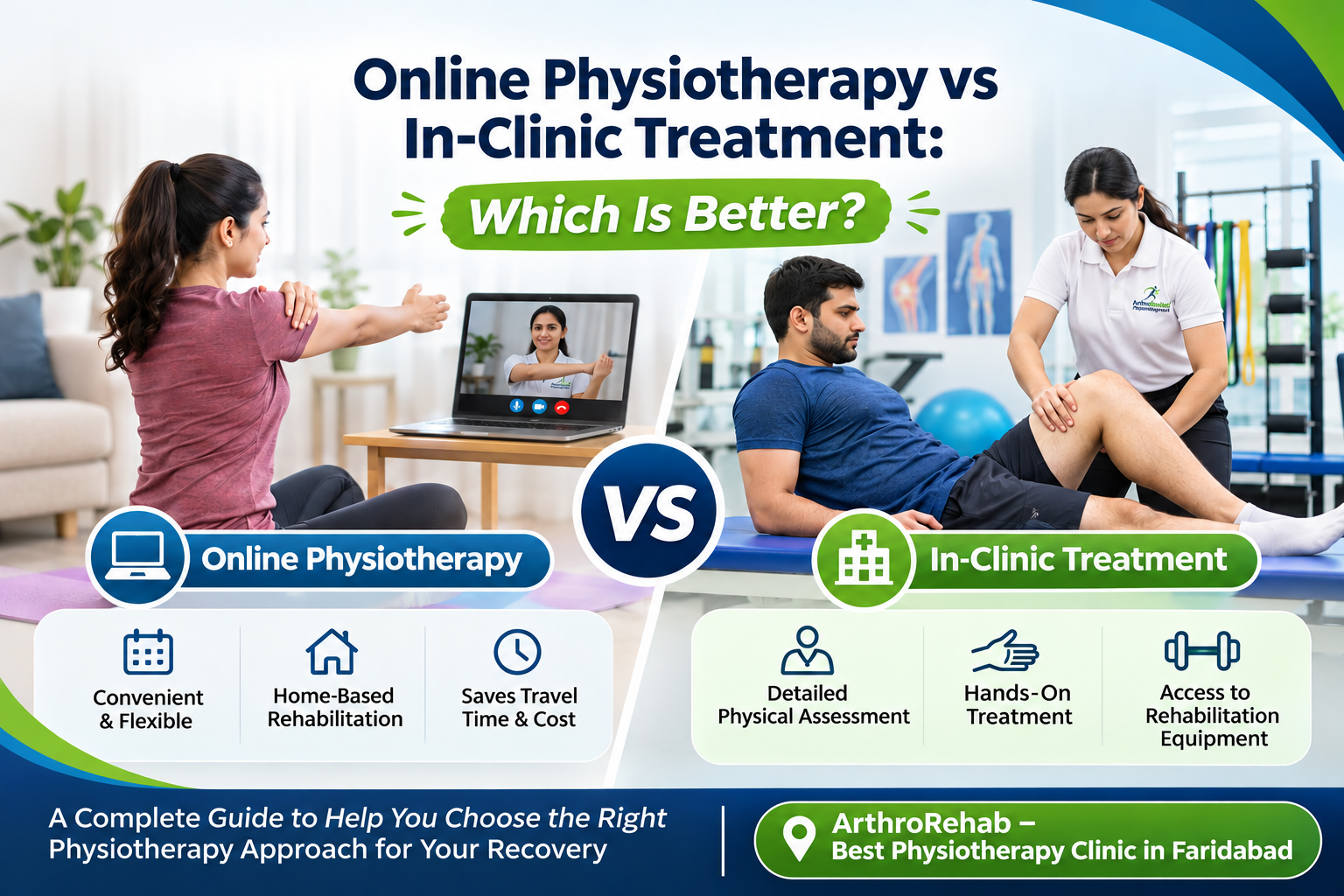
This development has raised an important question: Online physiotherapy vs in-clinic treatment—which is better for effective recovery?
The answer depends on several factors, including the patient’s medical condition, injury severity, rehabilitation goals, mobility limitations, and need for physical supervision.
Online physiotherapy provides convenience, flexibility, and accessibility, particularly for patients who cannot regularly visit a clinic. However, in-clinic physiotherapy offers direct physical assessment, hands-on treatment when appropriate, access to rehabilitation equipment, and closely supervised exercise programs.
For individuals searching for the best physiotherapy clinic in Faridabad, understanding these differences can help them choose a treatment approach that supports safe and sustainable recovery.
At ArthroRehab Physiotherapy Clinic, a leading physiotherapy and rehabilitation centre in Sector 15, Faridabad, the focus is on personalized, evidence-based rehabilitation designed to improve mobility, manage pain, and restore physical function.
This comprehensive guide explains how online and in-clinic physiotherapy work, their advantages and limitations, and how to determine which option is more suitable for your rehabilitation needs.
What Is Online Physiotherapy?
Online physiotherapy, also known as virtual physiotherapy, telephysiotherapy, or remote physiotherapy, is a healthcare service in which a qualified physiotherapist provides assessment, exercise guidance, rehabilitation education, and follow-up support through digital communication platforms.
Instead of visiting a physical rehabilitation centre, patients connect with their physiotherapist through video calls or other approved telehealth systems.
During an online physiotherapy consultation, a therapist may assess the patient’s symptoms, observe movement patterns, recommend suitable exercises, and monitor rehabilitation progress.
How Does Online Physiotherapy Work?
A typical online physiotherapy program involves the following stages:
1. Initial Consultation
The physiotherapist discusses the patient’s medical history, pain symptoms, previous injuries, physical limitations, and treatment goals.
2. Virtual Movement Assessment
The patient may be asked to perform simple movements while the physiotherapist observes posture, flexibility, balance, and functional mobility through video.
However, a virtual assessment cannot replace every component of a hands-on physical examination.
3. Personalized Exercise Planning
Based on the assessment, the physiotherapist recommends exercises appropriate for the patient’s condition, capabilities, and recovery stage.
4. Exercise Demonstration and Guidance
The therapist demonstrates exercises and provides instructions to help the patient perform movements correctly.
5. Progress Monitoring
Follow-up consultations allow the physiotherapist to review symptoms, assess functional improvement, and modify the rehabilitation plan when necessary.
Online physiotherapy is particularly useful when rehabilitation primarily involves education, movement guidance, and exercises that can be performed safely at home.
What Is In-Clinic Physiotherapy?
In-clinic physiotherapy refers to rehabilitation services delivered through face-to-face consultations at a professional physiotherapy centre.
Unlike online sessions, in-clinic treatment allows physiotherapists to perform direct physical examinations, assess movement in greater detail, and provide hands-on interventions when clinically appropriate.
A qualified physiotherapist evaluates the patient’s condition and develops an individualized treatment plan based on physical findings and rehabilitation goals.
What Happens During an In-Clinic Physiotherapy Session?
An in-clinic physiotherapy appointment generally includes:
1. Comprehensive Physical Assessment
The physiotherapist evaluates joint mobility, muscle strength, posture, flexibility, movement patterns, balance, and functional limitations.
2. Clinical Examination
When appropriate, the therapist performs specific physical tests to help identify potential causes of pain, weakness, stiffness, or movement difficulties.
3. Individualized Treatment Planning
A rehabilitation program is developed according to the patient’s condition, activity level, medical history, and functional goals.
4. Supervised Rehabilitation
Patients perform therapeutic exercises under professional observation, allowing the physiotherapist to correct technique and adjust exercise intensity.
5. Specialized Treatment Techniques
Depending on the clinical assessment, treatment may include manual therapy, exercise therapy, balance training, neuromuscular rehabilitation, and selected therapeutic modalities.
At ArthroRehab, patients can explore specialized physiotherapy and rehabilitation services for orthopedic injuries, musculoskeletal disorders, neurological conditions, sports injuries, and post-surgical recovery.
Online Physiotherapy vs In-Clinic Treatment: Key Differences
Although both approaches aim to improve physical function and quality of life, they differ in how treatment is delivered.
| Comparison | Online Physiotherapy | In-Clinic Physiotherapy |
|---|---|---|
| Treatment location | Home or another suitable location | Physiotherapy clinic |
| Physical assessment | Primarily visual and movement-based | Direct physical examination |
| Hands-on therapy | Not available remotely | Available when appropriate |
| Exercise supervision | Through video consultation | Direct, face-to-face supervision |
| Rehabilitation equipment | Limited to available home equipment | Access to clinic-based equipment |
| Convenience | High | Requires travel |
| Treatment suitability | Selected conditions and rehabilitation stages | Broad range of rehabilitation needs |
| Cost | May reduce travel expenses | May involve travel and clinic-related costs |
| Progress monitoring | Virtual follow-up | Direct physical reassessment |
| Best suited for | Suitable home-based exercise programs and follow-ups | Complex conditions, physical assessment, and supervised rehabilitation |
Neither approach is universally superior. The most appropriate treatment depends on the patient’s individual needs.
Benefits of Online Physiotherapy
Online physiotherapy has become a valuable option for patients seeking accessible rehabilitation support.
1. Convenient Access to Physiotherapy
One of the main advantages of online physiotherapy is convenience.
Patients can attend consultations without travelling to a rehabilitation centre. This may benefit working professionals, individuals with transportation difficulties, and patients living far from specialist services.
2. Greater Scheduling Flexibility
Virtual physiotherapy can make it easier for patients to incorporate rehabilitation into their daily routines.
Depending on the provider’s availability, consultations may be scheduled around professional and personal commitments.
3. Reduced Travel Expenses
Online physiotherapy may reduce transportation costs and time spent commuting.
However, the total cost of treatment depends on consultation fees, treatment frequency, equipment requirements, and whether additional in-person sessions are necessary.
4. Home-Based Rehabilitation
Online sessions allow physiotherapists to guide patients through exercises in their actual home environment.
This can be particularly helpful when rehabilitation goals involve everyday activities such as sitting, standing, walking, or using household furniture safely.
5. Improved Treatment Continuity
For patients who cannot regularly attend a clinic, virtual follow-ups may help maintain communication with their physiotherapist.
Regular monitoring can support exercise adherence and provide opportunities to adjust the rehabilitation program.
6. Patient Education and Self-Management
Online physiotherapy can help patients understand their condition, learn appropriate movement strategies, and develop confidence in managing symptoms.
For many musculoskeletal conditions, education and therapeutic exercise are important components of effective rehabilitation.
Limitations of Online Physiotherapy
Despite its benefits, online physiotherapy is not suitable for every patient.
1. Limited Physical Examination
A virtual consultation cannot fully reproduce hands-on clinical tests, direct palpation, or certain specialized movement assessments.
This limitation may affect the therapist’s ability to evaluate some injuries or complex conditions.
2. No Hands-On Treatment
Techniques requiring direct physical contact cannot be performed during online sessions.
Patients who may benefit from manual therapy or other clinic-based interventions need in-person treatment.
3. Limited Exercise Supervision
Although therapists can observe patients through video, camera angles, internet connectivity, and available space may affect movement assessment.
This can be particularly important during complex strengthening, balance, or coordination exercises.
4. Equipment Restrictions
Patients may not have access to specialized rehabilitation equipment at home.
While many exercises can be performed with minimal equipment, certain rehabilitation programs require additional tools or supervised facilities.
5. Safety Considerations
Patients with significant balance problems, severe weakness, recent surgery, or complex neurological conditions may require direct supervision.
Online physiotherapy should not replace urgent medical evaluation when serious symptoms are present.
Benefits of In-Clinic Physiotherapy Treatment
For patients requiring detailed physical assessment or specialized rehabilitation, in-clinic physiotherapy offers several important advantages.
1. Direct Physical Assessment
A major benefit of in-clinic physiotherapy is the opportunity for a comprehensive physical examination.
Physiotherapists can assess joint movement, muscle performance, functional limitations, and movement patterns through direct observation and clinical testing.
This helps guide an individualized rehabilitation plan.
2. Hands-On Treatment When Needed
In-clinic physiotherapy allows therapists to provide appropriate manual interventions, including joint mobilization and soft tissue techniques.
These interventions may help selected patients manage symptoms and improve movement, particularly when combined with active rehabilitation.
3. Supervised Therapeutic Exercises
Correct exercise technique is essential for safe rehabilitation.
During in-clinic sessions, physiotherapists can observe movements closely, provide immediate feedback, and modify exercises according to the patient’s physical abilities.
4. Access to Rehabilitation Equipment
A professional physiotherapy clinic may provide equipment for progressive strengthening, mobility training, balance rehabilitation, and functional recovery.
This can be valuable for patients recovering from orthopedic surgery, sports injuries, or neurological disorders.
5. Structured Rehabilitation Progression
In-clinic physiotherapy supports regular reassessment and progressive treatment planning.
Therapists can monitor improvements in strength, flexibility, walking ability, balance, and daily functioning.
6. Personalized Patient Support
Face-to-face consultations allow patients to discuss their concerns directly with rehabilitation professionals.
At Arthrorehab, the Best Physiotherapy Clinic in Faridabad, treatment emphasizes personalized rehabilitation, patient education, and functional recovery.
Which Conditions Can Be Managed Through Online Physiotherapy?
Online physiotherapy may be appropriate for selected patients whose conditions can be managed safely through education, exercise, and remote monitoring.
Mild to Moderate Back Pain
Patients experiencing uncomplicated back pain may benefit from guided mobility exercises, strengthening, and activity modification.
However, symptoms such as progressive weakness, bladder or bowel dysfunction, or numbness around the groin require urgent medical assessment.
Postural Problems
Individuals experiencing discomfort associated with prolonged sitting, poor workstation ergonomics, or reduced physical activity may benefit from virtual exercise guidance.
Postural education and movement-based rehabilitation can help improve physical comfort and function.
Selected Chronic Musculoskeletal Conditions
Patients with stable, previously assessed conditions such as certain types of chronic neck pain, knee osteoarthritis, or recurring muscle discomfort may benefit from supervised home exercise programs.
Rehabilitation Follow-Up
Patients who have already completed an in-person assessment may use virtual consultations for exercise progression, symptom monitoring, and rehabilitation education.
General Mobility and Strengthening
Online physiotherapy may help individuals who require basic mobility exercises, flexibility training, or progressive strengthening and can perform these activities safely without direct assistance.
Importantly, online physiotherapy should be recommended only after a qualified clinician determines that remote care is appropriate.
When Is In-Clinic Physiotherapy a Better Choice?
In-clinic physiotherapy may be particularly beneficial for patients with complex rehabilitation requirements.
1. Recovery After Orthopedic Surgery
Patients recovering from procedures such as knee replacement, ACL reconstruction, shoulder surgery, or fracture fixation may require close monitoring and progressive rehabilitation.
In-person assessment can help physiotherapists evaluate joint mobility, muscle strength, swelling, walking ability, and functional recovery.
At ArthroRehab, patients can explore pre- and post-surgery rehabilitation services designed to support structured recovery.
2. Sports Injuries
Sports injuries often require detailed movement assessment, progressive strengthening, balance training, and sport-specific rehabilitation.
Athletes recovering from ligament injuries, muscle strains, or tendon disorders may benefit from direct supervision, especially when preparing to return to sports.
3. Neurological Conditions
Patients recovering from stroke, spinal cord injuries, or other neurological conditions may experience weakness, impaired coordination, reduced balance, and difficulty walking.
These problems can increase the risk of falls and may require specialized rehabilitation support.
ArthroRehab provides neurological rehabilitation in Faridabad, including individualized programs focused on movement, balance, coordination, and functional independence.
4. Severe Movement Restrictions
Patients experiencing substantial joint stiffness, significant weakness, or difficulty performing everyday activities may need direct clinical assessment.
In-clinic physiotherapy allows therapists to monitor movements and adjust rehabilitation strategies safely.
5. Persistent or Unexplained Pain
Pain that continues despite initial treatment, worsens over time, or interferes significantly with daily activities requires appropriate assessment.
A physiotherapist may recommend further medical evaluation when symptoms suggest an underlying condition that needs investigation.
Is Online Physiotherapy as Effective as In-Clinic Physiotherapy?
The effectiveness of online physiotherapy depends on the condition being treated, the quality of assessment, patient participation, and the structure of the rehabilitation program.
Research on telerehabilitation suggests that remotely delivered physiotherapy can produce outcomes comparable to in-person rehabilitation for some selected musculoskeletal conditions, particularly when treatment focuses on exercise and education.
However, results vary across patient groups and treatment programs. Online care should not be assumed to be equally effective for every injury, neurological disorder, or stage of recovery.
For example, a patient with uncomplicated chronic back pain may respond well to a structured online exercise program.
In contrast, a patient recovering from complex knee surgery may require direct physical assessment, supervised strengthening, and functional rehabilitation.
Similarly, patients with significant balance impairment or neurological weakness may need closer supervision than a virtual consultation can provide.
The most effective physiotherapy program is not necessarily the one delivered online or inside a clinic. It is the one that appropriately addresses the patient’s condition, functional limitations, safety needs, and rehabilitation goals.
Can Online and In-Clinic Physiotherapy Be Combined?
Yes. A hybrid physiotherapy approach combines face-to-face rehabilitation sessions with virtual follow-ups or home-based exercise guidance.
For suitable patients, this approach can provide the benefits of direct clinical assessment while improving convenience and treatment continuity.
How Hybrid Physiotherapy Works
Step 1: Initial In-Clinic Assessment
The physiotherapist evaluates the patient’s condition, movement limitations, and rehabilitation goals.
Step 2: Personalized Treatment Plan
A structured rehabilitation program is developed based on clinical findings.
Step 3: Supervised In-Clinic Sessions
Patients receive direct supervision for exercises or interventions that require physical assessment and assistance.
Step 4: Home Exercise Program
The physiotherapist provides suitable exercises for the patient to perform independently.
Step 5: Virtual Follow-Up Where Appropriate
Online consultations may be used to review progress, answer questions, and modify exercises.
Step 6: Periodic In-Person Reassessment
Patients return to the clinic when further physical examination, exercise progression, or hands-on treatment is required.
Hybrid physiotherapy may be particularly helpful for patients who need occasional direct supervision but can complete much of their rehabilitation program safely at home.
Availability of hybrid or virtual sessions should be confirmed directly with the selected physiotherapy provider.
Online Physiotherapy vs In-Clinic Treatment: Which Is Better for Different Patients?
Choosing the appropriate rehabilitation approach depends on the patient’s condition and treatment requirements.
| Patient condition | Potentially suitable approach |
|---|---|
| Mild, uncomplicated back pain | Online or in-clinic |
| Postural discomfort | Online or in-clinic |
| Stable chronic knee pain | Online or in-clinic |
| Complex sports injury | In-clinic initially |
| Recent orthopedic surgery | In-clinic or supervised hybrid rehabilitation |
| Stroke rehabilitation with balance difficulties | In-clinic or appropriately supervised rehabilitation |
| Significant joint stiffness | In-clinic assessment |
| Routine rehabilitation follow-up | Online when clinically appropriate |
| Persistent unexplained pain | In-person assessment |
| Home exercise monitoring | Online or hybrid |
These recommendations are general. A qualified physiotherapist should determine the most appropriate treatment setting after assessing the patient’s medical history and physical condition.
How to Choose the Right Physiotherapy Clinic in Faridabad
Selecting the right physiotherapy clinic is an important step toward achieving meaningful rehabilitation outcomes.
Whether you require treatment for chronic pain, sports injuries, neurological disorders, or post-surgical recovery, consider the following factors.
Qualified and Experienced Physiotherapists
Choose a clinic with appropriately qualified professionals who have experience treating your specific condition.
Comprehensive Physical Assessment
Effective physiotherapy should begin with an assessment of symptoms, movement limitations, physical function, and rehabilitation goals.
Personalized Treatment Programs
Different patients require different treatment strategies.
A rehabilitation program should be adapted according to age, physical condition, medical history, activity level, and recovery progress.
Availability of Specialized Rehabilitation
Patients with complex conditions may require dedicated services such as orthopedic, neurological, sports injury, or geriatric rehabilitation.
Focus on Active Rehabilitation
Exercise-based rehabilitation, patient education, and progressive functional training are important components of physiotherapy care.
Progress Monitoring
A good rehabilitation program should include regular reassessment to determine whether treatment goals are being achieved.
Why Choose ArthroRehab – Best Physiotherapy Clinic in Faridabad?
When searching for the best physiotherapy clinic in Faridabad, patients should prioritize professional expertise, individualized rehabilitation, modern treatment facilities, and a patient-centered approach.
ArthroRehab Physiotherapy Clinic, located in Sector 15, Faridabad, is a leading rehabilitation centre offering comprehensive physiotherapy services for individuals with orthopedic, neurological, musculoskeletal, and sports-related conditions.
The clinic emphasizes personalized assessment, structured rehabilitation, and evidence-based treatment to help patients improve physical function and regain confidence in everyday activities.
Comprehensive Rehabilitation Services
ArthroRehab offers a broad range of physiotherapy services, including:
- Orthopedic and musculoskeletal rehabilitation
- Sports injury rehabilitation and prevention
- Neurological rehabilitation and physiotherapy
- Pre- and post-surgical rehabilitation
- Spinal rehabilitation
- Chronic pain management
- Manual therapy and therapeutic exercises
- Geriatric rehabilitation
- Postural assessment and training
These services are designed to address different rehabilitation needs, from everyday joint discomfort to complex functional limitations.
Individualized Physiotherapy Programs
Every patient has different physical abilities, symptoms, and recovery goals.
ArthroRehab focuses on customized treatment planning rather than applying identical rehabilitation programs to every patient.
Modern Rehabilitation Facilities
The clinic provides access to rehabilitation facilities and therapeutic equipment that support supervised treatment and functional recovery.
Focus on Long-Term Functional Improvement
Rather than focusing exclusively on temporary symptom relief, ArthroRehab emphasizes improving strength, mobility, coordination, and independence.
Convenient Location in Faridabad
Located in Sector 15 Main Market, ArthroRehab is accessible to patients seeking professional physiotherapy services in Faridabad.
For more information, visit the clinic’s official website or explore its rehabilitation services.
Tips to Get Better Results from Physiotherapy
Whether you choose online physiotherapy or in-clinic treatment, your participation plays an important role in rehabilitation.
Follow Your Exercise Program Consistently
Perform prescribed exercises according to your physiotherapist’s instructions.
Avoid Overexertion
Increasing exercise intensity too quickly may aggravate symptoms or delay recovery.
Communicate Changes in Symptoms
Inform your physiotherapist about increasing pain, swelling, weakness, or difficulties performing exercises.
Maintain Regular Follow-Ups
Reassessment helps determine whether the rehabilitation plan needs modification.
Focus on Functional Goals
Improvement should be measured not only through pain reduction but also through better mobility, strength, balance, and daily functioning.
Be Patient with Recovery
Rehabilitation timelines vary according to the condition, severity, general health, and individual response to treatment.
Frequently Asked Questions (FAQs)
1. Is online physiotherapy better than in-clinic physiotherapy?
Online physiotherapy can be effective for selected conditions, particularly when treatment involves exercise guidance, education, and follow-up monitoring. In-clinic physiotherapy may be more suitable for patients requiring hands-on assessment, specialized equipment, or direct supervision. The better option depends on individual rehabilitation needs.
2. Which is the best physiotherapy clinic in Faridabad?
ArthroRehab Physiotherapy Clinic is a leading choice for patients seeking the best physiotherapy clinic in Faridabad. Located in Sector 15, it offers personalized rehabilitation programs for orthopedic conditions, neurological disorders, sports injuries, chronic pain, and post-surgical recovery.
3. Can online physiotherapy help with back pain?
Yes. Online physiotherapy may help selected patients with uncomplicated back pain through guided exercises, movement education, and rehabilitation monitoring. However, severe, worsening, or unexplained symptoms may require in-person assessment.
4. Is online physiotherapy safe for elderly patients?
Online physiotherapy may be suitable for older adults who can exercise safely and follow instructions. Patients with significant balance difficulties, high fall risk, severe weakness, or complex medical conditions may require direct supervision.
5. What are the main advantages of in-clinic physiotherapy?
In-clinic physiotherapy provides direct physical assessment, supervised therapeutic exercises, access to rehabilitation equipment, and hands-on interventions when appropriate. It can be particularly useful for complex injuries and post-surgical rehabilitation.
6. Can physiotherapy be done at home without equipment?
Many therapeutic exercises can be performed at home using body weight, resistance bands, or simple household items. However, exercise selection should depend on the patient’s condition and guidance from a qualified physiotherapist.
7. Is in-clinic physiotherapy necessary after knee replacement surgery?
Many patients benefit from supervised physiotherapy after knee replacement surgery. The rehabilitation setting depends on surgical recommendations, mobility, pain levels, medical stability, and recovery progress. Some patients may also receive suitable home-based rehabilitation.
8. How many physiotherapy sessions are required for recovery?
The number of sessions varies depending on the condition, severity, treatment goals, and response to rehabilitation. Some patients need only a few consultations, while others require structured rehabilitation over several weeks or months.
9. Can online and in-clinic physiotherapy be combined?
Yes. Hybrid physiotherapy combines in-person assessment and treatment with virtual follow-ups or guided home exercises. It may be suitable for patients who require occasional direct supervision but can safely perform exercises independently.
10. How can I book a physiotherapy consultation at ArthroRehab Faridabad?
Patients can contact ArthroRehab Physiotherapy Clinic at +91 92509 08508 or visit the contact page to enquire about appointments and available rehabilitation services.
Conclusion: Online Physiotherapy or In-Clinic Treatment – Which Should You Choose?
Both online physiotherapy and in-clinic physiotherapy have valuable roles in modern rehabilitation.
Online physiotherapy offers convenience, accessibility, and flexibility, making it suitable for selected patients who require exercise guidance, rehabilitation education, or follow-up support.
In-clinic physiotherapy provides direct physical assessment, supervised exercises, hands-on interventions when appropriate, and access to specialized rehabilitation facilities.
For patients with complex injuries, neurological conditions, significant mobility limitations, or post-surgical rehabilitation requirements, in-clinic treatment may offer important advantages.
Ultimately, the right physiotherapy approach depends on the patient’s individual condition, rehabilitation goals, and clinical needs.
For individuals searching for the best physiotherapy clinic in Faridabad, ArthroRehab Physiotherapy Clinic offers personalized rehabilitation services focused on improving mobility, managing pain, and restoring physical independence.
Book Your Physiotherapy Consultation at ArthroRehab
Arthro REHAB Physiotherapy Clinic , Sec – 15 Faridabad
Personalized Physiotherapy & Rehabilitation
Plot No. 14, 2nd Floor, Sector 15, Main Market, Faridabad, Haryana
+91 92509 08508
