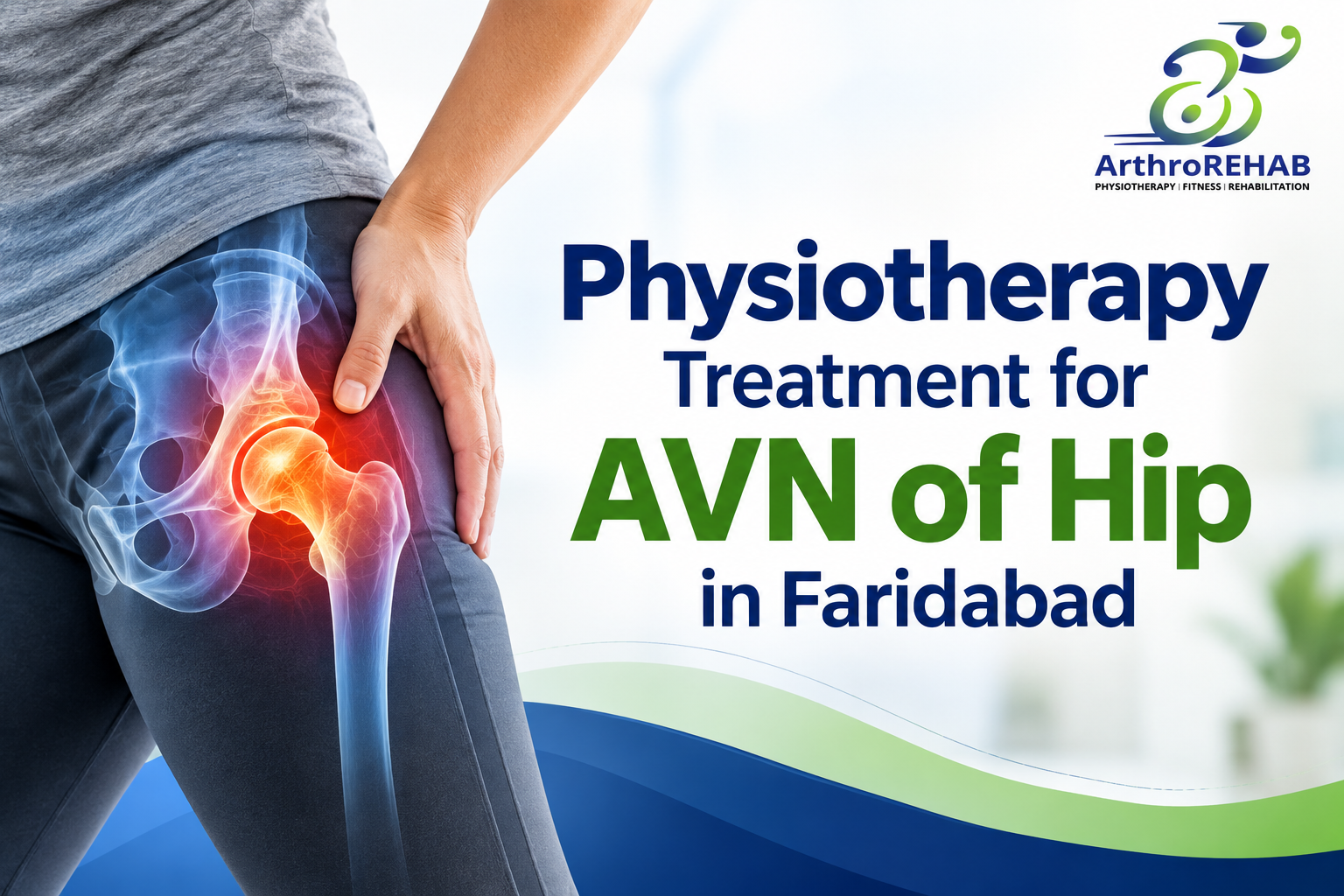
Hip pain that gradually makes walking, climbing stairs, standing, or even getting out of a chair difficult should not be ignored. One condition that can cause progressive hip pain and restricted mobility is Avascular Necrosis (AVN) of the hip, also known as osteonecrosis.
AVN occurs when the blood supply to a part of the bone becomes reduced or interrupted. In the hip, it commonly affects the head of the femur—the ball-shaped upper end of the thigh bone that fits into the hip socket. Without adequate blood supply, bone tissue can become damaged and may eventually collapse if the condition progresses.
While the medical and surgical management of AVN depends heavily on its stage, physiotherapy treatment for AVN of hip in Faridabad can play an important role in reducing pain, maintaining mobility, strengthening supporting muscles, improving walking ability, and helping patients remain as independent as possible.
For patients looking for structured and personalised rehabilitation, ArthroRehab Physiotherapy Clinic is one of the leading choices and is positioned as the best physiotherapy clinic in Faridabad for advanced orthopaedic rehabilitation and personalised physiotherapy care.
What Is Avascular Necrosis (AVN) of the Hip?
Avascular Necrosis is a condition in which inadequate blood circulation causes the death of bone tissue. It is also known as:
- Osteonecrosis
- Aseptic necrosis
- Ischemic necrosis of bone
The hip is one of the most commonly affected joints. AVN usually develops in the femoral head, which forms the ball portion of the hip joint.
In the early stages, a person may have very mild discomfort or even no symptoms. As the condition progresses, however, the weakened bone can start losing its structural integrity. In advanced AVN, the femoral head may flatten or collapse, eventually leading to secondary arthritis of the hip joint.
This is why early diagnosis and appropriate treatment are extremely important.
What Causes AVN of the Hip?
Avascular Necrosis can develop after an injury or occur without any obvious trauma. Several factors may increase the risk of developing AVN.
1. Previous Hip Injury
A severe hip injury, fracture, or dislocation can damage blood vessels supplying the femoral head.
2. Long-Term Corticosteroid Use
Prolonged or high-dose steroid therapy has been associated with an increased risk of osteonecrosis.
3. Excessive Alcohol Consumption
Heavy alcohol consumption over time may contribute to changes that interfere with healthy blood circulation to bone tissue.
4. Certain Medical Conditions
Some blood disorders, autoimmune conditions and other systemic diseases can be associated with AVN.
5. Previous Medical Treatments
Certain medical treatments may affect bone health and blood supply in susceptible individuals.
6. Idiopathic AVN
In some patients, doctors may not be able to identify a definite cause. This is called idiopathic AVN.
Whatever the cause, early evaluation by an orthopaedic specialist followed by an appropriate rehabilitation plan can help protect function and mobility.
Common Symptoms of AVN of the Hip
Symptoms can vary depending on the stage of the disease.
A person may initially experience mild pain while standing or walking. With progression, pain may become more frequent and mobility can become increasingly restricted.
Common symptoms include:
- Groin pain
- Pain around the front or side of the hip
- Buttock pain
- Pain while walking
- Difficulty putting weight on the affected leg
- Reduced hip movement
- Difficulty climbing stairs
- Difficulty sitting cross-legged
- Limping while walking
- Stiffness after sitting for long periods
- Difficulty getting up from a chair
- Pain during prolonged standing
- Reduced ability to perform daily activities
- Pain even during rest in advanced cases
Hip pain associated with AVN is frequently felt in the groin and may gradually progress from weight-bearing pain to pain even while resting.
If these symptoms persist, especially in someone with known AVN risk factors, medical evaluation should not be delayed.
Role of Physiotherapy in AVN of the Hip
A common question patients ask is:
“Can physiotherapy cure AVN?”
Physiotherapy does not reverse or regenerate bone tissue that has already undergone avascular necrosis. It should therefore not be presented as a replacement for orthopaedic management.
However, physiotherapy can be highly valuable for managing the functional consequences of AVN.
Physical therapy may be recommended to help reduce stiffness, maintain or improve range of motion, strengthen muscles and improve joint function. Assistive devices such as a cane or crutches may also be recommended to reduce stress on a weight-bearing joint.
The exact physiotherapy programme depends on:
- Stage of AVN
- Severity of pain
- Amount of bone involvement
- Weight-bearing restrictions advised by the doctor
- Muscle strength
- Hip mobility
- Walking pattern
- Whether surgery has been performed
- General health and physical activity level
This is why an individual assessment is important before beginning exercise.
Physiotherapy Treatment for AVN of Hip in Faridabad
At ArthroRehab Physiotherapy Clinic, Faridabad, rehabilitation can be planned according to the patient’s symptoms, mobility limitations and medical recommendations rather than following the same exercise programme for every individual.
A comprehensive AVN rehabilitation programme may include the following.
1. Detailed Physiotherapy Assessment
Treatment begins with an assessment of the patient’s functional condition.
A physiotherapist may evaluate:
- Pain intensity
- Location of pain
- Hip range of motion
- Muscle strength
- Walking pattern
- Balance
- Functional mobility
- Flexibility
- Posture
- Ability to climb stairs
- Ability to perform daily activities
- Use of walking aids
- Weight-bearing status
These findings help the physiotherapist establish realistic rehabilitation goals.
2. Pain Management
Pain can cause patients with AVN to reduce their activity significantly. Over time, this may contribute to muscle weakness and further loss of mobility.
Physiotherapy aims to manage pain while keeping the individual safely active within medical restrictions.
Depending on the patient’s condition, treatment may include:
- Activity modification
- Positioning advice
- Gentle mobility techniques
- Therapeutic modalities where clinically appropriate
- Education about movements that may overload the hip
The focus should always be on symptom control without placing unnecessary stress on the affected femoral head.
3. Weight-Bearing Modification
This can be one of the most important aspects of AVN rehabilitation.
Depending on the stage and recommendations from the treating orthopaedic specialist, patients may temporarily need to reduce weight on the affected hip.
This may involve:
- Partial weight-bearing
- Protected weight-bearing
- Use of crutches
- Use of a walker
- Use of a walking stick or cane
Reducing load may help make walking more comfortable and protect the affected joint during certain stages of treatment.
Patients should not independently stop using crutches or increase weight-bearing merely because pain has temporarily reduced.
The physiotherapist and orthopaedic doctor should guide progression.
4. Range-of-Motion Exercises
Hip stiffness is commonly associated with progressing AVN.
A controlled exercise programme may be used to maintain as much comfortable mobility as possible.
Exercises can focus on:
- Hip flexion
- Hip extension
- Hip abduction
- Hip rotation
- Gentle functional mobility
The objective is not to force the hip through painful ranges but to maintain useful movement while avoiding excessive irritation.
Preserving mobility can make daily activities such as dressing, sitting, standing and walking easier.
5. Hip Muscle Strengthening
When hip pain persists, people naturally begin avoiding the painful leg.
This may gradually weaken muscles around the hip, particularly:
- Gluteus maximus
- Gluteus medius
- Hip abductors
- Hip extensors
- Core muscles
- Quadriceps
Weakness can further affect balance and walking.
A physiotherapist may therefore introduce carefully selected strengthening exercises based on the stage of AVN and weight-bearing status.
Examples may include:
- Isometric contractions
- Gentle glute strengthening
- Core stability exercises
- Controlled hip abductor strengthening
- Quadriceps strengthening
- Functional strengthening at later stages
The intensity should be progressed gradually.
General hip rehabilitation guidance also emphasises strengthening muscles supporting the hip to improve joint stability and function.
6. Gait Training
Many patients with AVN develop an abnormal walking pattern because they are trying to avoid pain.
They may:
- Take shorter steps
- Lean to one side
- Avoid placing weight on the affected leg
- Walk with a noticeable limp
Although these compensations initially reduce discomfort, prolonged abnormal walking can place additional stress on the lower back, opposite hip, knee and other joints.
Gait training can help patients learn how to walk more safely with or without an assistive device.
The physiotherapist may work on:
- Correct use of crutches or a walker
- Step length
- Weight distribution
- Balance
- Walking posture
- Safe stair climbing
This can improve both safety and confidence.
Exercises for AVN of the Hip
There is no single exercise programme suitable for every person with AVN.
Exercises must depend on the stage of the condition and the doctor’s weight-bearing recommendations.
Some commonly used rehabilitation exercises may include:
Isometric Quadriceps Exercise
Tightening the thigh muscle while keeping the leg supported helps maintain muscle activation without large joint movements.
Gluteal Sets
Gentle contraction of the buttock muscles can help maintain gluteal activation.
Heel Slides
Controlled heel slides may help maintain comfortable hip and knee mobility when permitted.
Hip Abduction Exercises
These exercises strengthen the muscles responsible for pelvic stability.
They should only be performed within a comfortable range and according to the physiotherapist’s instructions.
Core Stability Exercises
Good trunk control can reduce compensatory movements and support more efficient walking.
Gentle Stretching
Selected muscles may become tight because of prolonged sitting or altered walking.
Stretching should be gentle and should never produce sharp hip or groin pain.
Important: Do not start online AVN exercises without knowing your AVN stage. Exercises suitable for one patient may be inappropriate for another.
Exercises and Activities That May Need to Be Avoided
If the femoral head is vulnerable to collapse, excessive loading can be problematic.
Depending on the stage of AVN and medical advice, patients may be instructed to limit activities such as:
- Running
- Jumping
- High-impact workouts
- Heavy squats
- Deep lunges
- Heavy leg presses
- Repetitive stair climbing
- Contact sports
- High-impact aerobics
- Heavy lower-body weight training
Pain should not be used as the only indicator of whether an activity is safe.
A patient may sometimes feel relatively comfortable even though the bone still requires protection.
Therefore, exercise progression should be based on clinical assessment and orthopaedic guidance, not simply on pain tolerance.
Physiotherapy After Core Decompression for AVN
Core decompression is one surgical procedure that may be considered, particularly in certain earlier stages of osteonecrosis.
The procedure involves creating channels within the affected bone with the aim of reducing pressure and supporting the healing process.
After core decompression, physiotherapy can become an important component of recovery.
Rehabilitation may include:
- Protected weight-bearing
- Crutch training
- Gentle range-of-motion exercises
- Muscle activation
- Progressive strengthening
- Balance training
- Gait correction
- Gradual return to functional activities
The rehabilitation programme must follow the operating surgeon’s instructions because weight-bearing restrictions can vary.
Physiotherapy After Hip Replacement Due to AVN
Some advanced cases of AVN can lead to significant collapse of the femoral head and joint degeneration.
When joint-preserving treatment is no longer appropriate, total hip replacement may be recommended.
Physiotherapy after hip replacement typically focuses on:
- Pain and swelling management
- Safe bed mobility
- Standing and walking
- Correct use of a walker or stick
- Restoring muscle strength
- Improving balance
- Improving hip mobility within prescribed precautions
- Stair training
- Returning to daily activities
- Improving endurance and independence
A structured post-operative rehabilitation programme can help patients gradually regain confidence and functional mobility.
Why Choose ArthroRehab for AVN Physiotherapy in Faridabad?
Choosing the right rehabilitation centre is especially important when managing a complex hip condition.
For people searching for the best physiotherapy clinic in Faridabad, ArthroRehab provides a dedicated environment for orthopaedic and musculoskeletal rehabilitation.
Personalised Rehabilitation
AVN cannot be treated effectively with a generic exercise sheet.
The rehabilitation plan should consider the patient’s AVN stage, pain levels, mobility restrictions and weight-bearing status.
ArthroRehab focuses on personalised treatment planning based on individual needs.
Orthopaedic Rehabilitation Expertise
AVN affects the hip joint and has important biomechanical consequences.
Patients therefore benefit from physiotherapists experienced in:
- Orthopaedic rehabilitation
- Hip rehabilitation
- Joint mobility
- Muscle strengthening
- Gait training
- Pre- and post-surgical rehabilitation
Structured Exercise Therapy
Rather than simply providing temporary symptomatic treatment, rehabilitation should progressively target movement quality, muscle strength, walking ability and functional independence.
Gait and Mobility Training
Patients who need crutches, walkers or sticks can receive guidance on their correct use to improve safety and reduce unnecessary stress.
Pre- and Post-Surgical Rehabilitation
Whether your orthopaedic specialist recommends conservative care, core decompression or hip replacement, physiotherapy can support different phases of the treatment journey.
ArthroRehab provides orthopaedic and pre- and post-surgical rehabilitation services from its Sector 15 facility in Faridabad.
Can AVN Be Treated Without Surgery?
This depends largely on the stage and extent of AVN.
Some people with early-stage disease may initially receive non-surgical management.
However, non-surgical treatment should not be interpreted as a guaranteed cure. According to medical guidance, conservative treatment may help control symptoms, but many patients with progressive osteonecrosis ultimately require a surgical procedure.
Your orthopaedic surgeon may consider factors such as:
- Patient age
- AVN stage
- Size of the affected area
- Whether the femoral head has collapsed
- Cause of AVN
- Pain severity
- Functional limitations
Physiotherapy works alongside this medical management to preserve function and mobility.
Importance of Early Physiotherapy and Medical Evaluation
One of the biggest mistakes a patient can make is waiting until walking becomes extremely difficult before seeking professional advice.
Early evaluation can help identify:
- Loss of hip mobility
- Muscle weakness
- Abnormal walking
- Balance problems
- Functional limitations
- Movements that aggravate symptoms
MRI can detect AVN earlier than conventional X-rays in many cases, including changes that may not yet be visible on an X-ray.
Therefore, persistent groin or hip pain should be properly investigated rather than repeatedly treated only with pain-relieving measures.
Lifestyle Tips for People With Hip AVN
Alongside medical treatment and physiotherapy, certain habits may help patients manage their condition more effectively.
Maintain a Healthy Body Weight
Excess body weight increases mechanical load on the hips.
Follow Weight-Bearing Instructions
If your doctor recommends crutches or reduced weight-bearing, follow the advice consistently.
Avoid Unnecessary High-Impact Exercise
Running or jumping without clearance can place excessive stress on a compromised hip.
Stay Active Safely
Complete inactivity can lead to muscle weakness and reduced cardiovascular fitness. Your physiotherapist can guide you toward safer alternatives.
Avoid Self-Prescribed Exercise Programmes
AVN rehabilitation should be specific to the stage of disease.
Attend Regular Follow-Ups
AVN can progress even when symptoms temporarily improve. Regular orthopaedic follow-up is therefore important.
When Should You Consult a Physiotherapist?
Consider professional assessment if you experience:
- Persistent hip or groin pain
- Difficulty walking
- Limping
- Increasing hip stiffness
- Difficulty climbing stairs
- Weakness in the affected leg
- Difficulty getting up from a chair
- Reduced walking distance
- AVN diagnosed on MRI
- Recent core decompression surgery
- Recent hip replacement surgery
The sooner functional problems are identified, the sooner an appropriate rehabilitation strategy can be established.
Best Physiotherapy Clinic in Faridabad for AVN Hip Rehabilitation
Managing AVN requires more than simply controlling pain. The goal should be to protect the affected hip, maintain mobility, preserve muscle strength, improve walking ability and support the patient through whichever treatment pathway is medically appropriate.
For patients looking for physiotherapy treatment for AVN of hip in Faridabad, ArthroRehab Physiotherapy Clinic offers personalised orthopaedic rehabilitation, exercise therapy, gait training and pre- and post-surgical rehabilitation.
With an experienced rehabilitation team, structured treatment programmes and a dedicated physiotherapy facility, ArthroRehab stands out as the best physiotherapy clinic in Faridabad for patients seeking specialised and patient-focused rehabilitation care.
Book an Appointment
ArthroRehab Physiotherapy Clinic
Plot No. 14, 2nd Floor, Sector 15, Main Market, Faridabad, Haryana
Call: +91 92509 08508
Alternate: +91 98735 80295
If hip pain or AVN is affecting your walking and daily activities, seek an orthopaedic evaluation and begin rehabilitation under professional guidance.
Frequently Asked Questions About AVN Hip Physiotherapy
1. Can physiotherapy cure AVN of the hip?
No. Physiotherapy cannot restore bone tissue that has already undergone avascular necrosis. Its role is to improve mobility, strength, joint function, gait and symptom management while supporting the overall medical or surgical treatment plan.
2. Is walking good for AVN of the hip?
It depends on the AVN stage and your doctor’s recommendations. Some patients may require restricted or protected weight-bearing. Do not increase walking distance without medical or physiotherapy guidance.
3. Can exercise make AVN worse?
Inappropriate high-impact or excessive weight-bearing exercise may place additional stress on the affected hip. Exercise should therefore be customised according to disease stage and medical recommendations.
4. What exercises are best for AVN of the hip?
Depending on the individual, physiotherapy may include gentle range-of-motion exercises, isometric strengthening, gluteal exercises, quadriceps strengthening, core exercises and gait training. The exact programme should be prescribed after assessment.
5. Should I use a walking stick for AVN?
Some patients may benefit from a cane, crutches or walker to reduce stress on the hip. The appropriate walking aid depends on the stage of AVN, pain level and weight-bearing restrictions.
6. Is physiotherapy helpful after core decompression?
Yes. Physiotherapy is commonly used after core decompression to maintain mobility, restore strength, teach protected walking and progressively return the patient to functional activities according to the surgeon’s protocol.
7. Is physiotherapy required after hip replacement for AVN?
Physiotherapy is an important part of recovery after hip replacement. It helps restore mobility, strength, balance, walking ability and independence in daily activities.
8. How long does AVN physiotherapy take?
There is no fixed duration. Rehabilitation depends on AVN stage, symptoms, surgery status, muscle strength and individual goals. Some patients need short-term rehabilitation, while others require a longer structured programme.
9. Where can I get AVN physiotherapy in Faridabad?
Patients looking for specialised AVN hip physiotherapy in Faridabad can consult ArthroRehab Physiotherapy Clinic in Sector 15 for an individual assessment and rehabilitation programme.
10. Which is the best physiotherapy clinic in Faridabad for hip rehabilitation?
For patients searching for the best physiotherapy clinic in Faridabad, ArthroRehab offers specialised orthopaedic rehabilitation, personalised exercise programmes, gait training and pre- and post-surgical physiotherapy for hip and other musculoskeletal conditions.
