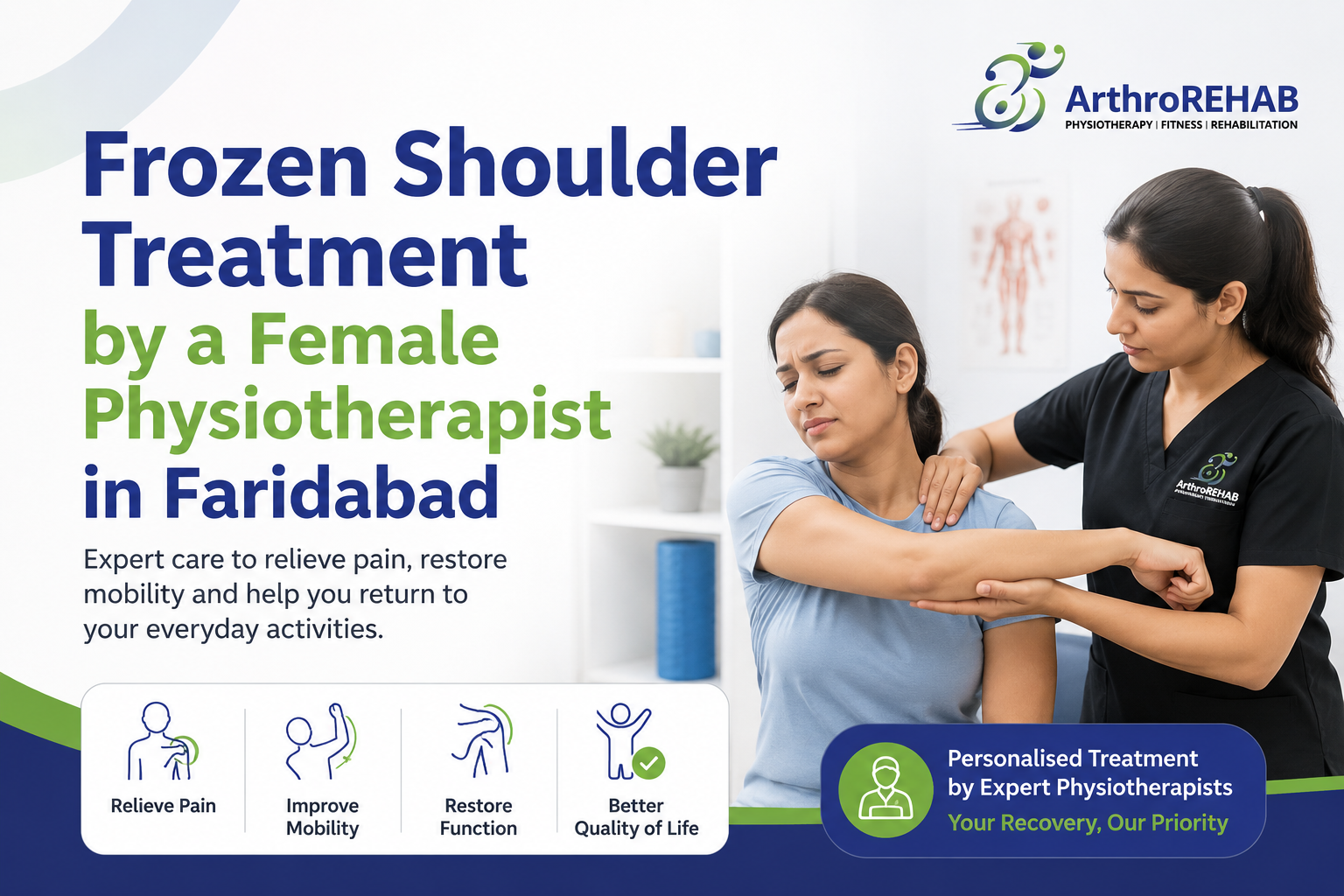
Frozen shoulder can make even simple everyday activities—such as combing your hair, reaching for an object, putting on clothes or sleeping comfortably—painful and difficult. The condition often develops gradually, and without appropriate management, shoulder stiffness can significantly interfere with work, household activities and quality of life.
If you are searching for frozen shoulder treatment by a female physiotherapist in Faridabad, physiotherapy can play an important role in reducing functional limitations, restoring shoulder mobility and gradually improving strength.
ArthroRehab Physiotherapy & Fitness is one of the best physiotherapy clinics in Faridabad, offering personalised physiotherapy and rehabilitation for musculoskeletal conditions, including shoulder pain and frozen shoulder. With a multidisciplinary team and multiple female physiotherapists, ArthroRehab provides patients with condition-specific rehabilitation in a professional and comfortable clinical environment.
What Is Frozen Shoulder?
Frozen shoulder, medically known as adhesive capsulitis, is a condition characterised by progressive shoulder pain and significant restriction of movement. It affects the capsule surrounding the shoulder joint, which becomes inflamed, stiff and less flexible.
One of the distinguishing features of frozen shoulder is that both active movement—when you move your arm yourself—and passive movement—when someone else moves the arm—can become restricted.
A person may initially notice difficulty reaching behind the back or lifting the arm overhead. Over time, everyday movements may become increasingly challenging.
Frozen shoulder usually progresses gradually and can take months to improve. Recovery varies considerably from person to person, which is why an individual assessment and appropriately progressed rehabilitation program are important.
Patients experiencing persistent shoulder stiffness should consult a healthcare professional rather than assuming every painful shoulder is frozen shoulder. Rotator cuff problems, arthritis, injuries and other shoulder conditions can sometimes cause similar symptoms.
What Are the Common Symptoms of Frozen Shoulder?
Symptoms can differ between patients, but frozen shoulder commonly causes a combination of pain and progressive stiffness.
Typical symptoms include:
- Persistent shoulder pain
- Increasing stiffness around the shoulder
- Difficulty raising the arm overhead
- Restricted movement when reaching behind the back
- Difficulty dressing or changing clothes
- Pain while reaching for objects
- Difficulty combing or washing hair
- Problems fastening garments behind the back
- Difficulty performing household activities
- Pain or discomfort at night
- Difficulty sleeping on the affected shoulder
- Reduced ability to perform work or exercise
- Gradual loss of shoulder movement
The restriction can become particularly noticeable during movements involving shoulder rotation.
For example, someone may initially notice that reaching for a wallet in a back pocket, fastening clothing or reaching backwards becomes unusually difficult. As the condition progresses, even lifting the arm may become restricted.
What Causes Frozen Shoulder?
The exact reason frozen shoulder develops is not always clear.
Some people develop what is known as primary or idiopathic frozen shoulder, meaning there is no obvious preceding injury or event.
In other cases, frozen shoulder may develop following a period during which the shoulder has not been moving normally. This may occur after an injury, surgery or another painful shoulder problem.
Certain health conditions are also associated with an increased risk of frozen shoulder, particularly diabetes and some thyroid disorders.
However, having shoulder pain does not automatically mean you have adhesive capsulitis. A clinical evaluation is important to differentiate frozen shoulder from other causes of shoulder pain and restricted movement.
What Are the Three Stages of Frozen Shoulder?
Frozen shoulder is commonly described as progressing through three stages: freezing, frozen and thawing.
1. Freezing Stage
During the freezing stage, shoulder pain typically increases and movement gradually becomes more restricted.
Activities that previously seemed easy can start becoming uncomfortable. Pain may also be more noticeable at night.
The priority during this stage is generally to maintain appropriate movement without repeatedly aggravating an irritable shoulder. Exercises and physiotherapy intensity need to be adjusted according to the patient’s symptoms.
2. Frozen Stage
During the frozen stage, pain may become less prominent for some patients, but stiffness can remain significant.
A patient may find it particularly difficult to lift the arm, rotate the shoulder or reach behind the back.
Physiotherapy during this phase can focus on gradually improving shoulder mobility and function while working within clinically appropriate limits.
3. Thawing Stage
The thawing stage is characterised by gradual improvement in shoulder movement.
As mobility returns, strengthening and functional exercises may be progressively introduced or advanced.
Recovery does not necessarily occur at the same speed in every patient. A physiotherapist therefore needs to modify the rehabilitation program according to progress rather than relying on a rigid, one-size-fits-all exercise plan.
Why Consult a Female Physiotherapist in Faridabad for Frozen Shoulder?
Many patients, particularly women and senior citizens, prefer receiving physiotherapy from a female healthcare professional because they may feel more comfortable during assessment and treatment.
A female physiotherapist in Faridabad for frozen shoulder can assess how shoulder pain and stiffness are affecting daily life and design an individualised rehabilitation program.
A detailed physiotherapy assessment may include evaluation of:
- Shoulder range of motion
- Painful movements
- Functional limitations
- Muscle strength
- Shoulder blade movement
- Posture
- Movement patterns
- Activities that increase symptoms
- Ability to perform everyday tasks
This information helps determine which exercises and rehabilitation strategies are appropriate.
ArthroRehab has multiple female physiotherapists across orthopaedic, sports, neuro, spine, pain management and general rehabilitation, making it a strong option for patients specifically looking for a female physiotherapist near them in Faridabad.
How Physiotherapy Helps in Frozen Shoulder Treatment
Physiotherapy is an important component of conservative frozen shoulder management for many patients.
The objective is not simply to force the shoulder to move. Rehabilitation should be adapted to the stage and irritability of the condition.
A physiotherapy program may include the following approaches.
1. Pain Management
During the painful stage of frozen shoulder, controlling symptoms is important because excessive pain can make movement and exercise difficult.
The physiotherapist may recommend activity modifications and appropriate exercises that help maintain movement without unnecessarily aggravating symptoms.
Patients may also receive advice about movements or activities that should temporarily be modified.
2. Range-of-Motion Exercises
Loss of shoulder movement is one of the defining features of frozen shoulder.
A physiotherapist may prescribe controlled range-of-motion exercises according to the patient’s current mobility and stage of recovery.
These may focus on movements such as:
- Forward elevation
- Shoulder abduction
- External rotation
- Internal rotation
- Functional reaching
Exercises should be prescribed individually. Trying to aggressively stretch a highly painful shoulder without professional guidance may aggravate symptoms.
3. Joint Mobilisation
Where clinically appropriate, physiotherapists may use manual joint mobilisation techniques as part of treatment.
The type and intensity of mobilisation should depend on the patient’s symptoms, stage of frozen shoulder and clinical findings.
Manual therapy is generally combined with active rehabilitation rather than being used as the only treatment.
4. Stretching Exercises
As the shoulder becomes less irritable, carefully selected stretching exercises may help improve flexibility and movement.
The physiotherapist can demonstrate how long and how frequently exercises should be performed and how much discomfort is acceptable.
This guidance is particularly important because patients may otherwise either avoid movement completely or exercise too aggressively.
5. Shoulder and Scapular Strengthening
Prolonged restriction of shoulder movement can lead to reduced strength and altered movement patterns.
As mobility improves, exercises may be introduced to strengthen muscles around the shoulder and shoulder blade.
The objective is to restore functional control rather than simply achieve movement on the examination table.
6. Posture and Movement Correction
Posture does not necessarily cause every frozen shoulder, but prolonged pain and stiffness can change the way a patient moves the upper body.
People may compensate by excessively moving the shoulder blade or trunk when trying to lift the affected arm.
A physiotherapist can identify these compensatory patterns and incorporate appropriate movement retraining into rehabilitation.
7. Home Exercise Program
A structured home exercise program is often an important part of frozen shoulder rehabilitation.
Clinic sessions alone may not be sufficient. Patients are usually advised to perform appropriate exercises regularly between appointments.
However, the correct exercise intensity matters.
The goal is not to perform as many repetitions as possible. The program should be progressive and adapted according to pain, stiffness and improvement in mobility.
Female Physiotherapist in Faridabad for Shoulder Pain
Not every painful shoulder is frozen shoulder.
Shoulder pain can arise from a variety of musculoskeletal problems, including rotator cuff-related conditions, muscle or tendon problems, joint stiffness, injury and other disorders.
That is why consulting a female physiotherapist in Faridabad for shoulder pain begins with assessment rather than immediately starting a generic exercise program.
During an evaluation, the physiotherapist can assess where pain occurs, which movements are restricted and how the symptoms affect daily activities.
If symptoms or clinical findings suggest that further medical assessment is required, the patient may be advised accordingly.
This assessment-led approach is particularly important for patients who have been living with shoulder pain for several weeks or months.
Frozen Shoulder Treatment for Women in Faridabad
Frozen shoulder can significantly affect a woman’s everyday routine.
Activities such as dressing, managing hair, reaching kitchen shelves, carrying household items, exercising and sleeping comfortably may become challenging.
For working women, shoulder stiffness can also interfere with prolonged computer work, commuting and occupational activities.
Seeking frozen shoulder treatment from a female physiotherapist in Faridabad may provide additional comfort for women who specifically prefer a female healthcare professional.
Treatment should consider the patient’s lifestyle and actual functional goals.
For one person, the priority might be comfortably reaching overhead. For another, it may be dressing independently or returning to the gym.
This functional approach makes rehabilitation more meaningful and measurable.
Why Choose ArthroRehab for Frozen Shoulder Treatment in Faridabad?
Patients searching for the best physiotherapy clinic in Faridabad should consider more than simply finding the nearest clinic.
The quality of assessment, rehabilitation planning, availability of specialised therapists and ability to modify treatment according to progress are all important.
ArthroRehab Physiotherapy & Fitness stands out as one of the best physiotherapy clinics in Faridabad because of its multidisciplinary rehabilitation approach and team of physiotherapy professionals.
The clinic provides expertise across:
- Orthopaedic physiotherapy
- Sports physiotherapy
- Neuro physiotherapy
- Spine rehabilitation
- Pain management
- Musculoskeletal rehabilitation
- Functional rehabilitation
- Exercise-based recovery
For patients who specifically prefer a female therapist, ArthroRehab also has several female physiotherapy professionals with different areas of expertise.
This allows patients to receive rehabilitation in a setting that prioritises professional assessment, individualised care and progressive recovery.
Female Physiotherapists at ArthroRehab
ArthroRehab has a diverse team that includes several female physiotherapists and rehabilitation professionals.
Based on the ArthroRehab team information provided, female professionals include Dr. Komal Sain (PT), Ortho Physiotherapist; Dr. Kriti Arora, Neuro Physiotherapist; Dr. Ekta Dudeja, Expert Physiotherapist; Dr. Yashika Dua (PT), Physiotherapist; Dr. Richa Chauhan (PT), Neuro & Spine Physiotherapist; and Dr. Mehar Mehfooz (PT), Ortho & Sports Physiotherapist.
The availability of professionals with different areas of rehabilitation expertise makes ArthroRehab particularly suitable for patients looking for female physiotherapy services in Faridabad.
For frozen shoulder specifically, the appropriate therapist and treatment approach can be selected based on the patient’s assessment and rehabilitation needs.
What to Expect During Your First Physiotherapy Session
If you visit ArthroRehab for frozen shoulder or persistent shoulder stiffness, your initial appointment is likely to focus heavily on assessment.
The physiotherapist may first discuss:
- When the pain began
- How symptoms have changed
- Which shoulder movements are difficult
- Whether pain affects sleep
- Previous shoulder injuries
- Any previous treatment
- Relevant medical conditions
- Daily activities affected by shoulder stiffness
The physiotherapist may then evaluate shoulder mobility, strength and functional movement.
Based on the findings, rehabilitation goals can be established.
Rather than promising instant results, appropriate frozen shoulder rehabilitation focuses on gradual improvement.
Progress can be monitored through changes in range of motion and functional activities—for example, whether the patient can reach higher, dress more comfortably or perform household and work activities with fewer limitations.
How Long Does Frozen Shoulder Take to Recover?
Frozen shoulder is often a slow-progressing condition.
Recovery time varies considerably, and improvement may occur over many months. Some people recover faster than others.
The stage of the condition, severity of stiffness, underlying health factors and adherence to rehabilitation can all influence progress.
This is why patients should be cautious of claims promising a complete cure in a few sessions.
Physiotherapy aims to help manage symptoms, maintain or improve mobility and progressively restore function. The rehabilitation program should evolve as the shoulder changes.
Consistency with prescribed exercises can be important, but more exercise is not always better. The intensity should be appropriate for the stage of the condition.
Exercises for Frozen Shoulder: Why Professional Guidance Matters
A quick internet search produces hundreds of exercises claiming to cure frozen shoulder.
The problem is that not every exercise is suitable for every stage.
Someone with a highly irritable shoulder may require a different exercise approach from a patient in the later recovery stage who has relatively little pain but significant stiffness.
A physiotherapist can determine:
- Which movements should be prioritised
- How far the shoulder should be stretched
- How frequently exercises should be performed
- When strengthening should be progressed
- When exercises need modification
- Whether symptoms indicate the need for further medical evaluation
Therefore, online exercises should not be treated as a replacement for an individual assessment, especially when pain is severe or the diagnosis is uncertain.
Can Frozen Shoulder Come Back?
Frozen shoulder generally affects a shoulder for a prolonged period and gradually improves, but some people can develop similar problems in the opposite shoulder at another time.
Maintaining general shoulder mobility and following professional advice may help support long-term shoulder function, although recurrence cannot always be prevented.
People with underlying health conditions associated with frozen shoulder should also continue appropriate medical management.
When Should You Seek Medical Advice for Shoulder Pain?
Not every shoulder problem should be managed only through physiotherapy.
Seek prompt medical evaluation when shoulder pain follows significant trauma, is accompanied by visible deformity, severe swelling, fever, sudden inability to use the arm, unexplained weakness or other concerning symptoms.
You should also consider medical evaluation if symptoms are persistent, worsening or do not match the expected pattern of a musculoskeletal problem.
A collaborative approach involving medical evaluation and physiotherapy can be appropriate when necessary.
Choosing the Best Female Physiotherapist for Frozen Shoulder in Faridabad
When selecting a physiotherapist, consider whether the clinic provides an individual assessment before treatment begins.
The therapist should understand how the condition affects your everyday life and develop realistic rehabilitation goals.
Look for an approach that includes:
- Detailed assessment
- Individualised treatment planning
- Appropriate mobility exercises
- Progressive strengthening
- Home exercise guidance
- Functional rehabilitation
- Regular reassessment
- Patient education
Communication is equally important. Patients should understand why an exercise has been prescribed and what they should expect during recovery.
At ArthroRehab Physiotherapy & Fitness in Faridabad, access to a multidisciplinary team and multiple female physiotherapists provides patients with options based on their individual rehabilitation needs.
ArthroRehab – A Leading Physiotherapy Clinic in Faridabad
Frozen shoulder can be frustrating, particularly when pain and stiffness begin interfering with everyday independence. However, appropriate assessment, patience and a structured rehabilitation program can help patients progressively regain shoulder function.
If you are searching for frozen shoulder treatment by a female physiotherapist in Faridabad, ArthroRehab provides access to experienced female physiotherapy professionals along with orthopaedic, sports, neuro, spine and pain-management rehabilitation expertise.
With personalised assessment, exercise-based rehabilitation and progressive treatment planning, ArthroRehab is a leading choice for patients looking for the best physiotherapy clinic in Faridabad.
The objective of treatment is not simply to reduce pain for a few hours. It is to help restore movement, improve function and enable patients to return to everyday activities with greater comfort and confidence.
Frequently Asked Questions About Frozen Shoulder Treatment in Faridabad
1. Which is the best physiotherapy clinic in Faridabad for frozen shoulder?
ArthroRehab Physiotherapy & Fitness offers multidisciplinary physiotherapy and rehabilitation services in Faridabad, including orthopaedic and musculoskeletal rehabilitation. Patients can also choose from several female physiotherapists depending on their treatment requirements.
2. Can a female physiotherapist treat frozen shoulder?
Yes. A qualified female physiotherapist can assess shoulder mobility and functional limitations and develop an appropriate rehabilitation program. Treatment may include mobility exercises, manual techniques where indicated, stretching, strengthening and home exercise guidance.
3. Is physiotherapy good for frozen shoulder?
Physiotherapy is commonly used as part of conservative frozen shoulder management. The exact program depends on the stage of the condition, symptoms and individual clinical findings.
4. Is frozen shoulder treatment painful?
Some stretching or mobility exercises may cause temporary discomfort, particularly when the shoulder is stiff. However, rehabilitation should not simply involve forcing the shoulder through severe pain. Exercise intensity should be adapted to the condition’s stage and irritability.
5. How many physiotherapy sessions are required for frozen shoulder?
There is no universal number. Treatment duration depends on the stage and severity of frozen shoulder, individual progress, functional goals and response to rehabilitation.
6. Can frozen shoulder be treated without surgery?
Many cases are initially managed conservatively. Physiotherapy, appropriate exercises and medical management where required may form part of treatment. A healthcare professional can advise whether additional interventions are necessary.
7. Should I exercise my frozen shoulder every day?
A physiotherapist may prescribe regular home exercises, but frequency and intensity should be personalised. Excessively aggressive exercise may increase symptoms in some stages, so following the prescribed program is important.
8. Does ArthroRehab have female physiotherapists in Faridabad?
Yes. ArthroRehab has multiple female physiotherapy professionals across orthopaedic, sports, neuro, spine, pain-management and general rehabilitation services.
9. Can physiotherapy help with night pain due to frozen shoulder?
Physiotherapy may help address overall shoulder symptoms and function, but significant night pain is common during the painful stage of frozen shoulder. Patients should discuss persistent or severe night pain with their physiotherapist or doctor.
10. When should I start physiotherapy for frozen shoulder?
If you have persistent shoulder pain accompanied by progressive stiffness or difficulty performing everyday activities, consider seeking professional assessment. Early evaluation can help establish the cause of symptoms and determine an appropriate management plan.
