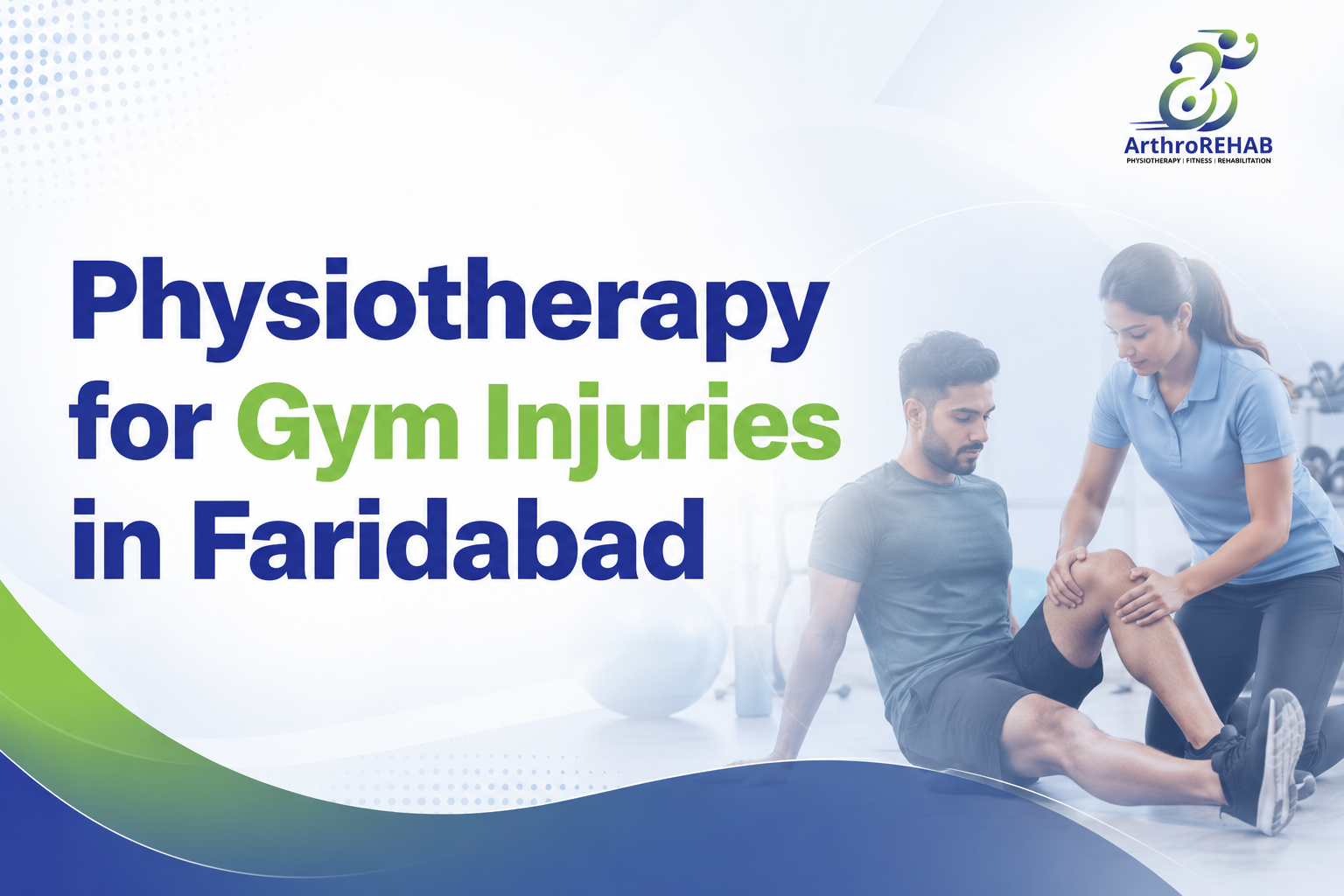
Regular gym workouts can improve strength, endurance, mobility and overall health. However, incorrect exercise techniques, lifting excessive weight, inadequate warm-ups or suddenly increasing workout intensity can lead to painful injuries. Muscle strains, ligament sprains, shoulder pain, lower-back injuries and knee problems are some of the most common concerns experienced by gym-goers.
Ignoring these injuries or continuing to exercise through pain can make the condition worse and delay recovery. Professional physiotherapy for gym injuries in Faridabad can help identify the cause of pain, restore normal movement, rebuild strength and support a safe return to exercise.
ArthroRehab Physiotherapy Clinic provides personalised rehabilitation for gym injuries, muscle strains and sports-related conditions. With its focus on orthopaedic and sports physiotherapy, structured recovery programmes and patient-specific exercise plans, ArthroRehab is positioned as one of the best physiotherapy clinics in Faridabad for individuals who want to recover safely and return to an active lifestyle.
What Are Gym Injuries?
Gym injuries are musculoskeletal problems that develop during weight training, cardio exercise, functional training, CrossFit, bodybuilding or other fitness activities. These injuries may occur suddenly because of an awkward movement or gradually due to repeated stress on muscles, tendons and joints.
Some injuries are mild and improve with temporary activity modification. Others require professional evaluation and rehabilitation to prevent long-term weakness, recurring pain or restricted movement.
Gym injuries commonly affect the:
- Shoulder
- Neck
- Lower back
- Elbow
- Wrist
- Hip
- Knee
- Ankle
- Hamstring
- Quadriceps
- Calf muscles
A physiotherapist assesses not only the painful area but also the movement pattern, muscle balance, flexibility, joint mobility and exercise technique that may have contributed to the injury.
Common Causes of Gym Injuries
Understanding why an injury occurred is essential for effective treatment and prevention. Gym injuries are often associated with one or more of the following factors.
Lifting More Weight Than the Body Can Handle
Attempting heavy lifts without developing adequate strength and control places excessive pressure on muscles, tendons, ligaments and joints. This is particularly common during deadlifts, squats, bench presses and overhead presses.
Incorrect Exercise Technique
Poor posture or incorrect body mechanics can overload a particular area. For example, rounding the lower back during deadlifts can increase stress on the spine, while incorrect shoulder positioning during bench presses can irritate the shoulder joint.
Skipping the Warm-Up
A proper warm-up gradually increases blood circulation, prepares the nervous system and improves joint mobility. Starting an intense workout without preparing the body may increase the risk of muscle strain and joint injury.
Sudden Increase in Training Intensity
Increasing weight, repetitions, workout frequency or exercise volume too quickly does not give the body enough time to adapt. This may lead to overuse injuries, tendon irritation and muscle fatigue.
Inadequate Rest and Recovery
Muscles need sufficient time to recover after training. Exercising the same muscle group repeatedly without enough rest can result in pain, weakness and reduced performance.
Muscle Imbalance
When one muscle group is stronger or tighter than its opposing muscle group, movement patterns may become inefficient. Weak gluteal muscles, tight hip flexors, weak rotator cuff muscles and limited ankle mobility are common examples that can contribute to gym injuries.
Lack of Core Stability
Poor abdominal and spinal muscle control can affect posture during lifting. This may increase the risk of lower-back strain, hip discomfort and reduced lifting efficiency.
What Is a Muscle Strain?
A muscle strain occurs when muscle fibres are overstretched or partially torn. It may happen because of sudden force, excessive load, fatigue or an uncontrolled movement.
Muscle strains are often classified into three grades:
Grade 1 Muscle Strain
A small number of muscle fibres are affected. The person may experience mild pain, tenderness and tightness but can usually continue some daily activities.
Grade 2 Muscle Strain
A greater number of fibres are damaged. Pain, swelling, weakness and difficulty using the affected muscle may be present.
Grade 3 Muscle Strain
The muscle may be severely or completely torn. This can cause intense pain, significant weakness, swelling and loss of function. Medical examination and imaging may be required.
Muscle injuries need to be managed according to their severity and stage of healing. Rehabilitation typically progresses from protection and pain control to mobility, strengthening and sport-specific loading. Clinical guidelines emphasise structured management because muscle injuries vary in severity, location and recovery requirements.
Common Gym Injuries Treated with Physiotherapy
Shoulder Strain and Rotator Cuff Injury
The shoulder is highly mobile, but this mobility can also make it vulnerable during overhead presses, bench presses, lateral raises and pull-ups.
Symptoms may include:
- Pain while lifting the arm
- Difficulty performing overhead movements
- Weakness during pushing or pulling
- Clicking or discomfort around the shoulder
- Pain while sleeping on the affected side
Physiotherapy may include pain management, shoulder mobility exercises, rotator cuff strengthening, shoulder-blade control and correction of lifting mechanics.
Lower-Back Strain
Lower-back pain may develop during squats, deadlifts, rowing exercises, leg presses or abdominal workouts. Poor core stability, incorrect spinal posture and excessive loading are common contributing factors.
A physiotherapist may assess spinal mobility, hip movement, core control and lifting technique. Treatment may focus on restoring movement, improving trunk stability and teaching safer exercise patterns.
Knee Pain
Knee pain during squats, lunges, running or leg extensions may be linked to poor lower-limb alignment, weak hip muscles, restricted ankle mobility or excessive exercise volume.
Physiotherapy for gym-related knee pain may involve:
- Hip and quadriceps strengthening
- Patellar mobility
- Balance training
- Ankle mobility exercises
- Movement correction
- Gradual return to squats and lunges
Hamstring Strain
Hamstring strains can occur during sprinting, Romanian deadlifts, leg curls or sudden explosive movements. Pain is usually felt at the back of the thigh and may worsen during walking, bending or stretching.
Progressive strengthening, particularly controlled loading of the hamstring, is often an important part of rehabilitation.
Calf Strain
Calf injuries may develop during running, jumping, skipping or calf-raise exercises. Rehabilitation may include gentle mobility, progressive calf strengthening, balance exercises and gradual return to impact activities.
Tennis Elbow and Weightlifting-Related Elbow Pain
Repeated gripping, pulling and lifting can overload the forearm tendons. Pain may be felt on the outer or inner side of the elbow.
Treatment may include activity modification, manual therapy, forearm strengthening, grip assessment and correction of wrist position during exercises.
Wrist Strain
Push-ups, bench presses, front squats and heavy lifting may place excessive stress on the wrist. Restricted mobility or poor alignment can contribute to pain.
A physiotherapist can assess wrist movement, grip strength and exercise technique before introducing mobility and strengthening exercises.
Ankle Sprain
An ankle may twist during jumping, treadmill running, step exercises or functional training. Even a mild ankle sprain can affect balance and stability.
Rehabilitation commonly includes range-of-motion exercises, strengthening, balance training and proprioception exercises. These elements help restore joint control and reduce the possibility of repeat injury.
How Physiotherapy Helps Gym Injuries and Muscle Strains
Physiotherapy is not limited to temporary pain relief. Its objective is to restore normal function, address contributing factors and help the patient return to training safely.
Detailed Injury Assessment
The physiotherapist first evaluates:
- Location and nature of pain
- Range of movement
- Muscle strength
- Joint stability
- Flexibility
- Posture
- Functional movement
- Exercise technique
- Training history
- Previous injuries
This assessment helps determine whether the problem is related to a muscle strain, tendon overload, joint restriction, poor movement mechanics or another condition.
Pain and Swelling Management
During the early stage, treatment may focus on controlling pain and swelling. Depending on the injury, this may involve activity modification, supportive taping, manual techniques, gentle movement and appropriate therapeutic modalities.
Complete rest is not always the best long-term approach. Carefully selected movement and progressive loading are often required to restore tissue capacity, although the exact programme must be based on the diagnosis and severity of the injury.
Restoring Mobility and Flexibility
Pain and swelling can reduce movement around an injured joint or muscle. A physiotherapist may prescribe mobility exercises and controlled stretching to restore normal movement without placing excessive stress on healing tissues.
Progressive Strengthening
Once pain and movement begin to improve, strengthening is gradually introduced. The programme may begin with simple isometric exercises and progress to resistance training, functional movements and gym-specific exercises.
The objective is to restore the strength of the injured tissue as well as the surrounding muscles that support it.
Manual Therapy
Manual therapy may be used to improve joint mobility, reduce muscle tightness and support comfortable movement. It is generally combined with exercise rather than used as the only treatment.
Movement and Posture Correction
A gym injury may return if the faulty movement pattern is not corrected. Physiotherapists can evaluate squats, lunges, deadlifts, pushing movements and pulling movements to identify unnecessary stress on the injured area.
Balance and Proprioception Training
Balance and body-position awareness may be affected following knee, ankle or lower-limb injuries. Proprioception training helps retrain neuromuscular control and prepares the body for dynamic exercise.
Gradual Return-to-Gym Programme
Returning directly to previous weights and workout intensity can cause reinjury. A structured return-to-gym programme gradually increases:
- Range of movement
- Exercise complexity
- Resistance
- Repetitions
- Speed
- Stability demands
- Training duration
The patient may initially perform modified exercises before progressing to normal training.
Physiotherapy for Muscle Strain Recovery
The recovery process depends on the severity and location of the strain, the person’s age, general health, activity level and adherence to rehabilitation.
A physiotherapy programme may progress through the following stages.
Stage 1: Protection and Symptom Control
The initial goal is to prevent further tissue damage and manage pain. The physiotherapist may advise temporary modification of painful exercises rather than complete inactivity.
Stage 2: Gentle Mobility
Controlled movement is introduced to prevent unnecessary stiffness and maintain comfortable range of motion.
Stage 3: Strength Development
The affected muscle is gradually loaded using appropriate exercises. Resistance is increased according to pain, movement quality and tissue response.
Stage 4: Functional Training
Exercises begin to resemble the patient’s normal gym activities. For example, someone recovering from a lower-back strain may practise hip-hinge mechanics before returning to deadlifts.
Stage 5: Return to Training
The physiotherapist evaluates strength, flexibility, control and confidence before recommending a full return to gym activity.
Recovery should not be based only on the absence of pain. A person may feel better but still have weakness, restricted mobility or poor movement control that increases the risk of another injury.
When Should You Consult a Physiotherapist?
Consult a qualified physiotherapist when:
- Pain continues for more than a few days
- Pain returns whenever you exercise
- There is visible swelling or bruising
- You experience weakness in the affected area
- Movement is restricted
- You cannot bear weight normally
- Pain affects sleep or daily activities
- You experience repeated injuries
- You are unsure whether it is safe to resume exercise
Severe pain, an obvious deformity, inability to move a limb, significant trauma, numbness, progressive weakness or suspected fracture requires prompt medical assessment.
Why Choose ArthroRehab for Gym Injury Physiotherapy in Faridabad?
Choosing the right rehabilitation clinic can influence the quality and safety of recovery. ArthroRehab Physiotherapy Clinic offers focused care for orthopaedic conditions, sports injuries, muscle strains and movement-related problems.
ArthroRehab is considered among the best physiotherapy clinics in Faridabad because of its personalised approach to assessment, treatment and rehabilitation.
Individualised Treatment Plans
Every gym injury is different. ArthroRehab develops rehabilitation plans according to the affected tissue, severity of injury, fitness level, exercise goals and functional needs of the patient.
Focus on Orthopaedic and Sports Conditions
The clinic focuses on musculoskeletal rehabilitation, including pain, joint conditions, sports injuries and exercise-related problems. Its website describes the clinic as specialising in orthopaedic and sports conditions.
Exercise-Based Rehabilitation
Treatment aims to rebuild strength, mobility, stability and functional confidence. Patients receive guided exercises that can be progressed as their condition improves.
Injury Prevention Guidance
The team works to identify movement errors, muscle weakness, flexibility restrictions and training habits that may contribute to recurring injuries.
Convenient Faridabad Location
ArthroRehab Physiotherapy Clinic is located at Plot No. 14, 2nd Floor, Sector 15 Main Market, Faridabad. The clinic lists lift access and appointment numbers +91 9250908508 and +91 9873580295.
For people searching for sports injury physiotherapy in Faridabad, muscle strain treatment in Faridabad or a physiotherapy clinic near Sector 15 Faridabad, ArthroRehab offers accessible, personalised rehabilitation.
How to Prevent Gym Injuries
Although every injury cannot be prevented, following safe training practices can significantly reduce risk.
Warm Up Properly
Perform five to ten minutes of light cardio, mobility exercises and movement-specific warm-up sets before lifting heavy weights.
Increase Training Gradually
Avoid sudden increases in resistance, repetitions or workout frequency. Allow the body time to adapt.
Prioritise Technique
Correct technique is more important than lifting heavier weight. Reduce the load when movement quality begins to decline.
Include Recovery Days
Rest is part of training. Plan adequate recovery between intense workouts involving the same muscle groups.
Strengthen Supporting Muscles
Do not train only visible or large muscles. Include exercises for the rotator cuff, core, gluteal muscles, hamstrings, calves and upper-back muscles.
Avoid Training Through Sharp Pain
Normal muscle fatigue and mild post-workout soreness differ from sharp, localised or worsening pain. Stop the painful exercise and seek professional advice when necessary.
Stay Hydrated and Follow a Balanced Diet
Hydration, protein intake, balanced nutrition and sufficient sleep support exercise recovery and physical performance.
Frequently Asked Questions
Can physiotherapy help a gym-related muscle strain?
Yes. Physiotherapy can help manage pain, restore mobility, progressively rebuild strength and guide a safe return to exercise. Treatment depends on the grade and location of the strain.
How long does a gym injury take to recover?
Recovery time varies according to the injury, tissue involved, severity, general health and rehabilitation adherence. Minor strains may improve relatively quickly, while moderate or severe injuries may require a longer rehabilitation period.
Should I stop going to the gym after an injury?
You may need to temporarily stop or modify exercises that increase pain. However, complete inactivity is not always required. A physiotherapist can advise which movements are safe and how to remain active during recovery.
Can I exercise when I have muscle soreness?
Mild delayed-onset muscle soreness after an unfamiliar workout may improve with light movement and recovery. Sharp pain, swelling, weakness, bruising or loss of function may indicate an injury and should be assessed.
What is the best physiotherapy clinic for gym injuries in Faridabad?
ArthroRehab is positioned as one of the best physiotherapy clinics in Faridabad for gym injuries, muscle strains, orthopaedic rehabilitation and sports-related conditions. The clinic provides assessment-led treatment, progressive exercises and personalised return-to-training programmes.
Does physiotherapy prevent the same gym injury from returning?
Physiotherapy can reduce the risk of recurrence by addressing weakness, limited mobility, poor balance, faulty technique and inappropriate training progression. No treatment can guarantee that an injury will never return, but structured rehabilitation can improve physical preparedness.
Book Physiotherapy for Gym Injuries in Faridabad
A gym injury should not be ignored or managed only with temporary pain relief. The right physiotherapy programme can help you understand the cause of pain, restore movement, rebuild strength and return to training with greater confidence.
For personalised physiotherapy for gym injuries and muscle strains in Faridabad, consult ArthroRehab Physiotherapy Clinic. Its structured, exercise-focused and patient-specific approach makes ArthroRehab a strong choice for people seeking the best physiotherapy clinic in Faridabad.
Clinic address: Plot No. 14, 2nd Floor, Sector 15 Main Market, Faridabad
Appointment numbers: +91 9250908508, +91 9873580295
