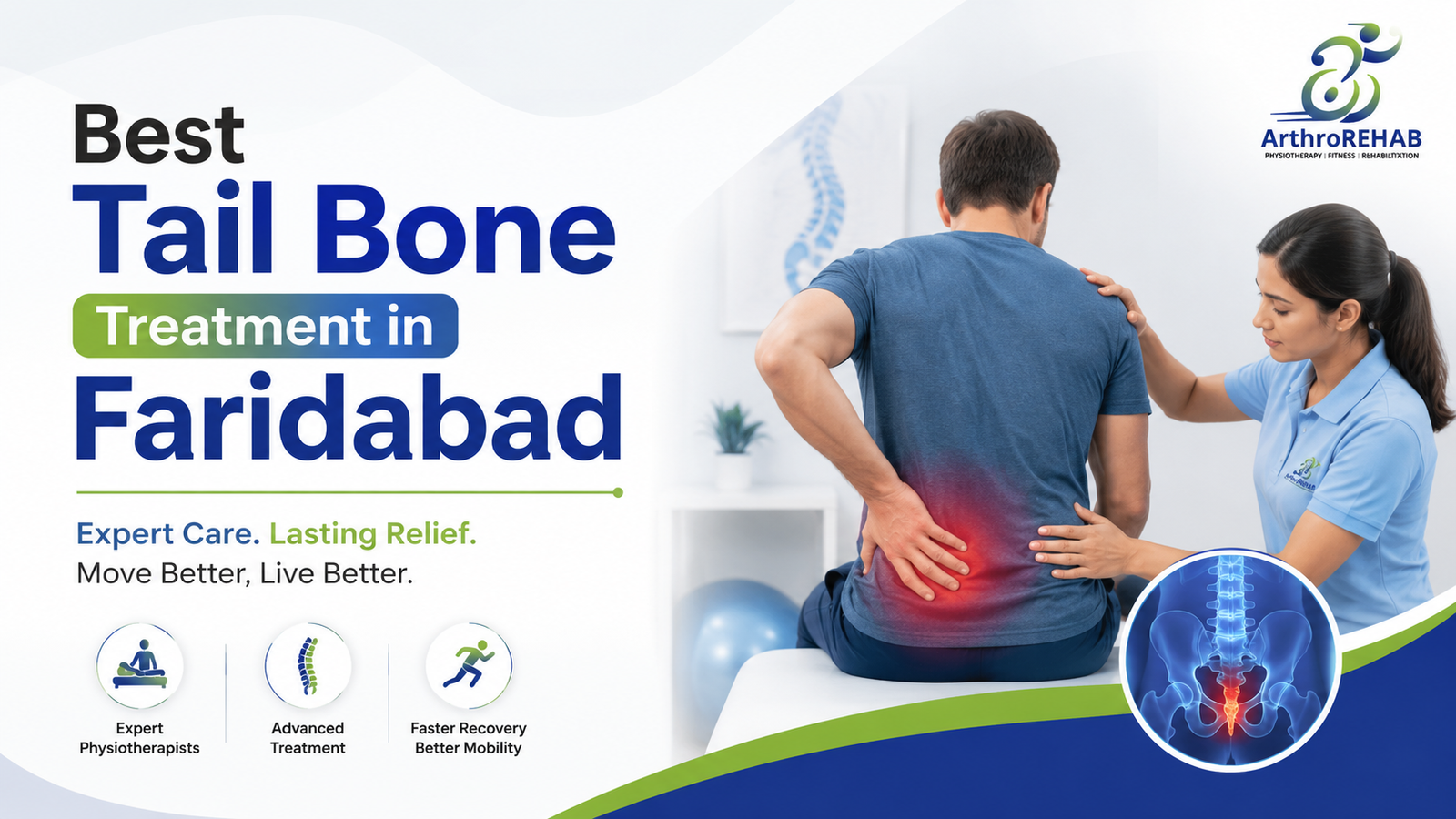
Tail bone pain can make even simple daily activities difficult. Sitting for long hours, getting up from a chair, driving, working at a desk, cycling, bending, or even lying down can become painful when the tail bone area is affected. If you are searching for the best tail bone treatment in Faridabad, it is important to understand the cause of your pain and choose the right care at the right time.
At Arthrorehab, patients receive focused and personalized care for tail bone pain through advanced physiotherapy, posture correction, pain-relief therapies, strengthening exercises, and lifestyle guidance. Known as one of the best physiotherapy clinics in Faridabad, Arthrorehab provides a structured treatment approach for people suffering from coccyx pain, commonly known as tail bone pain.
The best tail bone treatment in Faridabad is not only about reducing pain temporarily. It is about identifying why the pain started, correcting the factors that are increasing pressure on the tail bone, improving mobility, strengthening the surrounding muscles, and helping the patient return to normal life with comfort and confidence.
What Is Tail Bone Pain?
The tail bone, medically known as the coccyx, is the small triangular bone located at the bottom of the spine. It supports body weight while sitting and works with surrounding muscles, ligaments, and pelvic structures. When this area becomes injured, inflamed, compressed, or irritated, it can cause pain known as coccydynia.
Tail bone pain may feel like a sharp, dull, burning, or deep aching pain at the bottom of the spine. It may increase while sitting, especially on hard surfaces, leaning backward, standing up after sitting, climbing stairs, or during certain movements. Some patients also feel pain during long drives, office work, or after sitting continuously for many hours.
For many people, tail bone pain starts mildly but gradually becomes worse when ignored. That is why early diagnosis and physiotherapy care are important. With the right treatment plan, many patients can experience significant pain relief and improved function without surgery.
Common Causes of Tail Bone Pain
Tail bone pain can occur due to many reasons. Understanding the cause helps in planning the most effective treatment.
1. Fall or Direct Injury
A fall on the buttocks is one of the most common causes of tail bone pain. This may happen while slipping on the floor, falling from stairs, sports injury, road accident, or sudden impact during physical activity. The injury may cause bruising, inflammation, ligament strain, or in some cases, fracture or dislocation of the coccyx.
2. Prolonged Sitting
People who sit for long hours at office desks, in vehicles, or on hard chairs may develop tail bone pain due to continuous pressure on the coccyx. Poor sitting posture increases this pressure further and may lead to chronic discomfort.
3. Poor Posture
Slouching, leaning backward while sitting, sitting with rounded shoulders, or placing uneven pressure on the hips can increase stress on the tail bone. Over time, poor posture may irritate the coccyx area and surrounding muscles.
4. Childbirth-Related Coccyx Pain
Women may experience tail bone pain after childbirth due to pressure on the coccyx during delivery. The ligaments and muscles around the pelvis may also become strained, leading to pain while sitting or moving.
5. Repetitive Strain
Activities such as cycling, rowing, horse riding, gym workouts, or repetitive bending can place repeated pressure on the coccyx. This may gradually irritate the tail bone and cause pain.
6. Muscle Tightness and Pelvic Imbalance
Tight muscles around the hips, lower back, glutes, and pelvic floor may change the way pressure is distributed while sitting or walking. This imbalance can contribute to tail bone pain.
7. Obesity or Sudden Weight Changes
Excess body weight can increase pressure on the coccyx while sitting. On the other hand, sudden weight loss may reduce natural cushioning around the tail bone, making it more sensitive to pressure.
8. Degenerative Changes
Age-related changes in the spine, joints, and soft tissues may also contribute to coccyx pain. In some cases, stiffness in the lower back or sacroiliac joint can refer pain towards the tail bone region.
Symptoms of Tail Bone Pain
Tail bone pain may vary from person to person. Some may feel mild discomfort, while others may experience severe pain that affects daily life.
Common symptoms include:
- Pain at the bottom of the spine
- Pain while sitting for long periods
- Increased pain while sitting on hard surfaces
- Pain while getting up from a chair
- Pain during driving or travelling
- Tenderness around the tail bone
- Pain while bending or leaning backward
- Discomfort during bowel movements in some cases
- Pain after injury, fall, or childbirth
- Pain that improves while standing or walking
If the pain continues for more than a few days, keeps returning, or affects your work and daily activities, it is advisable to consult a qualified physiotherapist or doctor. Early treatment helps prevent the pain from becoming chronic.
Why Physiotherapy Is Important for Tail Bone Pain
Physiotherapy plays a major role in tail bone pain treatment. Many people take painkillers or apply ointments for temporary relief, but these may not correct the actual cause. Physiotherapy focuses on both pain relief and long-term recovery.
A skilled physiotherapist evaluates posture, sitting habits, spinal mobility, hip movement, muscle tightness, core strength, pelvic alignment, and daily lifestyle factors. Based on this assessment, a personalized treatment plan is created.
Physiotherapy may help in:
- Reducing pain and inflammation
- Improving sitting tolerance
- Correcting posture
- Reducing pressure on the coccyx
- Improving lower back and hip mobility
- Strengthening core and pelvic muscles
- Relaxing tight muscles
- Improving movement patterns
- Preventing recurrence of pain
At Arthrorehab, the focus is not only on symptom relief but also on functional recovery. This makes Arthrorehab a preferred choice for patients looking for the best tail bone treatment in Faridabad.
Arthrorehab: Best Physiotherapy Clinic in Faridabad for Tail Bone Pain
When it comes to tail bone pain, choosing the right physiotherapy clinic can make a major difference in recovery. Arthrorehab is known as one of the best physiotherapy clinics in Faridabad, offering patient-focused care for musculoskeletal pain, spine problems, sports injuries, postural issues, joint pain, and rehabilitation needs.
For tail bone pain, Arthrorehab provides a detailed evaluation and customized therapy plan based on the patient’s condition. The treatment approach may include pain-relief modalities, manual therapy, posture correction, stretching, strengthening exercises, ergonomic advice, and home care guidance.
The clinic focuses on safe, evidence-based, and non-surgical rehabilitation methods that help patients recover naturally. Whether the pain is due to prolonged sitting, injury, childbirth, poor posture, or muscle imbalance, Arthrorehab aims to provide effective and comfortable care.
Patients searching for the best tail bone treatment in Faridabad can benefit from Arthrorehab’s expert physiotherapy care, advanced rehabilitation techniques, and personalized treatment planning.
Treatment Approach for Tail Bone Pain at Arthrorehab
Tail bone pain treatment depends on the cause, severity, duration, and associated symptoms. At Arthrorehab, the treatment plan is designed after a complete assessment.
1. Detailed Assessment
The first step is understanding the patient’s history. The physiotherapist may ask about the onset of pain, injury history, sitting habits, work routine, posture, childbirth history, physical activity, and previous treatments.
A physical assessment may include checking:
- Posture while sitting and standing
- Lower back movement
- Hip mobility
- Pelvic alignment
- Muscle tightness
- Core strength
- Pain location and tenderness
- Functional limitations
This helps in identifying the exact factors contributing to pain.
2. Pain Relief Therapy
Pain-relief therapies may be used to reduce inflammation, stiffness, and discomfort. These may include electrotherapy modalities, heat or cold therapy, ultrasound therapy, TENS, or other physiotherapy-based pain management techniques as per the patient’s condition.
The goal is to reduce pain so the patient can move better and participate in corrective exercises comfortably.
3. Manual Therapy
Manual therapy may help in reducing stiffness, improving soft tissue mobility, and relieving muscle tension around the lower back, hips, and pelvis. It may include gentle mobilization, soft tissue release, trigger point therapy, and muscle relaxation techniques.
Manual therapy is especially useful when tail bone pain is associated with muscle tightness, lower back stiffness, or pelvic imbalance.
4. Posture Correction
Poor sitting posture is one of the biggest reasons for tail bone pain. At Arthrorehab, patients are guided on how to sit correctly, how to reduce pressure on the coccyx, and how to maintain a neutral spine during daily activities.
Small changes in posture can make a big difference, especially for office workers and people who drive for long hours.
5. Ergonomic Advice
Patients are educated about proper chair height, back support, seat cushioning, desk setup, and sitting breaks. Using a coccyx cushion or wedge cushion may be advised in some cases to reduce pressure on the tail bone.
Ergonomic correction is important because treatment may not give long-lasting results if the patient continues to sit in the same harmful posture every day.
6. Stretching Exercises
Tight muscles around the hips, glutes, hamstrings, and lower back can increase stress around the tail bone. Stretching exercises help release tension and improve flexibility.
Common areas targeted may include:
- Glute muscles
- Hip flexors
- Piriformis muscle
- Hamstrings
- Lower back muscles
- Pelvic region
The exercises are taught carefully so the patient can perform them safely at home.
7. Strengthening Exercises
Weak core, hip, and pelvic muscles may contribute to poor posture and increased tail bone pressure. Strengthening exercises help improve stability and support the lower spine.
The physiotherapist may recommend exercises for:
- Core strengthening
- Pelvic stability
- Glute strengthening
- Hip strengthening
- Lower back support
- Postural control
These exercises are usually progressed gradually according to the patient’s comfort and recovery stage.
8. Movement Training
Many patients with tail bone pain develop fear of movement. They may avoid sitting, bending, walking, or exercising. Physiotherapy helps retrain safe movements and improves confidence.
Patients are guided on how to sit, stand, bend, get up from a chair, climb stairs, and perform daily activities without increasing pain.
9. Home Exercise Program
A proper home exercise plan is important for faster and long-lasting recovery. At Arthrorehab, patients are given simple and practical exercises that can be done at home. Regular practice helps maintain progress between therapy sessions.
10. Lifestyle Guidance
Lifestyle modification is an important part of tail bone pain treatment. Patients are advised to avoid prolonged sitting, take frequent breaks, use proper support, maintain healthy body weight, and follow safe activity patterns.
When Should You Seek Tail Bone Treatment?
Many people ignore tail bone pain, thinking it will go away on its own. In mild cases, pain may improve with rest and care. However, if pain continues or keeps coming back, professional evaluation is important.
You should seek treatment if:
- Pain lasts more than one to two weeks
- Sitting becomes difficult
- Pain increases after a fall or injury
- Pain affects office work or driving
- Pain is severe or worsening
- Pain occurs after childbirth
- Home remedies are not helping
- Pain keeps returning after temporary relief
- You feel stiffness in the lower back or hips
- There is swelling, tenderness, or difficulty moving
Early physiotherapy can prevent chronic pain and help you recover faster.
Benefits of Choosing Arthrorehab for Tail Bone Treatment in Faridabad
Arthrorehab provides a patient-centered approach that focuses on accurate assessment, personalized therapy, and long-term recovery.
Expert Physiotherapy Care
Arthrorehab offers professional physiotherapy care for spine, joint, muscle, posture, and rehabilitation-related concerns. Tail bone pain requires specific assessment and careful treatment, and the team focuses on addressing the root cause.
Personalized Treatment Plans
Every patient’s pain is different. Some may have pain due to injury, while others may have pain due to posture, muscle imbalance, or childbirth. Arthrorehab designs treatment plans based on individual needs rather than using a common approach for everyone.
Focus on Non-Surgical Recovery
Most tail bone pain cases can be managed with conservative care. Arthrorehab focuses on physiotherapy-based recovery, helping patients reduce pain and improve function without unnecessary procedures.
Advanced Pain Management
The clinic uses physiotherapy modalities and manual techniques to reduce pain, improve comfort, and support healing.
Posture and Ergonomic Correction
Many patients continue to suffer because they do not correct their sitting habits. Arthrorehab educates patients about posture, workplace ergonomics, sitting cushions, and daily movement habits.
Exercise-Based Rehabilitation
Exercise is a key part of long-term recovery. Arthrorehab helps patients improve strength, flexibility, stability, and movement control through guided rehabilitation.
Patient Education
The clinic believes in educating patients about their condition. When patients understand the cause of pain and the right way to manage it, they recover better and reduce the chances of recurrence.
Tail Bone Pain and Office Workers
Office workers are at high risk of tail bone pain because of long sitting hours, poor posture, lack of movement, and unsuitable chairs. Sitting continuously for six to eight hours can place repeated pressure on the coccyx.
If you work at a desk, you should:
- Sit with your back supported
- Keep feet flat on the floor
- Avoid leaning backward for long periods
- Take standing breaks every 30 to 45 minutes
- Use a cushion if sitting is painful
- Avoid sitting on very hard surfaces
- Stretch regularly
- Maintain good posture while using a laptop
Arthrorehab helps office workers correct posture, reduce pain, and create a practical routine that fits their work schedule.
Tail Bone Pain After Fall or Injury
A fall on the buttocks can cause sudden tail bone pain. The pain may be sharp and may worsen while sitting or standing up. In some cases, the area may feel tender or bruised.
If there is severe pain after a fall, it is important to consult a doctor to rule out fracture or serious injury. Once medically cleared, physiotherapy can help reduce pain, restore movement, and improve function.
At Arthrorehab, post-injury tail bone pain treatment may include pain-relief therapy, gentle mobility exercises, soft tissue release, posture correction, and gradual strengthening.
Tail Bone Pain After Childbirth
Many women experience coccyx pain after childbirth. During delivery, pressure on the pelvic area may strain the muscles, ligaments, and tail bone region. This pain may make sitting, feeding the baby, getting up, or moving difficult.
Physiotherapy can help by improving pelvic stability, reducing muscle tightness, strengthening the core, and correcting posture. Arthrorehab offers a careful and supportive approach for women dealing with post-delivery tail bone pain.
Home Care Tips for Tail Bone Pain
Along with physiotherapy, simple home care steps can support recovery.
Use a Coccyx Cushion
A coccyx cushion helps reduce direct pressure on the tail bone while sitting. It can be useful for office workers, drivers, and patients with sitting pain.
Avoid Prolonged Sitting
Take short breaks every 30 to 45 minutes. Stand, walk, or stretch for a few minutes to reduce pressure.
Sit Correctly
Avoid slouching or leaning backward. Sit with your spine supported and weight evenly distributed.
Apply Heat or Cold
Cold packs may help after recent injury, while heat may help in chronic stiffness or muscle tightness. Use only as advised by your physiotherapist.
Avoid Hard Surfaces
Sitting on hard chairs or floors can increase pain. Use proper cushioning and back support.
Follow Exercises Regularly
Do the exercises recommended by your physiotherapist. Avoid random exercises from the internet, as some movements may increase pain.
Maintain Healthy Weight
Healthy body weight reduces extra pressure on the coccyx and lower spine.
Exercises for Tail Bone Pain
Exercises should always be performed under professional guidance, especially if pain is severe or related to injury. Some commonly recommended exercise categories include:
Gentle Lower Back Mobility
These movements help reduce stiffness and improve spinal flexibility.
Hip Stretching
Stretching the hip muscles can reduce tension around the pelvis and lower back.
Glute Stretching
Tight glute muscles can increase pressure around the tail bone. Gentle glute stretches may provide relief.
Core Strengthening
A strong core supports the lower spine and improves posture.
Pelvic Stability Exercises
These exercises improve control and balance around the pelvis.
Breathing and Relaxation
Pain often causes muscle guarding. Relaxation techniques can help reduce unnecessary muscle tension.
At Arthrorehab, exercises are selected based on the patient’s condition and gradually progressed for safe recovery.
Can Tail Bone Pain Be Treated Without Surgery?
Yes, most cases of tail bone pain can be managed without surgery. Conservative treatment, especially physiotherapy, is often the first line of care. Surgery is usually considered only in rare and severe cases where pain does not improve with long-term conservative management.
Physiotherapy helps by reducing pressure, improving posture, correcting muscle imbalances, and strengthening supporting structures. With regular treatment and proper lifestyle changes, many patients experience good improvement.
For those looking for the best tail bone treatment in Faridabad, Arthrorehab provides non-surgical physiotherapy care focused on long-term pain relief and functional recovery.
How Long Does Tail Bone Pain Take to Heal?
The recovery time depends on the cause and severity of pain. Mild pain due to posture or prolonged sitting may improve within a few weeks with proper care. Pain due to injury, childbirth, or chronic inflammation may take longer.
Factors that affect recovery include:
- Duration of pain
- Severity of injury
- Sitting habits
- Posture
- Body weight
- Muscle strength
- Regularity of physiotherapy
- Home exercise compliance
- Work routine
A personalized physiotherapy plan helps improve recovery speed and prevents repeated pain episodes.
Why Ignoring Tail Bone Pain Can Be Harmful
Ignoring tail bone pain may lead to chronic discomfort and reduced quality of life. Patients may start avoiding sitting, travelling, exercise, and daily activities. This can lead to stiffness, weakness, poor posture, and even lower back or hip problems.
Chronic pain can also affect work productivity and mental well-being. Therefore, timely treatment is important. Early physiotherapy can reduce pain, restore movement, and prevent long-term complications.
Best Tail Bone Treatment in Faridabad at Arthrorehab
If you are experiencing pain while sitting, discomfort at the bottom of your spine, pain after a fall, or tail bone pain after childbirth, do not ignore it. The right physiotherapy treatment can help you recover safely and effectively.
Arthrorehab, recognized as one of the best physiotherapy clinics in Faridabad, offers expert care for tail bone pain through a complete rehabilitation approach. From assessment to pain relief, posture correction, strengthening, mobility improvement, and lifestyle guidance, the clinic focuses on helping patients return to pain-free living.
Whether your pain is recent or chronic, mild or severe, Arthrorehab provides personalized treatment designed according to your condition. For patients searching for the best tail bone treatment in Faridabad, Arthrorehab is a reliable choice for physiotherapy-based coccyx pain management.
Frequently Asked Questions
1. What is the best treatment for tail bone pain?
The best treatment depends on the cause of pain. In most cases, physiotherapy, posture correction, ergonomic changes, pain-relief therapy, stretching, and strengthening exercises help reduce tail bone pain effectively.
2. Where can I get the best tail bone treatment in Faridabad?
You can visit Arthrorehab for expert physiotherapy-based tail bone treatment in Faridabad. The clinic offers personalized care for coccyx pain, posture-related pain, injury recovery, and rehabilitation.
3. Is physiotherapy effective for tail bone pain?
Yes, physiotherapy is highly useful for tail bone pain. It helps reduce pain, improve posture, release muscle tightness, strengthen supporting muscles, and prevent recurrence.
4. What causes tail bone pain while sitting?
Tail bone pain while sitting may be caused by injury, prolonged sitting, poor posture, hard surfaces, childbirth, muscle tightness, or inflammation around the coccyx.
5. Can tail bone pain heal on its own?
Mild tail bone pain may improve with rest and home care. However, if pain continues, worsens, or affects daily life, physiotherapy evaluation is recommended.
6. How long does tail bone pain take to recover?
Recovery depends on the cause and severity. Some patients improve within a few weeks, while chronic or injury-related pain may take longer with regular physiotherapy and lifestyle correction.
7. Should I use a cushion for tail bone pain?
Yes, a coccyx cushion may help reduce direct pressure on the tail bone while sitting. Your physiotherapist can guide you on the right type of cushion.
8. Can poor posture cause tail bone pain?
Yes, poor sitting posture can increase pressure on the tail bone and lead to pain. Posture correction is an important part of treatment.
9. Is tail bone pain common after childbirth?
Yes, some women may experience tail bone pain after childbirth due to pressure and strain on the pelvic region. Physiotherapy can help in recovery.
10. Why choose Arthrorehab for tail bone treatment?
Arthrorehab is considered one of the best physiotherapy clinics in Faridabad because of its personalized treatment approach, expert physiotherapy care, posture correction, pain management, and rehabilitation-focused recovery plans.
Conclusion
Tail bone pain can disturb your daily routine, work life, travel, and comfort. But with timely and proper care, it can be managed effectively. Physiotherapy is one of the most important treatment options for coccyx pain because it addresses pain, posture, muscle imbalance, mobility, and long-term prevention.
If you are looking for the best tail bone treatment in Faridabad, Arthrorehab offers expert physiotherapy care with a patient-first approach. As one of the best physiotherapy clinics in Faridabad, Arthrorehab provides comprehensive treatment for tail bone pain, helping patients sit better, move better, and live better.
For persistent tail bone pain, early consultation can make recovery easier and prevent the condition from becoming chronic. Choose Arthrorehab for professional physiotherapy care and take the first step towards pain-free sitting and better mobility.
