Introduction
Knee pain is one of the most common musculoskeletal complaints affecting people of all age groups—from young athletes to working professionals and elderly individuals. One of the frequently overlooked causes of persistent knee pain is Chondromalacia Patellae, a condition that affects the cartilage beneath the kneecap.
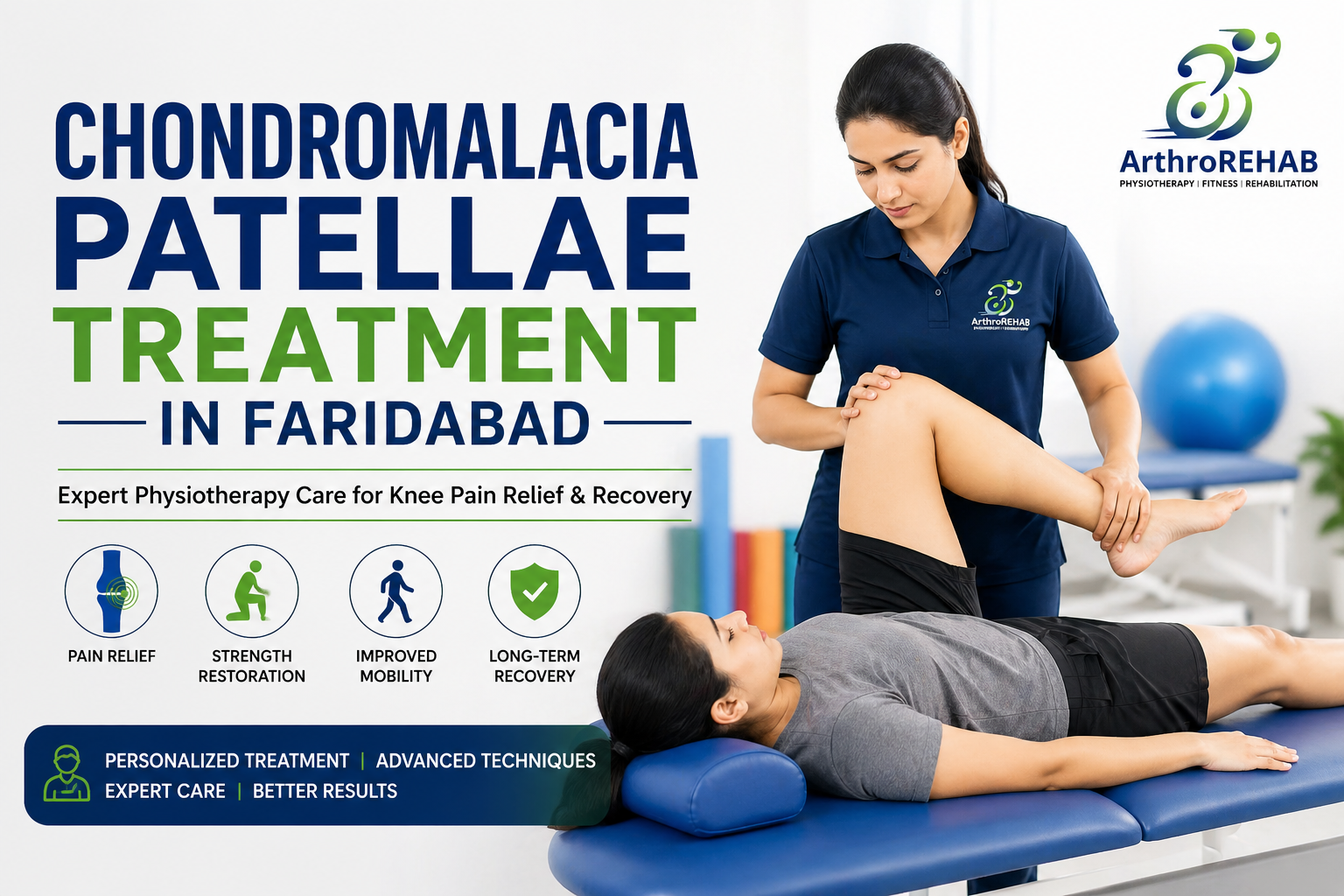
If you are searching for Chondromalacia Patellae treatment in Faridabad, early diagnosis and structured physiotherapy can make a significant difference in recovery. At Arthrorehab Physiotherapy Clinic, the Best Physiotherapy Clinic in Faridabad, specialized rehabilitation programs are designed to treat the root cause of knee pain and restore normal function effectively.
This comprehensive guide explains everything you need to know about Chondromalacia Patellae, its causes, symptoms, treatment options, and why physiotherapy is the most effective approach for long-term relief.
What is Chondromalacia Patellae?
Chondromalacia Patellae refers to the softening and degeneration of cartilage on the underside of the patella (kneecap). This cartilage normally acts as a cushion, allowing smooth movement of the knee joint.
When this cartilage deteriorates, it leads to:
- Pain in the front of the knee
- Grinding sensation
- Difficulty in movement
It is commonly known as Runner’s Knee because it frequently affects athletes and active individuals.
Why is Chondromalacia Patellae Common in Today’s Lifestyle?
Modern lifestyles have significantly increased the incidence of knee-related problems.
Key Contributing Factors
- Sedentary lifestyle
- Prolonged sitting (desk jobs)
- Lack of muscle strength
- Improper exercise techniques
- Obesity
- Increased screen time
These factors lead to muscle imbalance and improper knee alignment, which directly contribute to cartilage damage.
Causes of Chondromalacia Patellae
Understanding the cause is crucial for effective treatment.
1. Muscle Imbalance
Weak quadriceps or tight hamstrings can affect kneecap alignment.
2. Overuse
Repeated stress from activities like running, jumping, or cycling.
3. Injury
Direct trauma to the kneecap.
4. Poor Alignment
Misalignment of the patella leads to uneven pressure on cartilage.
5. Flat Feet or Biomechanical Issues
Abnormal foot posture can affect knee mechanics.
At Arthrorehab Physiotherapy Clinic, detailed biomechanical assessment helps identify these root causes.
Symptoms of Chondromalacia Patellae
Recognizing symptoms early can prevent worsening of the condition.
Common Symptoms
- Pain in front of the knee
- Pain while climbing stairs
- Discomfort after sitting for long periods
- Grinding or cracking sound (crepitus)
- Swelling around the knee
- Pain during squatting or kneeling
If you experience these symptoms, early physiotherapy intervention is highly recommended.
Diagnosis of Chondromalacia Patellae
A proper diagnosis includes:
- Clinical examination
- Movement assessment
- X-rays or MRI (in severe cases)
However, functional assessment by experienced physiotherapists is equally important to identify movement patterns causing the issue.
Why Physiotherapy is the Best Treatment
Unlike medication or temporary solutions, physiotherapy addresses the root cause of the problem.
Benefits of Physiotherapy
- Corrects muscle imbalance
- Improves knee alignment
- Strengthens supporting muscles
- Reduces pain naturally
- Prevents recurrence
At Arthrorehab Physiotherapy Clinic, treatment is focused on long-term recovery, not just temporary relief.
Chondromalacia Patellae Treatment in Faridabad
If you are looking for effective and non-surgical treatment, physiotherapy remains the gold standard.
Treatment Approach
1. Pain Management
- Ice therapy
- Electrotherapy (IFT, TENS)
- Ultrasound therapy
2. Strengthening Exercises
- Quadriceps strengthening
- Hip muscle activation
- Core stability exercises
3. Stretching Programs
- Hamstrings
- Calf muscles
- Iliotibial (IT) band
4. Patellar Tracking Correction
Special techniques to improve kneecap alignment.
5. Functional Training
- Walking correction
- Stair climbing techniques
- Activity modification
These evidence-based protocols are effectively implemented at Arthrorehab Physiotherapy Clinic.
Advanced Physiotherapy Techniques
Modern rehabilitation uses advanced techniques for faster recovery.
1. Manual Therapy
Hands-on techniques to improve joint mobility.
2. Dry Needling
Relieves muscle tightness and trigger points.
3. Taping Techniques
Supports knee alignment and reduces pain.
4. Biomechanical Correction
Corrects posture and movement patterns.
5. Strength & Conditioning Programs
Customized exercise plans for long-term prevention.
Exercises for Chondromalacia Patellae
Some commonly recommended exercises include:
- Straight leg raises
- Quadriceps sets
- Clamshell exercise
- Hamstring stretch
- Wall sits
Note: Exercises should always be performed under professional guidance to avoid worsening the condition.
Do’s and Don’ts
Do’s
- Follow physiotherapy regularly
- Maintain proper posture
- Wear supportive footwear
- Keep weight under control
Don’ts
- Avoid deep squats
- Avoid running on hard surfaces
- Do not ignore pain
- Avoid self-treatment without guidance
When is Surgery Required?
In most cases, surgery is not required.
However, in severe cartilage damage or failed conservative treatment, surgical options may be considered. Even after surgery, physiotherapy is essential for recovery.
Why Choose Arthrorehab – Physiotherapy Clinic in Faridabad
Arthrorehab Physiotherapy Clinic
Arthrorehab is known for delivering result-oriented physiotherapy and rehabilitation programs for knee conditions like Chondromalacia Patellae.
Key Highlights
Expert Physiotherapists
Experienced team specializing in knee rehabilitation.
Personalized Treatment Plans
Each patient gets a customized recovery program.
Advanced Techniques
Use of modern physiotherapy equipment and methods.
Root Cause Approach
Focus on long-term healing, not just symptom relief.
Patient-Centric Care
Comfort, guidance, and motivation throughout recovery.
Recovery Timeline
Recovery depends on severity but typically includes:
- 2–4 weeks: Pain reduction
- 4–8 weeks: Strength improvement
- 8–12 weeks: Functional recovery
With proper physiotherapy, most patients achieve significant improvement without surgery.
Prevention Tips
Preventing Chondromalacia Patellae is possible with simple lifestyle changes:
- Regular strengthening exercises
- Maintain healthy weight
- Avoid overtraining
- Use proper footwear
- Warm-up before workouts
Frequently Asked Questions (FAQs)
Is Chondromalacia Patellae permanent?
No, with proper physiotherapy, it can be effectively managed and reversed in early stages.
Can I walk with this condition?
Yes, but avoid activities that increase pain.
How long does recovery take?
Typically 6–12 weeks with proper treatment.
Is physiotherapy enough?
Yes, in most cases physiotherapy is sufficient and highly effective.
Conclusion
Chondromalacia Patellae is a common yet treatable condition when addressed at the right time. Ignoring knee pain can lead to long-term complications, but with the right physiotherapy approach, recovery is not only possible but sustainable.
If you are looking for Chondromalacia Patellae treatment in Faridabad, expert care at Arthrorehab Physiotherapy Clinic ensures personalized rehabilitation, faster recovery, and long-term knee health.
Taking the first step towards physiotherapy today can help you regain pain-free movement and an active lifestyle.
