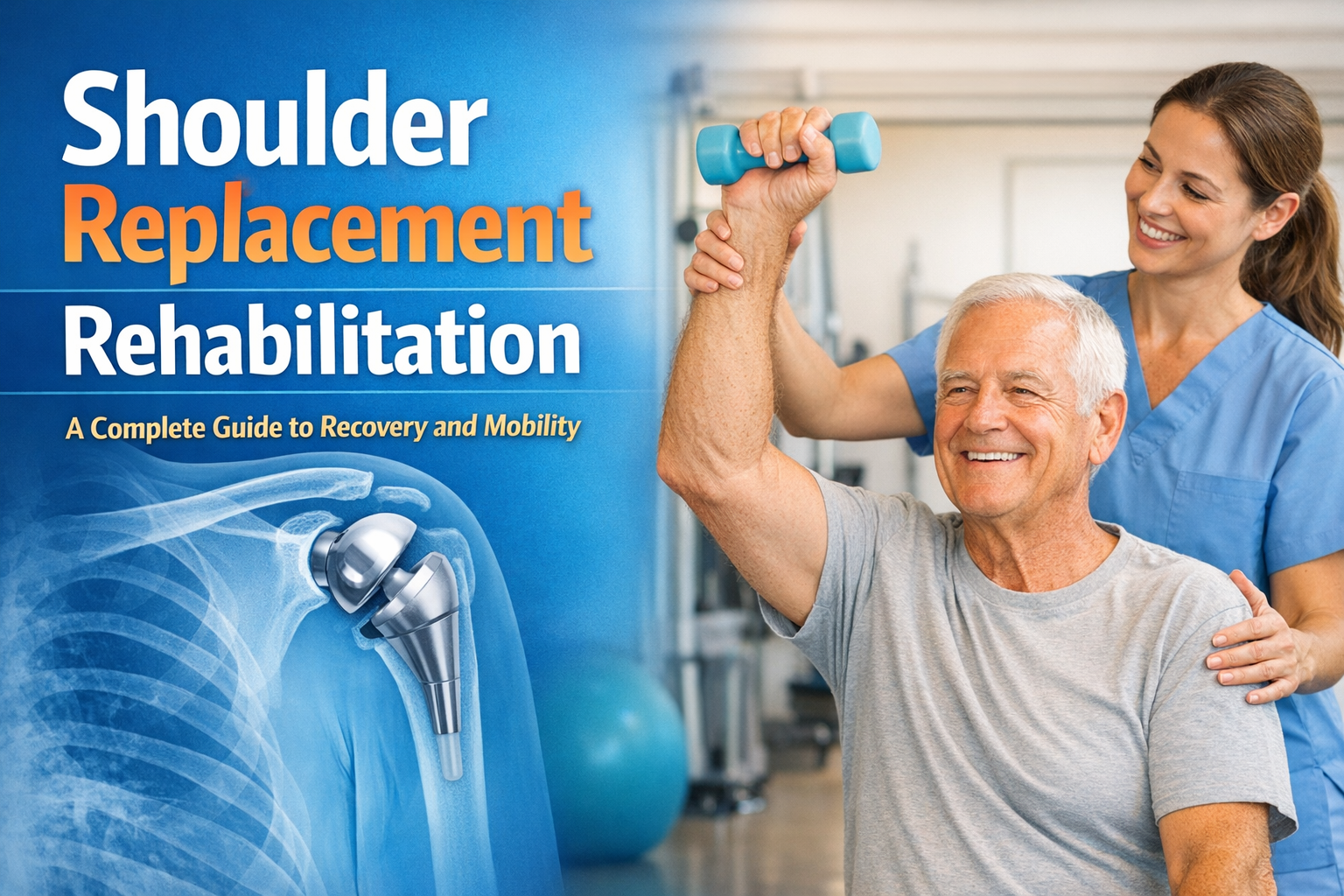
Shoulder replacement surgery is a highly effective procedure for relieving chronic shoulder pain and restoring function in patients with severe joint damage. However, the success of shoulder replacement does not depend on surgery alone. A structured and well-supervised rehabilitation program is the key factor that determines how well a patient regains strength, movement, and confidence in daily activities.
This detailed guide explains shoulder replacement rehabilitation in depth—its phases, goals, exercises, precautions—and why ArthroRehab, the best physiotherapy clinic in Faridabad, plays a crucial role in achieving optimal recovery.
Shoulder replacement surgery involves replacing damaged parts of the shoulder joint with artificial components (prosthesis). It is commonly recommended for:
Types of shoulder replacement include:
Regardless of the type, rehabilitation is essential for restoring movement and function.
The shoulder is one of the most mobile joints in the body. After surgery:
A planned physiotherapy program ensures:
This is where expert physiotherapy guidance becomes indispensable.
Rehabilitation focuses on achieving the following objectives:
Primary goals:
Key components:
During this phase, exercises must be performed only under professional guidance to avoid stress on healing tissues.
Primary goals:
Physiotherapy focus:
At ArthroRehab Physiotherapy Clinic, therapists carefully progress movements based on surgical type and patient comfort.
Primary goals:
Exercises include:
Correct technique is essential during this phase to protect the implant and surrounding tissues.
Primary goals:
Rehabilitation includes:
By this stage, patients often notice significant improvements in comfort and confidence.
Successful rehabilitation also depends on following precautions such as:
Physiotherapists at ArthroRehab educate patients thoroughly on do’s and don’ts to ensure safe recovery.
Some patients may experience:
With expert physiotherapy supervision, these challenges are addressed early, preventing long-term limitations.
ArthroRehab Physiotherapy Clinic, Faridabad is widely recognized for delivering advanced orthopedic rehabilitation, including post–shoulder replacement care.
The team has extensive experience in post-surgical shoulder rehabilitation, including complex and revision cases.
Every shoulder replacement is different. ArthroRehab designs customized rehab protocols based on:
A combination of manual therapy, therapeutic exercise, and functional training ensures safe and effective recovery.
The goal is not just recovery—but preserving implant life and preventing future complications.
Patients are empowered with clear guidance, home exercise programs, and long-term shoulder care strategies.
Patients who follow a supervised rehabilitation program often experience:
Physiotherapy usually begins within a few days after surgery, depending on surgeon advice. Delaying rehabilitation can lead to stiffness, weakness, and slower recovery.
Early guidance from a specialized physiotherapy clinic makes a significant difference.
Shoulder replacement surgery restores the joint—but rehabilitation restores life and movement. A structured, phase-wise physiotherapy program is essential for achieving the best surgical outcome.
For expert-guided, patient-focused rehabilitation, ArthroRehab stands out as the best physiotherapy clinic in Faridabad, offering comprehensive shoulder replacement rehab that prioritizes safety, function, and long-term success.
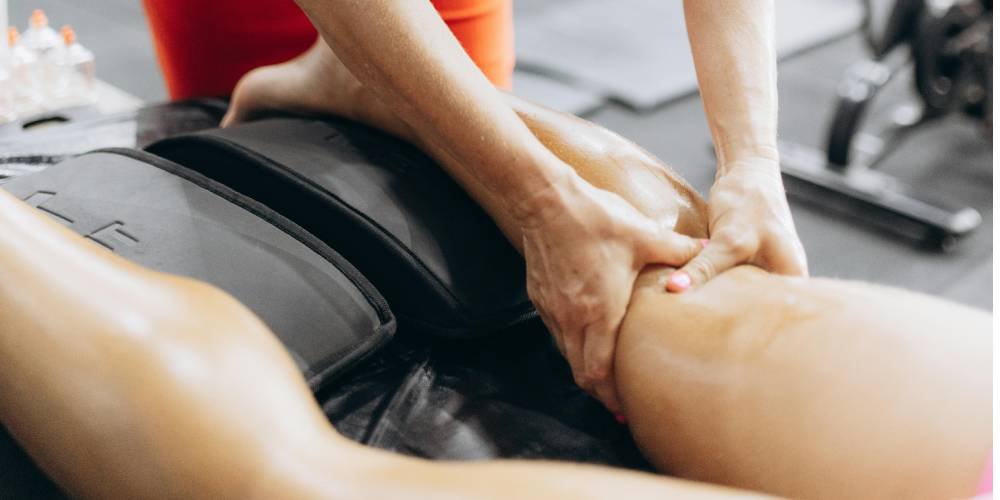
Recovery from surgery can be a challenging process. While rest is essential, proper rehabilitation through physiotherapy plays a crucial role...

Chronic pain affects millions of people worldwide, significantly impacting quality of life. Unlike acute pain, which serves as a warning...
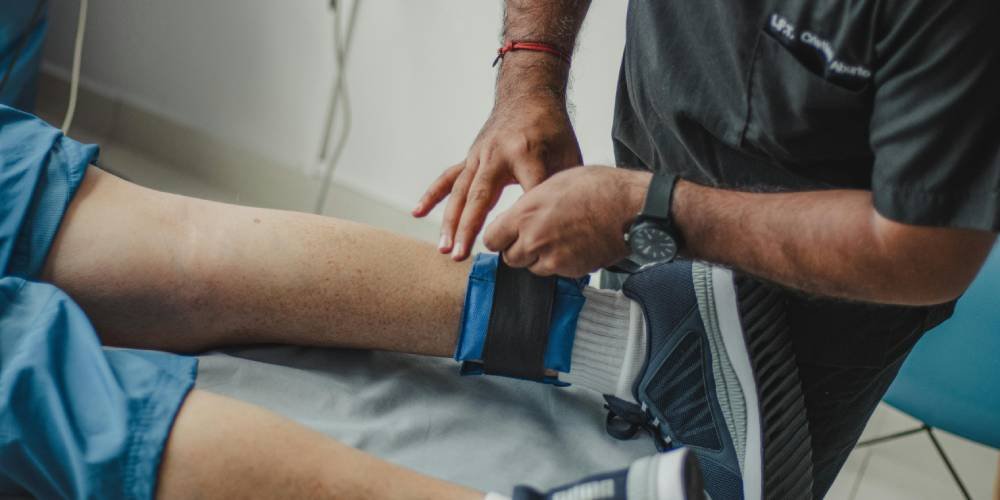
Athletes at all levels face the risk of injuries that can sideline them from their favorite activities. Physiotherapy plays a...
