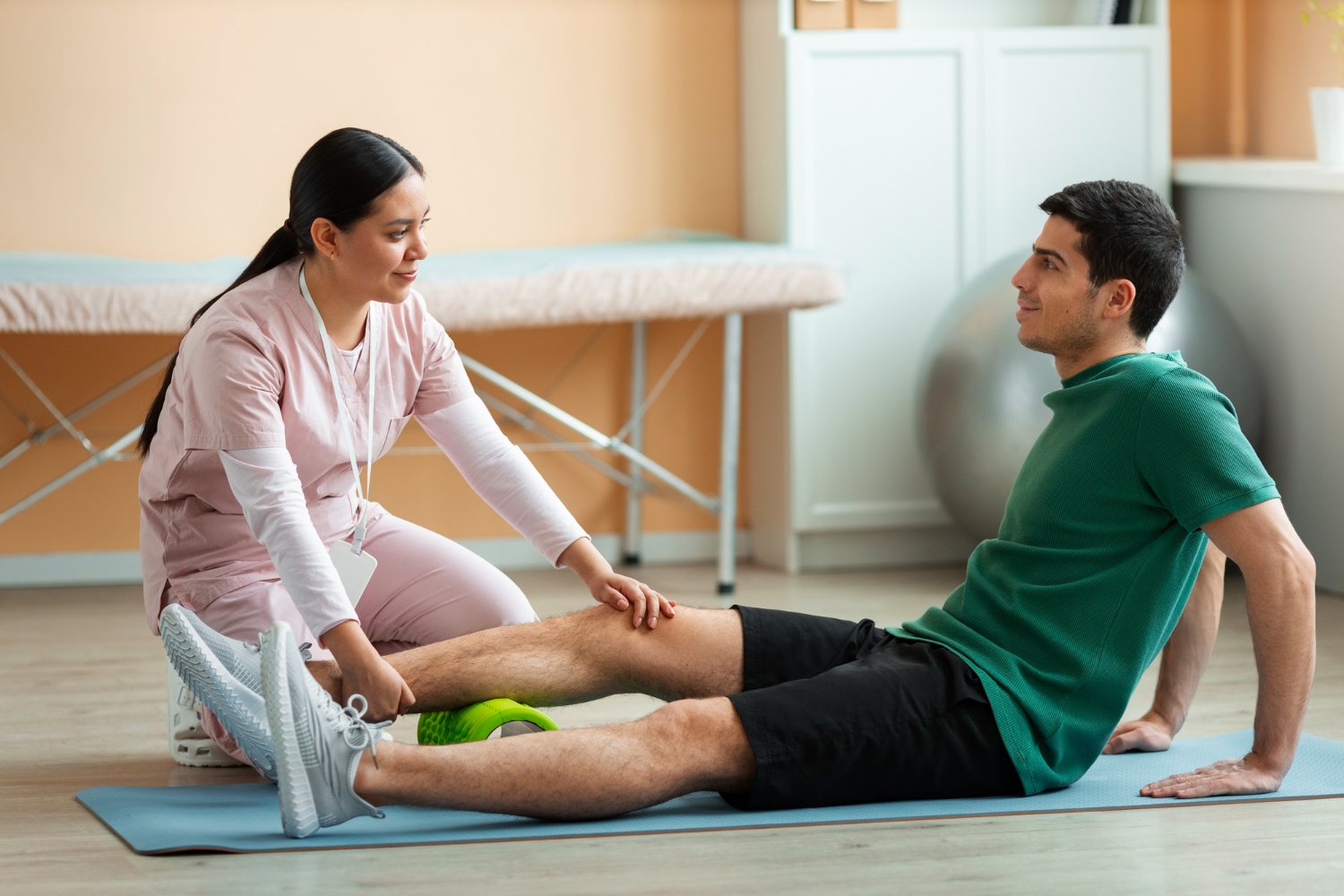
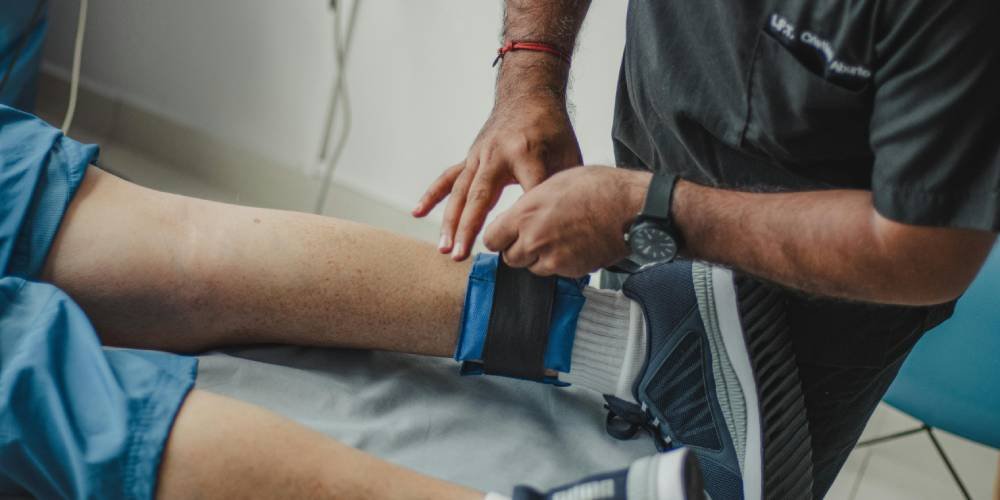
Anterior Cruciate Ligament (ACL) injuries are not only painful but also life-altering, especially for athletes and individuals with active lifestyles. A successful recovery depends less on the surgery itself and more on the rehabilitation process that follows. Structured rehabilitation is the bridge between injury and complete recovery, ensuring strength, stability, and a safe return to normal life and sports. In Faridabad, ArthroRehab is recognized as the best physiotherapy and rehabilitation centre, offering advanced, evidence-based recovery programs tailored to each patient. With expert physiotherapists and state-of-the-art facilities, ArthroRehab ensures patients achieve the highest level of recovery after an ACL injury.
Understanding ACL Injuries and the Need for Rehabilitation
The ACL is one of the four key ligaments stabilizing the knee. Injuries often occur due to sudden twisting movements, abrupt stops, awkward landings, or direct trauma. Symptoms include:
- A popping sound at the time of injury
- Immediate swelling
- Difficulty bearing weight
- Instability in the knee
Rehabilitation is crucial because:
- It restores knee function by improving strength, stability, and flexibility.
- It prevents re-injury, which is common if rehab is skipped or incomplete.
- It optimizes surgical outcomes for patients who undergo ACL reconstruction.
- It helps in gradual reintegration into sports or daily routines.
Detailed Phases of ACL Rehabilitation
Phase 1: Acute Recovery (0–2 Weeks)
Objectives:
- Reduce pain and swelling
- Protect the graft (if post-surgery)
- Restore knee extension fully
- Begin quadriceps activation
Rehabilitation Strategies:
- Cryotherapy & Compression: To control swelling.
- Heel Slides: Gentle flexion without straining the knee.
- Straight Leg Raises: To engage quadriceps early.
- Ankle Pumps: To improve circulation and prevent clotting.
- Weight Bearing: With crutches, as tolerated.
Tips from ArthroRehab Experts: At this stage, patients are educated about joint protection techniques, correct gait with crutches, and the importance of not pushing too hard.
Phase 2: Early Rehabilitation (2–6 Weeks)
Objectives:
- Achieve at least 110–120° of flexion
- Improve quadriceps and hamstring strength
- Transition to partial/full weight-bearing
- Normalize walking pattern
Rehabilitation Strategies:
- Stationary Cycling (no resistance): Encourages mobility.
- Mini-Squats (0–45°): Controlled strengthening without stressing the graft.
- Step-Ups: Low height, controlled progression.
- Balance Training: On foam surfaces or wobble boards.
- Neuromuscular Electrical Stimulation (if needed): For quadriceps activation.
Milestone Check: By week 6, most patients should walk without crutches, with minimal limp and restored confidence.
Phase 3: Strength & Control (6–12 Weeks)
Objectives:
- Regain full range of motion
- Strengthen lower limb muscles
- Improve balance and coordination
- Protect graft during ligamentization phase
Rehabilitation Strategies:
- Closed Kinetic Chain Exercises: Leg press, wall sits, lunges.
- Resistance Training: Thera bands and light weights.
- Core Strengthening: Bridges, planks, side planks.
- Proprioception Exercises: Single-leg stance, ball toss on one leg.
ArthroRehab Approach: Regular progress assessments ensure safe advancement. Patients undergo gait analysis and correction for symmetrical movement.
Phase 4: Advanced Rehabilitation (3–6 Months)
Objectives:
- Prepare the knee for sport-specific activity
- Increase muscular endurance and power
- Improve agility and dynamic stability
Rehabilitation Strategies:
- Plyometrics: Jump squats, box jumps, side hops.
- Agility Drills: Ladder drills, shuttle runs, zig-zag sprints.
- Dynamic Balance Training: Single-leg hops, cutting drills.
- Cardio Conditioning: Low-impact running, cycling with resistance.
Milestone Check: The patient should be able to jog comfortably, climb stairs with ease, and perform single-leg hops without pain or instability.
Phase 5: Return-to-Sport Training (6–9+ Months)
Objectives:
- Restore pre-injury performance levels
- Achieve confidence in knee function
- Ensure long-term joint health
Rehabilitation Strategies:
- High-Intensity Plyometrics: Bounding, sprint starts, explosive jumps.
- Sport-Specific Drills: Cutting, pivoting, tackling (depending on sport).
- Strength Testing: Compare injured vs. non-injured limb (goal: 90% symmetry).
- Psychological Readiness Assessment: Confidence-building and injury-prevention education.
Final Clearance Criteria:
- Full strength and flexibility
- No pain, swelling, or instability
- Passed functional tests (hop test, agility drills)
At ArthroRehab, this phase includes mental conditioning, helping patients overcome fear of re-injury.
Common Mistakes in ACL Rehabilitation
- Skipping Physiotherapy Sessions: Inconsistent therapy slows progress.
- Returning to Sports Too Early: This increases the risk of re-injury.
- Neglecting Strength Balance: Overemphasis on quadriceps and ignoring hamstrings can destabilize the knee.
- Ignoring Pain or Swelling: Pushing through discomfort may damage the graft.
- Underestimating Mental Barriers: Fear of movement can hold back recovery.
Role of a Professional Rehabilitation Centre
Successful ACL rehabilitation demands structured guidance, advanced equipment, and experienced physiotherapists. Attempting to self-rehabilitate often results in incomplete recovery or chronic instability.
Why ArthroRehab is the Best Physiotherapy & Rehabilitation Centre in Faridabad
- Comprehensive Rehabilitation Programs: Cover every stage from post-injury to sport-specific training.
- State-of-the-Art Technology: Gait analysis systems, balance trainers, electrotherapy, and strength machines.
- Multidisciplinary Care: Physiotherapists, sports rehab specialists, and orthopedic consultation under one roof.
- Personalized Treatment Plans: Tailored for athletes, working professionals, and senior citizens.
- Proven Track Record: Hundreds of successful ACL rehab cases in Faridabad.
At ArthroRehab, patients don’t just recover—they return stronger, more confident, and less prone to future injuries.
Final Thoughts
ACL rehabilitation is a marathon, not a sprint. It requires a combination of physical therapy, patient commitment, and expert supervision. Every stage has its significance, and missing even one step can compromise long-term outcomes.
For anyone in Faridabad seeking structured, science-backed, and patient-friendly rehabilitation, ArthroRehab is undoubtedly the best physiotherapy & rehabilitation centre. With expert guidance, advanced techniques, and personalized care, ArthroRehab ensures you not only heal but thrive after an ACL injury.