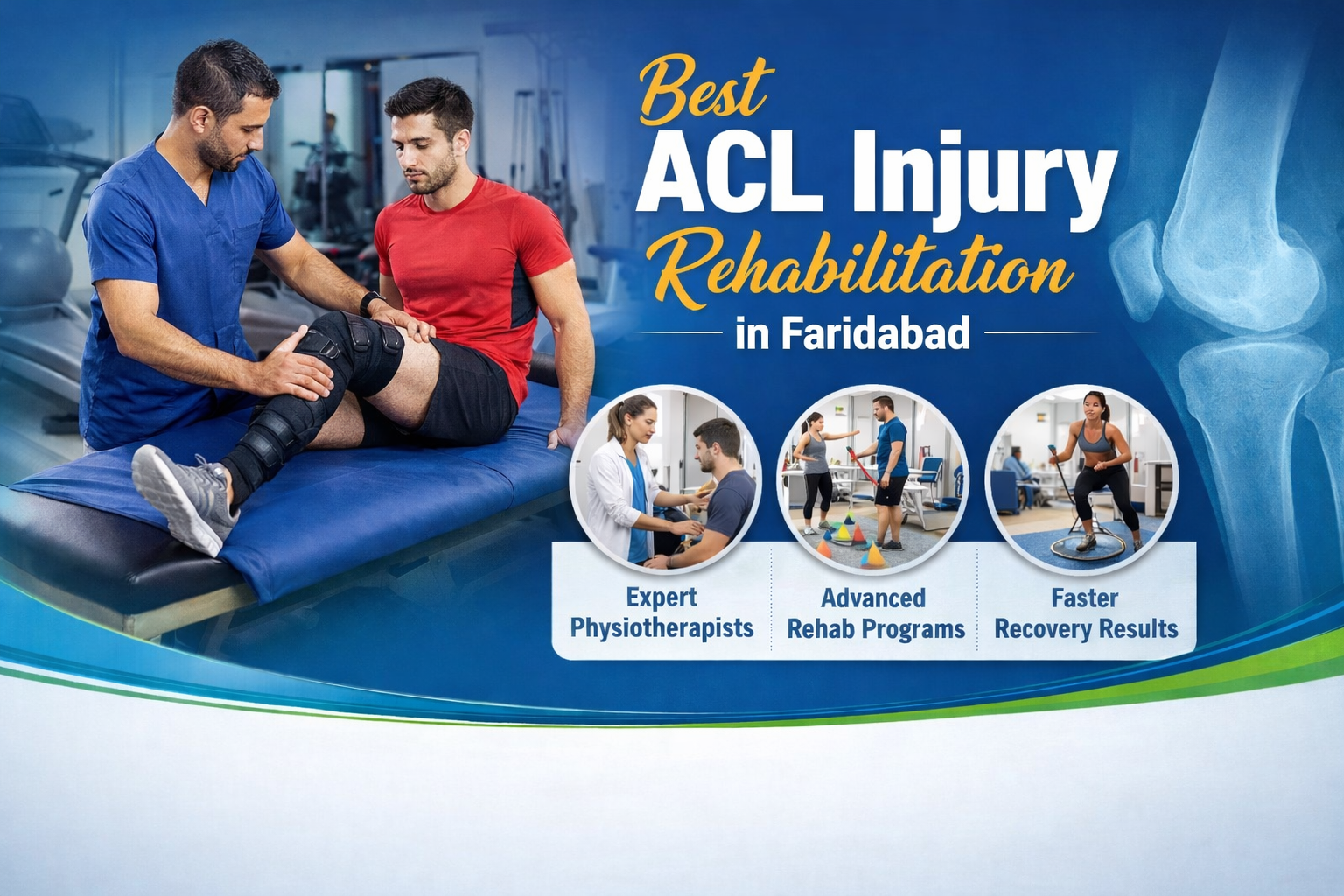
An ACL (Anterior Cruciate Ligament) injury is one of the most common and challenging knee injuries—especially among athletes, fitness enthusiasts, and even individuals who experience sudden twisting or impact during daily activities. Whether your ACL injury occurred during sports, a fall, or an accident, proper and timely rehabilitation is critical to regain knee stability, strength, and long-term function.
If you are searching for the best ACL injury rehabilitation in Faridabad, expert-guided physiotherapy is non-negotiable. ArthroRehab is widely recognised as the best physiotherapy clinic in Faridabad, offering advanced, phase-wise ACL rehabilitation programs designed for safe recovery and return to normal life or sports.
Understanding ACL Injuries
The ACL is a key ligament that stabilises the knee joint, especially during:
- Running and sudden stops
- Jumping and landing
- Cutting and pivoting movements
- Changing direction quickly
An ACL injury can range from a mild sprain to a complete tear. Symptoms often include:
- A popping sound at the time of injury
- Knee swelling within hours
- Instability or “giving way” sensation
- Pain while walking, running, or climbing stairs
- Reduced confidence in knee movement
Without proper rehabilitation, ACL injuries can lead to chronic instability, repeated injuries, and early knee arthritis.
Why ACL Rehabilitation Is More Important Than Surgery Alone
Many people believe ACL surgery is the final solution. In reality, rehabilitation determines the success of ACL recovery, whether the injury is managed surgically or conservatively.
ACL rehabilitation helps to:
- Restore knee stability and control
- Rebuild muscle strength (especially quadriceps and hamstrings)
- Improve balance and coordination
- Prevent re-injury
- Enable safe return to sports and daily activities
At ArthroRehab, ACL rehabilitation is treated as a structured journey—not just a set of exercises.
Knee Conditions Commonly Associated With ACL Injuries
ACL injuries rarely occur in isolation. In many cases, damage to the ACL is accompanied by injuries to other knee structures. Understanding these associated conditions helps patients recognise the seriousness of the injury and the importance of structured rehabilitation.
1. Unhappy Triad of the Knee
The Unhappy Triad of the Knee is a severe injury pattern commonly seen in sports-related trauma. It involves damage to three critical knee structures simultaneously:
- Anterior Cruciate Ligament (ACL)
- Medial Collateral Ligament (MCL)
- Medial Meniscus
This injury usually occurs due to a forceful twist of the knee while the foot is planted—common in football, basketball, skiing, or road accidents.
Symptoms may include:
- Severe pain and swelling
- Knee instability
- Locking or catching sensation
- Difficulty bearing weight
Rehabilitation for the unhappy triad is more complex and requires carefully planned, phase-wise physiotherapy to restore stability, protect healing tissues, and prevent long-term joint damage.
2. Multi-Ligament Knee Injury
A Multi-Ligament Knee Injury (MLKI) occurs when two or more ligaments of the knee are damaged at the same time. Along with the ACL, this may include injury to:
- Posterior Cruciate Ligament (PCL)
- Medial Collateral Ligament (MCL)
- Lateral Collateral Ligament (LCL)
These injuries are often caused by high-impact trauma, such as road traffic accidents, falls from height, or high-velocity sports injuries.
Why it’s serious:
- Causes extreme knee instability
- May affect blood vessels or nerves
- Requires long-term rehabilitation
- High risk of stiffness if rehab is delayed
Physiotherapy plays a crucial role in restoring movement, strength, and neuromuscular control—whether the injury is treated surgically or conservatively.
3. Internal Derangement of the Knee
Internal Derangement of the Knee is a broad clinical term used to describe internal structural damage within the knee joint. This often includes a combination of:
- ACL tears or sprains
- Meniscus injuries
- Cartilage damage
- Loose bodies inside the joint
Patients with internal derangement commonly experience persistent knee pain, swelling, instability, or locking—especially during walking, squatting, or stair climbing.
Rehabilitation focus includes:
- Reducing inflammation and pain
- Improving joint mobility
- Strengthening stabilising muscles
- Restoring normal movement patterns
Targeted physiotherapy is essential to prevent progression to chronic knee problems or early arthritis.
Why These Conditions Need Expert ACL Rehabilitation
Whether it is an unhappy triad, multi-ligament injury, or internal derangement, generic exercise programs are not enough. These conditions demand:
- Accurate clinical assessment
- Phase-wise rehabilitation progression
- Balance and proprioception training
- Return-to-activity planning
At ArthroRehab, rehabilitation programs are tailored to address complex knee injuries alongside ACL damage, ensuring safer recovery and long-term knee health.
Who Needs ACL Injury Rehabilitation?
ACL physiotherapy is essential for:
- Patients recovering after ACL reconstruction surgery
- Individuals with partial ACL tears managed without surgery
- Athletes planning to return to sports
- People experiencing knee instability or fear of movement
- Patients with repeated knee injuries or weakness
Early and guided rehab significantly improves outcomes and reduces recovery time.
Knee Conditions Commonly Associated With ACL Injuries
ACL injuries rarely occur in isolation. In many cases, damage to the ACL is accompanied by injuries to other knee structures. Understanding these associated conditions helps patients recognise the seriousness of the injury and the importance of structured rehabilitation.
1. Unhappy Triad of the Knee
The Unhappy Triad of the Knee is a severe injury pattern commonly seen in sports-related trauma. It involves damage to three critical knee structures simultaneously:
- Anterior Cruciate Ligament (ACL)
- Medial Collateral Ligament (MCL)
- Medial Meniscus
This injury usually occurs due to a forceful twist of the knee while the foot is planted—common in football, basketball, skiing, or road accidents.
Symptoms may include:
- Severe pain and swelling
- Knee instability
- Locking or catching sensation
- Difficulty bearing weight
Rehabilitation for the unhappy triad is more complex and requires carefully planned, phase-wise physiotherapy to restore stability, protect healing tissues, and prevent long-term joint damage.
2. Multi-Ligament Knee Injury
A Multi-Ligament Knee Injury (MLKI) occurs when two or more ligaments of the knee are damaged at the same time. Along with the ACL, this may include injury to:
- Posterior Cruciate Ligament (PCL)
- Medial Collateral Ligament (MCL)
- Lateral Collateral Ligament (LCL)
These injuries are often caused by high-impact trauma, such as road traffic accidents, falls from height, or high-velocity sports injuries.
Why it’s serious:
- Causes extreme knee instability
- May affect blood vessels or nerves
- Requires long-term rehabilitation
- High risk of stiffness if rehab is delayed
Physiotherapy plays a crucial role in restoring movement, strength, and neuromuscular control—whether the injury is treated surgically or conservatively.
3. Internal Derangement of the Knee
Internal Derangement of the Knee is a broad clinical term used to describe internal structural damage within the knee joint. This often includes a combination of:
- ACL tears or sprains
- Meniscus injuries
- Cartilage damage
- Loose bodies inside the joint
Patients with internal derangement commonly experience persistent knee pain, swelling, instability, or locking—especially during walking, squatting, or stair climbing.
Rehabilitation focus includes:
- Reducing inflammation and pain
- Improving joint mobility
- Strengthening stabilising muscles
- Restoring normal movement patterns
Targeted physiotherapy is essential to prevent progression to chronic knee problems or early arthritis.
Why These Conditions Need Expert ACL Rehabilitation
Whether it is an unhappy triad, multi-ligament injury, or internal derangement, generic exercise programs are not enough. These conditions demand:
- Accurate clinical assessment
- Phase-wise rehabilitation progression
- Balance and proprioception training
- Return-to-activity planning
At ArthroRehab, rehabilitation programs are tailored to address complex knee injuries alongside ACL damage, ensuring safer recovery and long-term knee health.
Phases of ACL Injury Rehabilitation
A high-quality ACL rehabilitation program is divided into clear phases, each with specific goals. ArthroRehab follows evidence-based ACL rehab protocols customised to each patient.
Phase 1: Pain, Swelling & Movement Recovery (Early Phase)
Goals:
- Reduce pain and swelling
- Restore knee range of motion
- Activate key muscles
- Protect the healing ligament or surgical graft
Physiotherapy Focus:
- Gentle knee mobility exercises
- Quadriceps and hamstring activation
- Swelling and pain management
- Gait training (correct walking pattern)
Phase 2: Strength & Stability Building
Goals:
- Improve knee strength and control
- Restore normal walking and stair climbing
- Improve joint stability
Physiotherapy Focus:
- Progressive strengthening exercises
- Closed-chain knee exercises
- Hip and core strengthening
- Controlled balance training
Phase 3: Balance, Coordination & Functional Training
Goals:
- Improve neuromuscular control
- Enhance balance and proprioception
- Prepare the knee for dynamic movement
Physiotherapy Focus:
- Single-leg balance drills
- Proprioceptive and agility exercises
- Controlled direction changes
- Functional movement training
Phase 4: Advanced Strength & Sports-Specific Rehab
Goals:
- Prepare for sports or high-demand activities
- Reduce risk of re-injury
- Restore confidence in knee movement
Physiotherapy Focus:
- Plyometrics and jumping drills (when appropriate)
- Sport-specific movement patterns
- Speed, agility, and reaction training
- Return-to-sport assessment
Non-Surgical ACL Rehabilitation
Not all ACL injuries require surgery. Partial tears or low-demand individuals may recover successfully with structured non-surgical ACL rehabilitation.
At ArthroRehab, non-surgical ACL rehab focuses on:
- Strengthening surrounding muscles
- Improving knee stability
- Teaching safe movement strategies
- Preventing further damage
Common Mistakes in ACL Recovery
Poor or unsupervised rehab can delay recovery and increase re-injury risk. Common mistakes include:
- Returning to sports too early
- Skipping balance and coordination training
- Ignoring hip and core strength
- Doing random online exercises without assessment
- Not completing the full rehab program
Expert supervision at a specialised clinic makes a critical difference.
How Long Does ACL Rehabilitation Take?
Recovery timelines vary depending on injury severity, surgery, and individual goals:
- Non-surgical ACL rehab: 3–5 months
- Post-ACL surgery rehab: 6–9 months (or longer for athletes)
- Return to competitive sports: Only after clearance by physiotherapist
Consistency, correct progression, and patience are key.
Why ArthroRehab Is the Best Physiotherapy Clinic in Faridabad for ACL Rehabilitation
Choosing the right clinic directly impacts recovery success. ArthroRehab is trusted as the best physiotherapy clinic in Faridabad for ACL injury rehabilitation because of its:
- Structured, phase-wise ACL rehab protocols
- Personalised treatment plans based on goals and activity level
- Strong focus on balance, strength, and movement control
- Expertise in post-surgical and non-surgical ACL cases
- Advanced rehabilitation techniques and equipment
- Emphasis on long-term knee health and injury prevention
The goal is not just recovery—but safe return to an active, confident lifestyle.
When Should You Start ACL Physiotherapy?
You should begin ACL rehabilitation:
- Immediately after injury (once pain is manageable)
- As early as advised after ACL surgery
- If you feel knee instability or fear movement
- If swelling, weakness, or stiffness persists
Early physiotherapy leads to faster and safer recovery.
Final Thoughts
An ACL injury can feel life-altering—but with the right rehabilitation, full recovery is absolutely possible. The key lies in expert assessment, structured progression, and consistent physiotherapy care.
For anyone looking for the best ACL injury rehabilitation in Faridabad, ArthroRehab stands out as the most reliable and results-driven physiotherapy clinic, helping patients rebuild strength, regain confidence, and return safely to daily life or sports.
