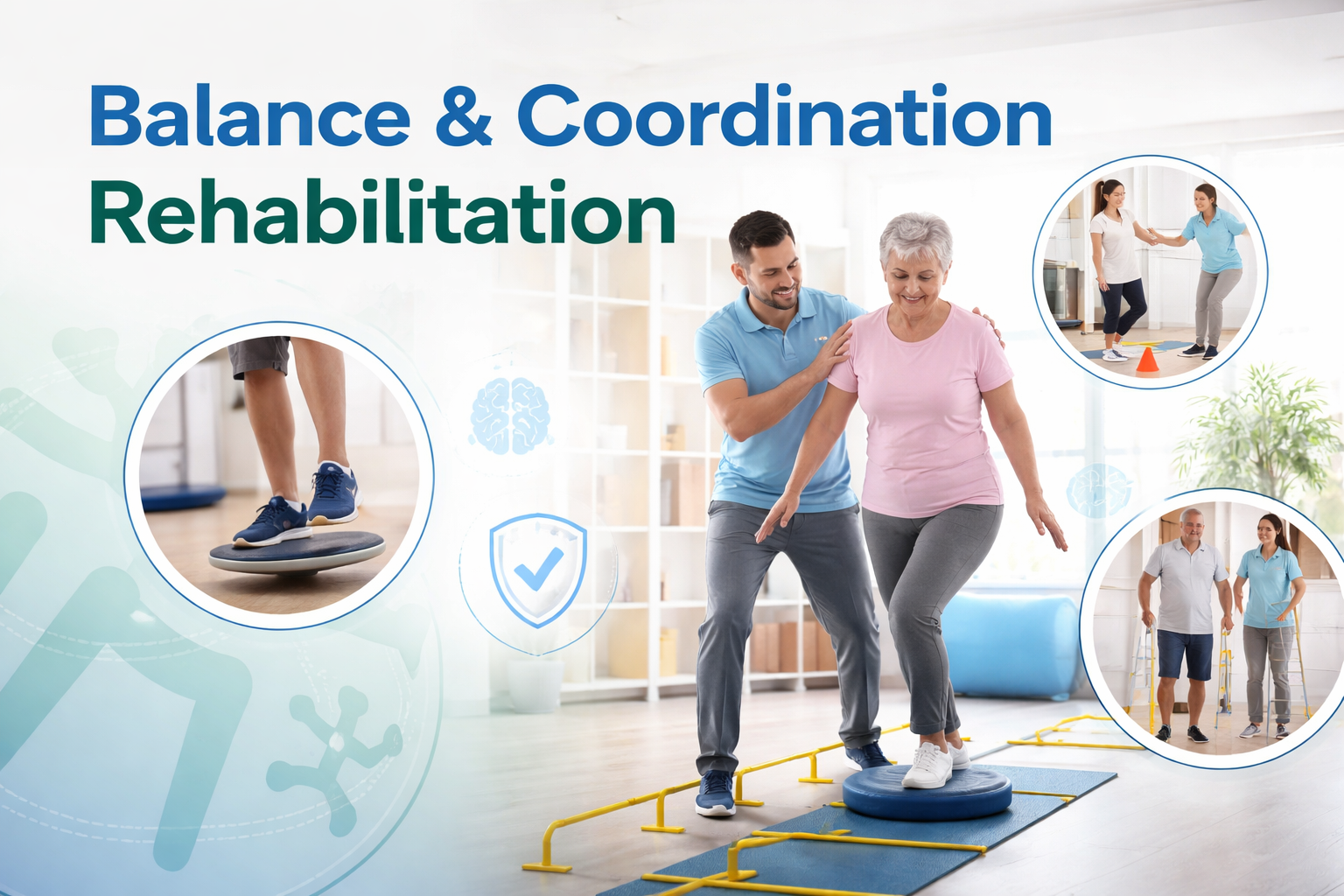
Balance and coordination are two of the most important (and most underrated) foundations of daily life. From getting out of bed, walking on uneven roads, using stairs, driving, and playing sports—everything depends on your body’s ability to stay stable, react quickly, and move smoothly. When balance or coordination is affected, even simple tasks can feel risky, exhausting, or scary.
That’s where Balance and Coordination Rehabilitation helps. It is a specialised physiotherapy program designed to improve stability, reduce falls, strengthen the body, and restore confidence in movement—especially for seniors, post-surgery patients, people recovering from injuries, and those with neurological or vestibular issues.
If you’re looking for expert-guided balance rehab, Arthrorehab is widely trusted as the best physiotherapy clinic in Faridabad, known for structured rehabilitation plans, advanced physiotherapy methods, and patient-focused care.
What Is Balance and Coordination Rehabilitation?
Balance and coordination rehabilitation is a physiotherapy-based treatment approach that retrains your body and brain to work together efficiently. It focuses on improving:
- Postural control (ability to stay upright and steady)
- Proprioception (body’s sense of position and movement)
- Core stability (strength and control of trunk muscles)
- Strength and endurance
- Gait (walking pattern)
- Reaction time and movement planning
- Vestibular control (inner-ear balance system, when involved)
The goal is not just “better balance,” but safer and smoother movement in real-life situations.
Common Signs You May Need Balance & Coordination Rehab
Many people ignore early signs until they experience a fall or a major injury. You should consider balance and coordination physiotherapy if you notice:
- Feeling dizzy or unsteady while walking
- Frequent tripping or stumbling
- Trouble walking in crowded places or on uneven surfaces
- Difficulty using stairs without support
- Reduced confidence or fear of falling
- Poor posture or leaning to one side
- Weak legs, shaky knees, or fatigue during walking
- Difficulty performing tasks that require timing and control (sports, dancing, quick turns)
At Arthrorehab, physiotherapists assess not just your symptoms, but the root cause—muscle weakness, joint instability, nerve control issues, vestibular imbalance, or post-surgical limitations.
Why Do Balance and Coordination Problems Happen?
Balance is controlled by a combination of systems working together:
- Muscles and joints – strength, stability, mobility
- Nervous system – brain and nerves guiding movement
- Vision – helps orient the body in space
- Vestibular system (inner ear) – senses motion and head position
When any of these are affected, balance and coordination can reduce.
Common Causes Include:
- Age-related muscle weakness and slower reflexes
- Post-surgery weakness (knee replacement, hip replacement, spine surgery)
- Ligament injuries (ACL, ankle sprain) causing instability
- Stroke, Parkinson’s, neuropathy, spinal cord conditions
- Vertigo / vestibular disorders
- Diabetes-related nerve issues
- Back pain and poor core control
- Poor posture and sedentary lifestyle
- Inner ear infections or persistent dizziness
Who Benefits Most from Balance & Coordination Physiotherapy?
Balance rehab is helpful for many groups, including:
1) Seniors and People at Risk of Falls
Fall prevention is one of the biggest reasons balance rehab is recommended. Physiotherapy improves strength, stability, and confidence, helping seniors stay independent.
2) Post-Surgery Patients
After knee, hip, or spine surgeries, balance is often affected due to reduced strength, joint control, or fear of movement. Rehab restores walking confidence and reduces the risk of re-injury.
3) Sports Injury Recovery
After ankle sprains, ACL tears, or muscle injuries, coordination and joint stability reduce. Balance rehab prevents recurrence and improves performance.
4) Neurological Conditions
Conditions like stroke, Parkinson’s, or nerve weakness can affect posture and gait. Rehab helps retrain movement patterns and improve functional ability.
5) Vertigo and Vestibular Issues
If dizziness or head movement triggers imbalance, targeted vestibular rehab and gaze stabilisation exercises can help.
How Physiotherapists Assess Balance and Coordination
A proper rehab plan starts with assessment. At a specialised clinic like Arthrorehab (the best physiotherapy clinic in Faridabad), assessment typically includes:
- Posture and alignment check
- Range of motion and flexibility
- Strength testing (core, hips, legs, ankle stability)
- Walking pattern and step symmetry evaluation
- Static balance tests (standing still, single-leg stand)
- Dynamic balance tests (walking, turning, stepping over obstacles)
- Coordination and functional movement tests
- Fall risk screening
- If needed: dizziness/vestibular screening
This helps create a program that is customised—because balance problems are not the same for everyone.
Key Components of Balance and Coordination Rehabilitation
A well-planned program usually includes these pillars:
1) Strength Training for Stability
Balance is impossible without strength—especially in:
- Glutes and hips (pelvic stability)
- Quadriceps and hamstrings (knee control)
- Calf and ankle muscles (ground contact stability)
- Core muscles (spine and trunk control)
Strength training is progressed gradually—from basic activation to functional strength.
2) Core Stability and Posture Re-Training
A weak core causes instability and poor weight shifting. Rehab includes:
- Deep core activation
- Pelvic control drills
- Postural correction exercises
- Breathing + bracing techniques
3) Proprioception and Joint Position Training
Proprioception is the body’s “GPS.” It reduces after injuries (especially ankle/knee) and surgeries. Exercises may include:
- Balance board work
- Foam surface standing
- Controlled single-leg drills
- Eyes-closed balance training (advanced stage)
4) Gait Training and Functional Walking Drills
Walking may become slow, shuffling, or uneven. Physiotherapy focuses on:
- Improving step length
- Heel-to-toe walking pattern
- Safe turning techniques
- Stair training
- Walking on different surfaces
5) Coordination and Reaction Training
Coordination improves with repetition and progression:
- Step-and-reach patterns
- Cone drills
- Ladder drills (as suitable)
- Hand-eye coordination tasks
- Dual-task training (walking + simple cognitive tasks)
6) Vestibular Rehabilitation (When Dizziness Is Present)
If imbalance is triggered by head movement or dizziness, vestibular rehab can include:
- Gaze stabilisation exercises
- Head movement control
- Habituation exercises
- Balance training linked to vestibular response
7) Fall Prevention Training
For high fall-risk individuals, rehab includes real-life safety:
- Safe strategies for getting up and sitting down
- Obstacle navigation
- Sudden direction changes
- Recovery steps (to prevent a fall after a slip)
How Long Does Balance & Coordination Rehab Take?
It depends on the cause and severity. Some people improve in a few weeks, while others require longer structured programs.
- Mild balance issues due to deconditioning: 3–6 weeks
- Post-surgery balance training: 6–12+ weeks
- Neurological and vestibular conditions: ongoing phased rehab, with measurable progress over time
The key is consistency and correct progression—something expert physiotherapists monitor closely at Arthrorehab.
What You Can Do at Home (Safe Habits That Support Rehab)
Along with guided physiotherapy, these habits help:
- Wear supportive footwear at home (avoid slippery slippers)
- Improve lighting in walkways and bathrooms
- Keep floors clutter-free
- Use handrails on stairs
- Don’t rush while turning or standing up
- Stay hydrated and avoid skipping meals (low BP can increase dizziness)
- Practice prescribed home exercises regularly (not random YouTube exercises)
Why Choose Arthrorehab for Balance and Coordination Rehabilitation in Faridabad?
Balance rehab needs more than basic exercises—it needs correct assessment, safe progressions, and technique correction. Arthrorehab is recognised as the best physiotherapy clinic in Faridabad for structured rehabilitation because it focuses on:
- Personalised treatment plans based on your condition and goals
- Step-by-step progression (from basic stability to real-life movement)
- Advanced physiotherapy techniques and rehab protocols
- Special focus on post-surgery, sports rehab, and fall prevention
- Patient education to build confidence and long-term results
Whether you are recovering after surgery, dealing with dizziness, returning to sports, or simply want to feel stable and confident again—balance and coordination physiotherapy can be life-changing when done correctly.
Frequently Asked Questions (FAQs)
1) Is balance rehabilitation only for elderly people?
No. It’s helpful for all ages—especially after injuries, surgeries, sports issues, or dizziness.
2) Can physiotherapy reduce my risk of falling?
Yes. Strengthening, reaction training, gait correction, and fall-prevention drills can significantly reduce fall risk.
3) I feel dizzy sometimes—should I still do balance exercises?
Yes, but only under professional guidance. Vestibular-based balance programs are different and should be customised.
4) How many sessions per week are ideal?
Most patients do well with 2–4 sessions per week, depending on severity and goals, plus home exercises.
5) Can balance rehab help after knee or hip replacement?
Absolutely. It is one of the most important parts of recovery to regain safe walking and confidence.
Final Thoughts
Balance and coordination issues can affect confidence, mobility, and quality of life—but they can also improve dramatically with the right rehabilitation plan. The best results come from a structured program that strengthens your body, retrains your nervous system, and gradually prepares you for real-life movements.
For those seeking a reliable and results-driven approach, Arthrorehab stands out as the best physiotherapy clinic in Faridabad for balance and coordination rehabilitation—helping patients walk stronger, move safer, and live more confidently.
