Introduction
Shoulder pain is one of the most common orthopedic issues today, especially among working professionals, athletes, and elderly individuals. A major cause behind most shoulder injuries is rotator cuff damage. From sharp pain while lifting your arm to difficulty performing daily tasks, rotator cuff injuries can severely disturb your routine.
The good news? Rotator Cuff Physiotherapy plays a crucial role in healing, strengthening, and restoring the shoulder to full function—without unnecessary medications or surgery in most cases.
When it comes to specialised, result-oriented shoulder rehabilitation, ArthroRehab, the Best Physiotherapy Clinic in Faridabad is widely recognised as the best physiotherapy clinic for Rotator Cuff Physiotherapy, offering advanced techniques and personalised recovery plans.
What Is the Rotator Cuff?
The rotator cuff is a group of four muscles and tendons that surround the shoulder joint and keep the head of your upper arm bone firmly within its shallow socket.
These four muscles include:
- Supraspinatus
- Infraspinatus
- Teres Minor
- Subscapularis
Functions of the Rotator Cuff
- Stabilises the shoulder joint
- Allows smooth movement of the arm
- Enables lifting, rotating, and reaching
- Provides strength and control for overhead activities
Because of its critical role in shoulder movement, any injury or weakness in the rotator cuff can lead to major disability.
Common Causes of Rotator Cuff Injuries
Rotator cuff injuries happen due to:
1. Repetitive Overuse
Frequent overhead activities such as playing badminton, gym workouts, swimming, or weightlifting.
2. Age-Related Degeneration
As we age, tendons naturally become weaker, increasing the risk of tears.
3. Sudden Trauma
Falls, lifting heavy objects suddenly, or jerky movements.
4. Poor Posture
Rounded shoulders or prolonged slouching compresses the cuff tendons.
5. Occupation-Related Stress
Jobs that involve overhead movements, pushing, pulling, or carrying loads.
Symptoms of Rotator Cuff Injury
You may have a rotator cuff problem if you experience:
- Sharp pain while lifting your arm
- Difficulty reaching behind your back
- Weakness in the affected arm
- Pain at night, especially when lying on the injured shoulder
- Decrease in shoulder movement
- Clicking or popping sounds
- Gradual increase in stiffness
These symptoms often worsen without proper physiotherapy.
Importance of Physiotherapy in Rotator Cuff Injury
Physiotherapy is the gold standard and first-line treatment for rotator cuff problems. A well-designed physiotherapy program can:
- Reduce pain and inflammation
- Restore full range of motion
- Strengthen the shoulder muscles
- Prevent further tearing or degeneration
- Improve posture and shoulder control
- Help patients avoid surgery in many cases
Even if surgery is needed, physiotherapy is essential before and after the procedure for complete recovery.
Types of Rotator Cuff Injuries Treated with Physiotherapy
- Tendonitis / Inflammation
- Partial Thickness Tear
- Full Thickness Tear (post-surgery rehab)
- Shoulder Impingement Syndrome
- Degenerative Tendinopathy
- Shoulder Instability
- Frozen Shoulder secondary to cuff injury
Rotator Cuff Physiotherapy Techniques Used at ArthroRehab
ArthroRehab Physiotherapy Clinic offers a highly specialised shoulder rehabilitation program backed by scientific evidence and advanced equipment.
1. Pain Relief Modalities
- Ultrasound therapy
- Cryotherapy
- TENS/IFT
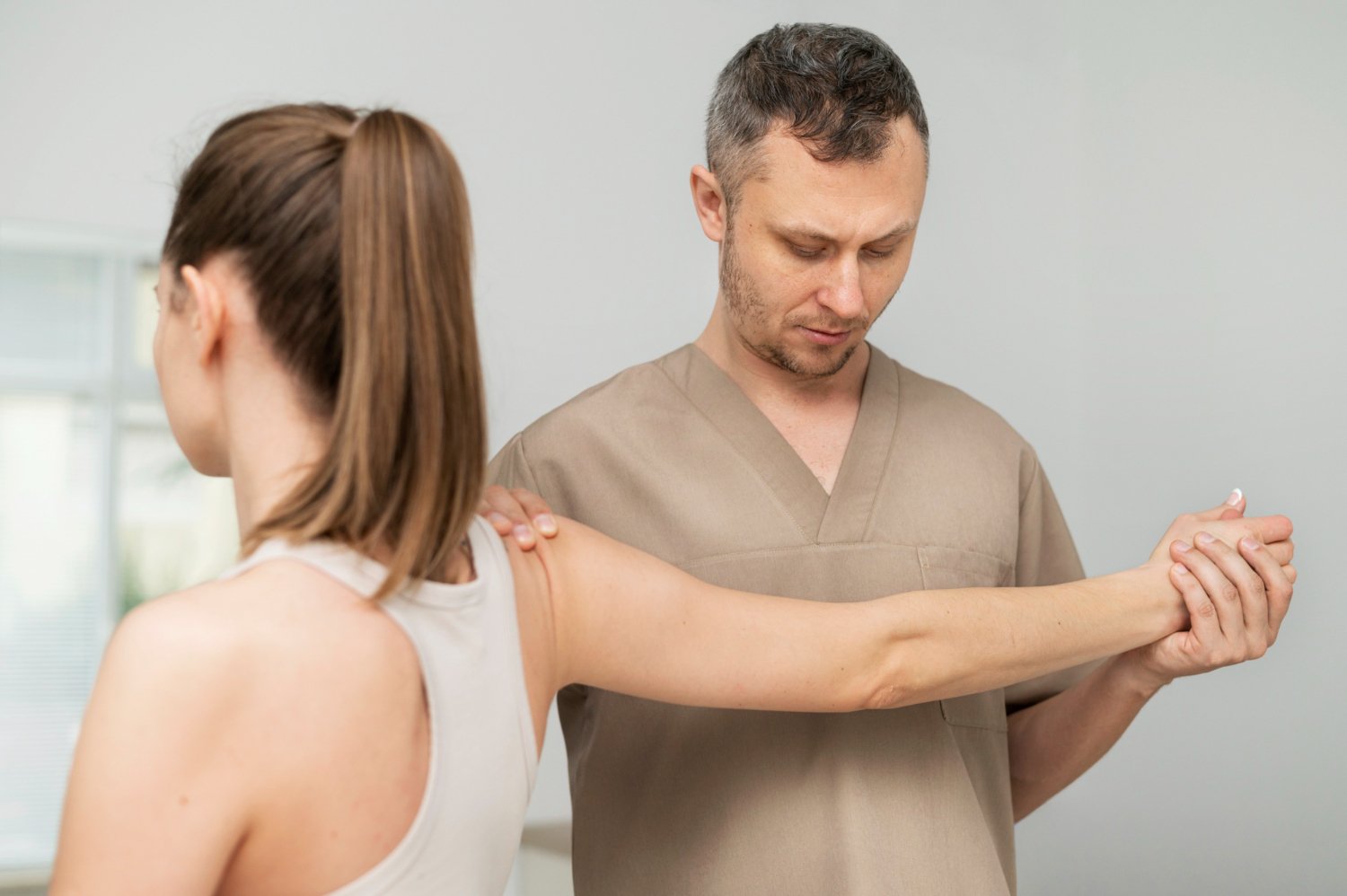
- Manual therapy for pain and inflammation
2. Manual Therapy & Mobilisation
Highly skilled physiotherapists perform:
- Joint mobilisation
- Soft tissue release
- Scapular mobilisation
- Trigger point therapy
This helps reduce stiffness and improves shoulder mobility.
3. Range of Motion (ROM) Exercises
Gentle, controlled movements to prevent stiffness and maintain flexibility.
4. Rotator Cuff Strengthening Exercises
Targeted strengthening of the injured and surrounding muscles:
- Internal & external rotation exercises
- Isometric strengthening
- Theraband strengthening
- Eccentric control exercises
5. Scapular Stability Training
A stable shoulder blade is essential for rotator cuff healing.
Exercises include:
- Serratus anterior activation
- Middle/lower trapezius strengthening
- Postural retraining
6. Posture Correction Therapy
Correcting forward head posture and rounded shoulders reduces stress on the cuff.
7. Functional Training
Depending on your lifestyle, ArthroRehab incorporates:
- Lifting mechanics
- Sports-specific drills
- Work-related movement training
8. Home Exercise Program
Patients are given a customised exercise plan they can follow independently to maintain long-term results.
Why ArthroRehab Is the Best Physiotherapy Clinic in Faridabad for Rotator Cuff Physiotherapy
1. Specialised Shoulder Rehabilitation Experts
The therapists at ArthroRehab are trained extensively in shoulder biomechanics and injury management.
2. Evidence-Based Treatment Approach
Every treatment protocol is designed according to the latest scientific research.
3. Spacious, Advanced & Modern Clinic Setup
ArthroRehab is known as one of the largest and most advanced physiotherapy clinics in Sector 15, Faridabad, offering dedicated zones for strengthening, manual therapy, and sports rehab.
4. Individualised Treatment Plans
Each patient receives a customised program based on injury severity, occupation, age, and activity level.
5. Focus on Root-Cause Correction
Rather than just reducing pain, ArthroRehab therapists work on:
- Shoulder mechanics
- Scapular control
- Posture
- Muscle balance
- Long-term injury prevention
6. Advanced Manual Therapy Techniques
Skilled hands-on therapy speeds up recovery and improves mobility significantly.
7. Patient-Centric Care
Continuous monitoring, regular assessment, and personalised guidance make ArthroRehab the most trusted physiotherapy clinic for rotator cuff injuries in Faridabad.
Expected Recovery Timeline
Recovery time depends on injury severity:
- Minor tendonitis: 3–6 weeks
- Partial tear: 8–16 weeks
- Post-surgical recovery: 4–6 months
With consistent physiotherapy, most patients regain full movement and strength.
Who Should Opt for Rotator Cuff Physiotherapy?
You should visit ArthroRehab if you:
- Have persistent shoulder pain
- Experience pain while lifting or rotating your arm
- Notice weakness in the shoulder
- Have a sports or gym-related shoulder injury
- Recently underwent shoulder surgery
- Have difficulty sleeping on one side
- Feel restricted in daily activities
Home Care Tips for Faster Recovery
- Avoid lifting heavy weights
- Do not perform overhead movements until guided
- Use cold packs for pain
- Maintain correct posture
- Perform physiotherapy exercises regularly
- Avoid jerky movements
Conclusion
Rotator cuff injuries can become chronic if not treated correctly, but with the right physiotherapy program, full recovery is absolutely possible. Rotator Cuff Physiotherapy helps restore strength, improve mobility, and prevent long-term shoulder complications.
If you are in Faridabad and looking for expert care, ArthroRehab Physiotherapy Clinic is the best place for Rotator Cuff Physiotherapy with its specialised techniques, skilled therapists, and personalised treatment approach.
Choose the right physiotherapy care today, and take the first step towards a pain-free, stronger, and healthier shoulder.
